
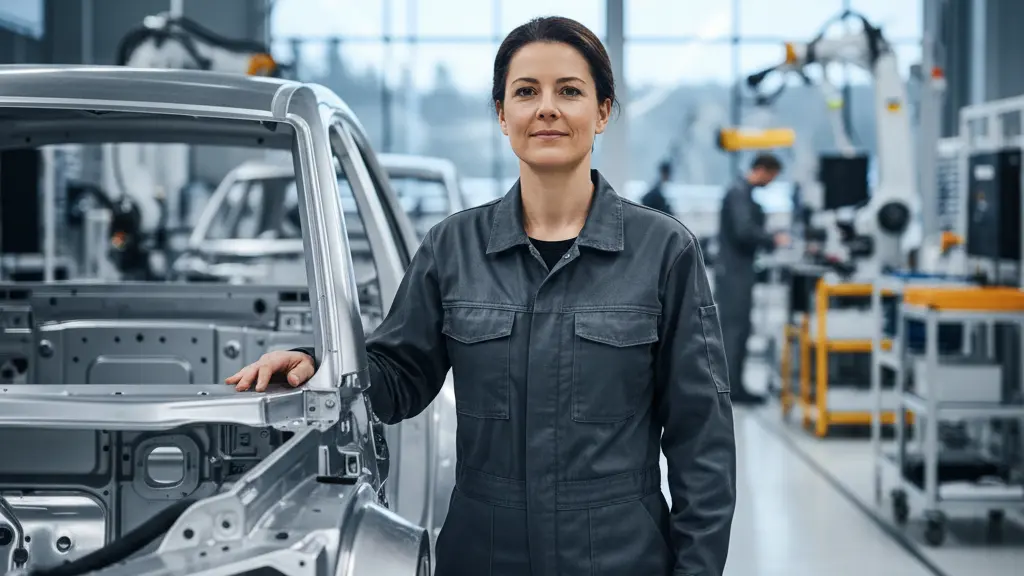
1. What is happening at the Zwickau plant?
The Volkswagen Zwickau plant in Saxony faces significant uncertainty in 2026 as the company considers broad cost-cutting measures. Long celebrated as a leading center for electric vehicle production, Zwickau builds models such as the ID.3 and ID.4 and delivered more than 300,000 units in 2024. Still, growing costs, high absenteeism and a tight labour market have pushed the site into a delicate position.
2. Production, performance and transformation projects
Zwickau remains an important hub for electric vehicle manufacturing. The plant’s recent output demonstrates its capability, but ongoing transformation projects aim to keep the site competitive. Management and workers are preparing for a conversion to new platforms scheduled through 2027.
Electric vehicle production and flagship models
The plant’s production lineup includes the ID.3 and ID.4, two electric models central to the company’s e-mobility strategy. Strong delivery numbers in 2024 showed the factory’s scale, but scale alone is not shielding it from corporate cost pressure and global competition.
Transformation projects and timeline
Employees point to active transformation projects intended to modernize production and prepare for next-generation platforms. The planned platform conversion is due by 2027, which supporters say could secure long-term competitiveness if accompanied by adequate investment.
3. Why cost cuts are being considered
The company cites rising costs across production, high absenteeism and trouble filling open positions as reasons for savings measures. Absenteeism alone cost the company around one billion euros in 2024. Additionally, competitive pressure from Chinese manufacturers and weaker-than-expected quarterly results are intensifying the push for lower costs.
Key factors behind financial pressure
- Rising production and material costs.
- High absenteeism costs, roughly €1 billion in 2024.
- Difficulty recruiting and retaining skilled workers in a tight labour market.
- Strong competition from Chinese electric-vehicle makers putting margin pressure.
- Corporate quarterly results prompting cost reviews across sites.
4. Workers, unions and management reactions
The situation has prompted heated reactions from unions, the works council and company leadership. The metalworkers’ union IG Metall has warned strongly against layoffs and demands instead that the company invest in modernization and secure jobs. Local works council representatives and many employees emphasize ongoing projects that could preserve the site if supported.
Management statements and counterpoints
Company leadership, including CEO Oliver Blume, has sought to reassure the workforce by saying that ‘no plant will be closed, but adjustments are unavoidable.’ That message underscores a commitment to keep sites open while signalling that operational changes and efficiency measures may be required.
5. Relocation rumours and political fallout
Conflicting reports about the future of e-mobility production have fueled uncertainty. Some accounts suggest parts of production could be moved to Sachsen-Anhalt or even abroad. Local politicians have reacted strongly, calling such a move a ‘catastrophe’ for the region and urging swift clarity and protective measures.
Possible scenarios under discussion
- Retain production at Zwickau with targeted modernization and investment.
- Shift some e-mobility production to other German sites such as Sachsen-Anhalt.
- Outsource or relocate parts of production abroad to reduce costs.
6. Outlook, risks and next steps
The outlook for the Zwickau plant is mixed. Optimists inside the plant point to ongoing transformation work and the planned platform conversion as reasons for hope. Skeptics and some analysts warn that intense international competition and corporate cost targets could put thousands of jobs at risk, while other sources argue management seeks a strategic realignment without mass lay-offs.
Timeline and what to watch next
- Negotiations between the works council, IG Metall and company management continue through 2026.
- Decisions on investments and possible production adjustments are expected before the end of 2026.
- Progress on transformation projects and the 2027 platform conversion will be a key indicator of the plant’s long-term prospects.
For employees, local communities and regional politicians, the coming months are critical. Clear investment commitments, transparent negotiation outcomes and effective steps to improve competitiveness would reduce uncertainty. Until then, the future of the Zwickau plant remains unsettled, caught between cost-cutting pressures and efforts to secure its role in electric vehicle production.
