
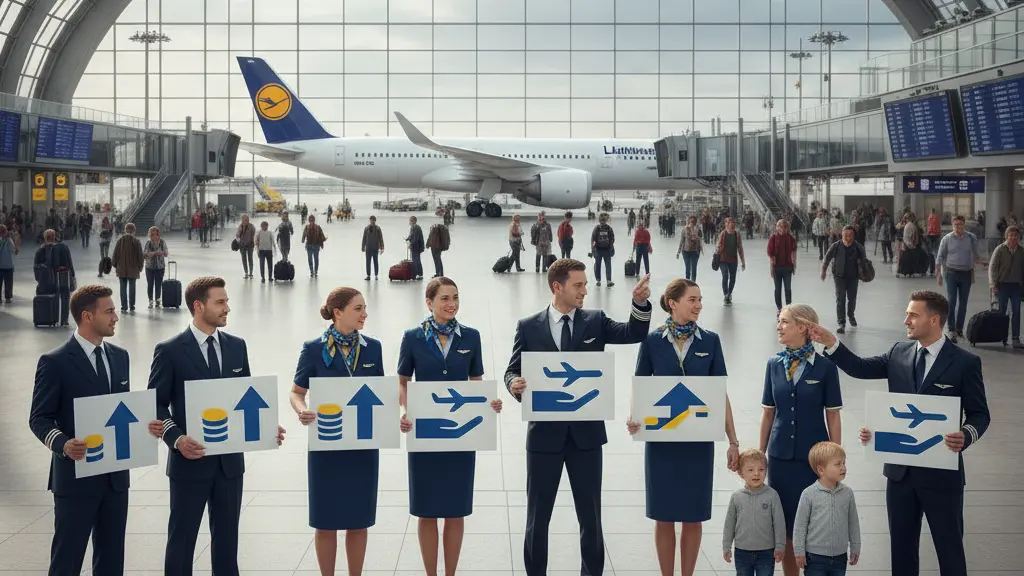
A rising wave of strikes at Lufthansa
In 2026 Lufthansa is facing an unprecedented wave of industrial action that has repeatedly disrupted flights and shaken confidence in the airline. Pilots and flight attendants have taken turns striking to press their separate demands, while three unions — Vereinigung Cockpit (VC), the Unabhängige Flugbegleiter Organisation (UFO) and Verdi — push for better terms for different staff groups. The strikes have forced hundreds of flight cancellations, clouded the airline’s planned 100-year anniversary and drawn sharp criticism from major shareholders.
Who is striking and what they want
The action involves different professional groups with distinct demands. Understanding who is involved and what they seek helps explain why the dispute is complex and why negotiations are difficult.
Pilots (Vereinigung Cockpit)
The pilots, represented by Vereinigung Cockpit (VC), have focused on changes to company pension arrangements. Their central demand is for higher contributions to the Betriebsrente (company pension), reflecting concerns about retirement security and fair compensation for experienced flight crews.
- Higher employer contributions to the company pension scheme
- Protection of pension rights earned under legacy agreements
- Measures to retain experienced pilots amid fleet and staffing changes
Flight attendants (UFO)
Flight attendants, organized by the Unabhängige Flugbegleiter Organisation (UFO), have concentrated on everyday working conditions. Their demands include more reliable duty rosters, protections against sudden schedule changes, and longer notice periods for dismissals to provide greater job security.
- Reliable and predictable rostering and duty schedules
- Longer notice periods for termination to reduce abrupt job loss
- Better staffing levels and safeguards for working conditions onboard
Verdi and other staff groups
Verdi represents ground staff and other employee groups and is negotiating separate collective agreements. All three unions are working to secure better tariff agreements for their respective members, which adds layers to the dispute because different agreements and priorities must be reconciled in collective bargaining.
Why tensions are escalating
Several structural and strategic factors have intensified the conflict, turning a series of isolated demands into a broader, escalating strike wave. The roots of the dispute reach back to historical labour agreements and strategic changes in how Lufthansa operates.
Legacy tariff structures from the state airline era
Complex tariffs left over from the time Lufthansa was a state airline have produced fragmented pay and pension rules across different employee groups. These historical structures make negotiations harder because solutions for one group can have knock-on effects for others and reopening one agreement risks destabilizing others.
Shift to cheaper subsidiaries and cost pressures
In recent years the company has moved aircraft and routes to lower-cost subsidiaries to reduce expenses. That shift has increased resentment among staff who remain under legacy contracts, who see cuts and outsourcing as threats to pay, pensions and working conditions.
Union competition and alternating strike tactics
The three unions are not only negotiating with management but also jockeying for influence among employees. They have used alternating strikes — pilots one day, flight attendants another — as a tactic to maintain pressure while each union defends its own members’ priorities. That strategy complicates resolution because it prolongs disruption and raises the stakes for management and shareholders.
- Alternating strikes increase operational disruption and public attention
- Competition among unions prolongs bargaining and reduces incentives for compromise
- Management faces simultaneous demands across multiple agreements
Impact and outlook
The strikes have immediate operational consequences and broader repercussions for the airline’s reputation and stakeholder relations. Hundreds of flights have been cancelled, passengers face uncertainty, and major events like Lufthansa’s planned 100-year anniversary have been overshadowed. Public debate is now focused on how far unions can push strike action and what remedies are available.
| Actor | Main demands | Immediate impact |
|---|---|---|
| Vereinigung Cockpit (VC) | Higher company pension contributions | Pilot strikes, flight cancellations |
| UFO (flight attendants) | Reliable rostering, longer dismissal notice | Cabin crew walkouts, service disruption |
| Verdi | Tariff deals for ground and other staff | Ground operations affected, additional cancellations |
| Result: Hundreds of cancelled flights; major shareholder criticism and media scrutiny | ||
Immediate effects
The strikes have tangible short-term effects on operations and stakeholders. Passengers face delays and cancellations, crew rostering becomes more difficult, and the airline must manage costs and reputational damage while negotiating with multiple unions.
- Hundreds of flights cancelled across networks
- Passengers and partners face uncertainty ahead of key dates
- Shareholder Karl Gernandt accuses the unions of disproportionate abuse of strike rights
Outlook and possible ways forward
Resolving the dispute will require coordinated bargaining, flexibility on both sides and possibly third-party mediation. Because the issues touch pensions, rostering and structural cost arrangements, solutions will need to balance immediate relief for employees with long-term financial planning for the airline.
- Intensive negotiations between management and all three unions to find package deals
- Use of independent mediation or arbitration to bridge gaps
- Targeted short-term concessions to reduce immediate disruption while negotiating longer-term reforms to tariffs and pensions
