
1. Overview
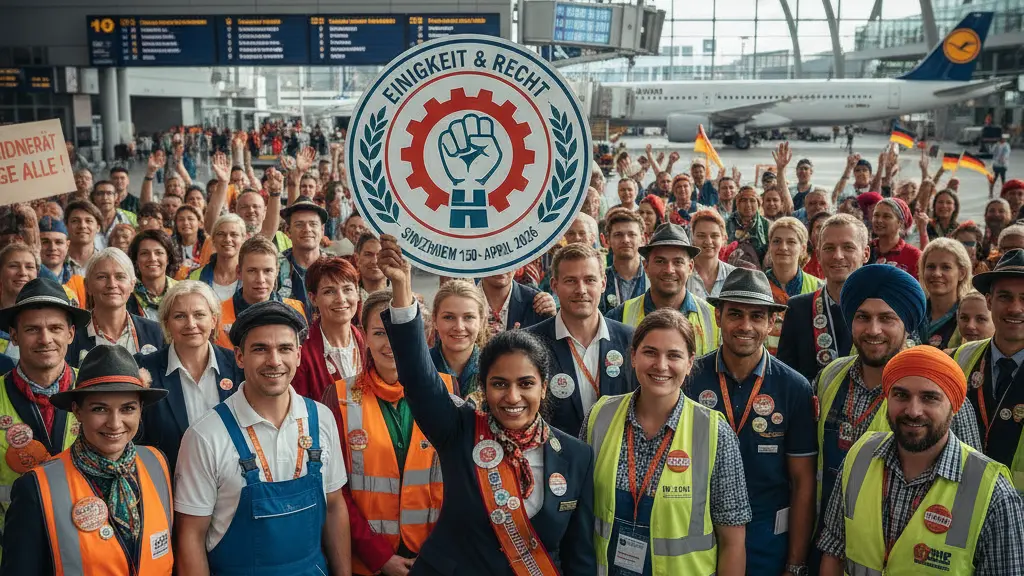
In the week around April 16, 2026, a dramatic wave of strikes in Germany coincides with the 150th birthday of labor law pioneer Hugo Sinzheimer. The timing is striking: a celebration of worker rights and collective bargaining meets a real-world escalation of industrial action. Pilot strikes, cabin crew walkouts and broad public-sector actions combine to disrupt air travel, local transport and hospitality services. At the same time, unions and employers remain locked in disputes over pay, pensions and working conditions.
Unions involved include the pilots’ Vereinigung Cockpit (VC), the UFO cabin crew union and the trade union Verdi. VC has announced large-scale pilot strikes, UFO cabin crew members voted strongly in favor of action, and Verdi is maintaining pressure in regional public transport and other sectors. Some employers and associations are raising public health or operational concerns, but the core conflicts are tariff disputes and demands for better working conditions.
2. Key dates and timeline
Here are the main dates that shaped the escalation during that week. These dates show when strikes begin, where they concentrate, and where travel disruption is most likely.
- April 15–16, 2026: UFO cabin crew strike in major hubs such as Munich and Frankfurt, aimed at better rostering and social tariff agreements.
- April 16–17, 2026: Vereinigung Cockpit announces broad pilot strikes across German airports, with flights to the Middle East largely excluded due to the situation there.
- Through April 17, 2026: Construction work at Munich airport and suspended S-Bahn service moderate access to the airport, compounding disruption.
- Until April 18, 2026: Verdi-organized local transport strikes in parts of Saxony (including Zwickau, Dresden and Chemnitz) continue, with some networks still operating.
- From April 20, 2026: Additional Verdi action in Lower Saxony timed with the Hannover Messe, and the Saarland faces potential open-ended action.
3. Who is striking and what they want
Pilots (Vereinigung Cockpit)
Pilots represented by Vereinigung Cockpit announced wide-reaching strikes for April 16–17, citing stalled negotiations and demanding improvements in pay and long-term security, including adequate pension arrangements. VC leadership has proposed mediation to avoid further escalation, noting employers have shown no movement so far.
Cabin crew (UFO)
The UFO cabin crew union held a decisive vote, with 94% of members supporting strike action on April 15–16 in Munich and Frankfurt. Their demands focus on better predictability of rosters, social-tariff agreements and improvements to working conditions that affect day-to-day life on the job.
Verdi and public transport workers
Verdi is pressing for shorter shifts, higher surcharges for unsocial hours and overall better conditions for roughly 100,000 employees. Strike activity affected eleven facilities in Saxony up to April 18, and two-day action during the Hannover Messe in Lower Saxony from April 20. The Saarland faces the threat of an open-ended dispute if talks fail.
Other actors and positions
Some industry associations called for strict hygiene measures and testing procedures in certain regions, framing parts of their response in pandemic-related terms. In contrast, transport operator DB avoided strikes thanks to an agreement with GDL, reducing one potential source of additional disruption.
4. Practical impact on travel and daily life
The combined actions hit air travel hardest during the announced pilot and cabin crew strikes. Passengers should expect cancellations and large-scale rescheduling at many German airports. The situation at Munich is worsened by DB construction work that suspends S-Bahn access until April 17, making ground access slower and less reliable.
- Air passengers: expect cancellations, check flight status and cancellation policies, and allow more time for connections.
- Rail and S-Bahn users: verify local timetables, as construction or strikes may affect routes and access to airports.
- Commuters: anticipate service gaps in affected regions and consider alternative routes or flexible working options if possible.
Local and regional travel is also affected: in Saxony several local facilities were involved in Verdi action, and while some services continued (for example DVB in Dresden), passengers must anticipate reduced timetables and altered services. Trade fair traffic around Hannover Messe may face additional strain during the two-day actions beginning April 20. In the Saarland the possibility of an open-ended dispute represents further uncertainty.
5. The Sinzheimer anniversary and what it symbolizes
The strikes coincided with the 150th birthday of Hugo Sinzheimer on April 16, 2026, a key figure in shaping German labor law and collective bargaining. Institutions such as the Hans-Böckler-Stiftung marked the anniversary and reflected on his legacy. The moment highlighted a deeper tension: the principles of fair labor and social justice that Sinzheimer championed are being actively tested by contemporary disputes over pay, pensions and working time.
For many observers, the coincidence is more than symbolic. It reminds policymakers, employers and the public that robust social dialogue and functioning collective bargaining systems are core to resolving conflicts without long-term disruption. Calls for mediation and arbitration during the crisis echo that legacy.
6. What to watch next and possible outcomes
Key factors to monitor include whether employers accept mediation proposals, how unions respond to any offers, and whether strikes spread or are prolonged. VC leadership publicly suggested arbitration as a way to avoid further escalation, but the unions also signaled readiness to sustain pressure if talks fail.
| Actor | Dates / Scope | Main demands |
|---|---|---|
| Vereinigung Cockpit (pilots) | April 16–17, widespread airport impact (excl. some Middle East flights) | Pensions, pay, job security; proposed mediation |
| UFO (cabin crew) | April 15–16 in Munich and Frankfurt | Roster predictability, social tariff agreements |
| Verdi (public/local transport & services) | Regional actions through April 18 and from April 20 in Lower Saxony; Saarland threatened | Shorter shifts, higher surcharges, better conditions for 100,000 workers |
| DB / GDL | No strikes (agreement reached) | Status quo preserved by agreement |
| Outcomes to watch: mediation acceptance, strike extensions, passenger compensation measures | ||
7. Practical advice for travelers and workers
For travelers: check your flight status and airline communications before leaving for the airport. In the current situation many affected passengers were advised to check the carrier’s official information pages and rebooking rules. If you must travel, allow extra time, have flexible plans and keep travel documents and contact details handy for quick rebooking.
For rail and local transport users: confirm local timetables; where S-Bahn or other links are suspended (for example at Munich airport during construction), plan alternative transfers well in advance. For trade-fair visitors and commuters, expect delays and allocate more time to reach events.
For workers: stay informed through official union communications about collective bargaining developments and legal rights during industrial action. If you are affected by strikes or negotiating on behalf of colleagues, consider mediation or arbitration proposals seriously as ways to limit prolonged disruption while protecting core demands.
