
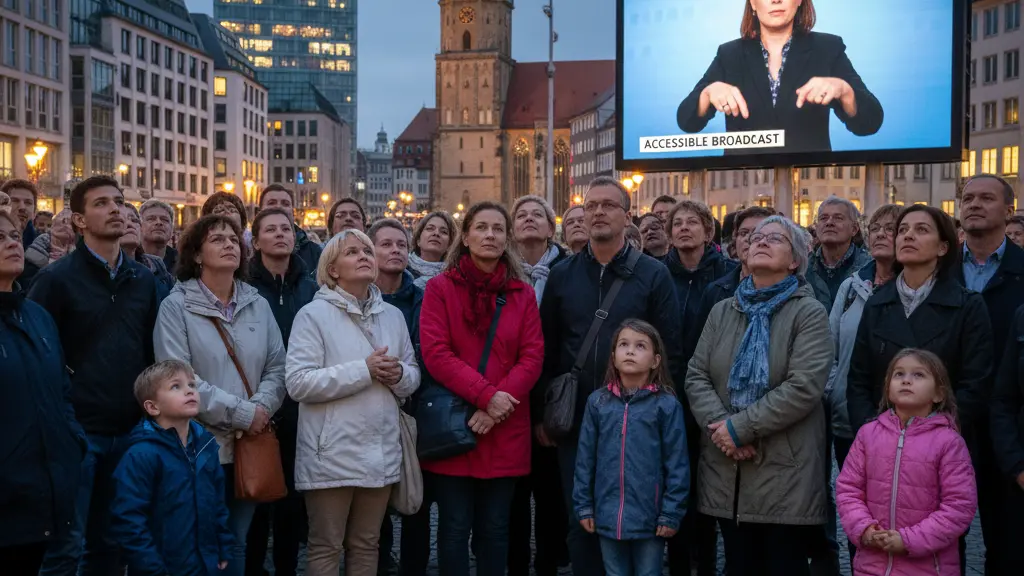
Overview of the May 7 broadcast (with Sign Language)
On May 7, 2026 the 19:30 edition of the regional news program aired with sign language (Gebärdensprache). The bulletin focused mainly on sweeping cost-saving measures announced for the broadcaster through 2028. Viewers heard that leadership is planning deep cuts across personnel, program and production to reduce costs. The report highlighted the emotional impact on staff during the announcement.
Main financial announcement made by management
The director-general announced planned savings of 160 million euros. Management intends to eliminate around 300 positions by imposing a hiring freeze rather than large-scale immediate layoffs. The measures are meant to reduce long-term spending but were described onscreen in a way that conveyed how painful the changes are for employees.
Program changes and their financial effects
The broadcast listed concrete program changes intended to contribute to the savings. A longstanding midday show will end at the close of 2026 after a 13-year run. In addition, one shared daytime magazine will be transferred to a neighboring broadcaster starting 2027, a move that is expected to save about three million euros per year. These steps are presented as part of a package to balance budgets through fewer shows and shared responsibilities.
What these changes mean for viewers and production
Ending a popular format and handing others to partners will reduce the variety of local programming. Production teams, editorial staff and technical crews are likely to see workloads shifted or reduced. While some roles may be preserved through transfers or restructuring, the overall local content offer will shrink and viewers may notice less locally produced material in the schedule.
Accessibility: Sign language inclusion in the broadcast
A clear positive point of the May 7 edition was the use of sign language interpretation. The presence of Gebärdensprache during the 19:30 news underlines the broadcaster’s commitment to accessibility and to making key information available to deaf and hard-of-hearing audiences. This emphasis on barrier-free access stood in stark contrast to the announced reductions in program diversity.
Why sign language matters for news
Sign language interpretation helps ensure that critical announcements reach people who rely on visual communication. In times of major organizational change, accessible reporting keeps all community members informed and able to respond. Maintaining and expanding accessible services is important for public trust and inclusion.
Local cultural notice: Museumsnacht Halle & Leipzig
The program also pointed viewers to the Museumsnacht on May 9, 2026 in Halle and Leipzig. As part of this cultural night, a memorial site opened three locations related to the history of the former one-party dictatorship. One of the offerings is a guided tour of a former central execution site in Leipzig, with sign language interpretation provided during the 19:30 tour, highlighting efforts to make historical education accessible.
Cultural memory and accessible history
Opening sites of historical significance and offering guided tours with sign language interpretation helps preserve collective memory while making that history accessible to more people. These events connect local audiences to difficult parts of the past and demonstrate how accessibility and cultural education can go hand in hand.
Other items covered in the edition
The bulletin briefly mentioned a television episode of a popular crime series that has a connection to Magdeburg. This item was included alongside the larger stories, but the program did not provide extensive detail beyond the local reference. The edition used sign language for major stories, reinforcing the role of barrier-free reporting despite simultaneous program reductions.
Reporting scope and available details
The broadcast combined regional reporting, cultural notices and program news. While it offered clear details about the planned savings and selected schedule changes, some items were short and did not include expanded background. Viewers seeking more in-depth coverage may need follow-up reports as the restructuring unfolds.
Implications and how viewers can respond
The announced savings and program shifts point to a leaner local broadcasting landscape in the coming years. Reduced variety and fewer locally produced shows are likely outcomes. At the same time, the presence of sign language in key broadcasts shows continued attention to accessibility. Viewers and community members can play a role in shaping the future by staying informed and engaging with local cultural events.
- Stay informed by watching follow-up reports and official statements about the restructuring.
- Support accessible programming and public events that include sign language interpretation.
- Attend local cultural events such as Museumsnacht to connect with community memory and educational offerings.
- Engage in public discussions about the future of regional media and local journalism.
