
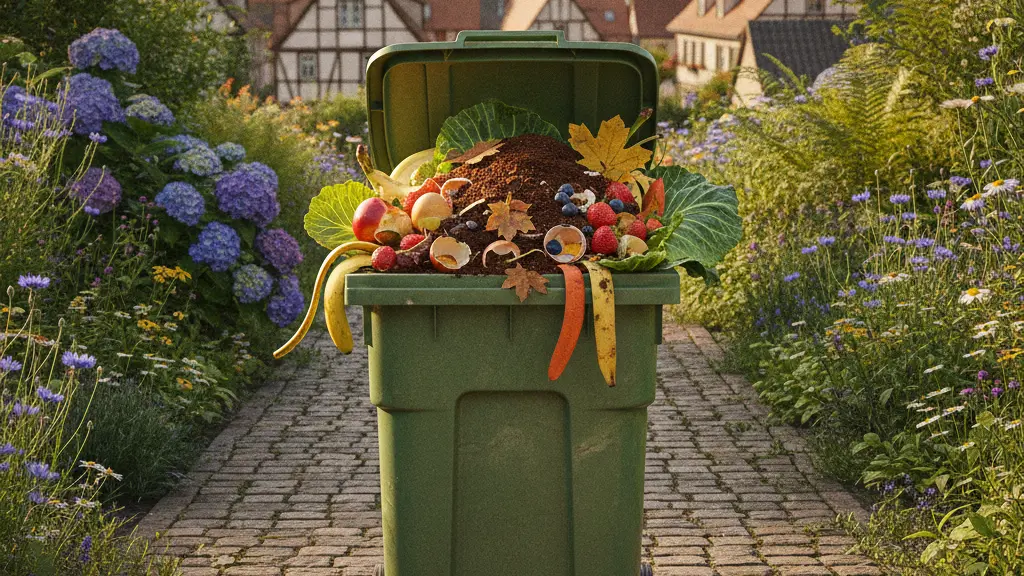
1. Why separating compost and biowaste matters
Separating organic waste correctly is important for producing high-quality compost and biogas and for protecting the recycling process. Clean organic waste leads to better end products and fewer problems during treatment. As one municipal notice puts it: “Whoever separates bio-waste cleanly does good for our climate!”
Benefits of correct separation
- Higher-quality compost and digestate for soil improvement.
- More efficient biogas production when organic waste is used for energy.
- Fewer costs and less effort in cleaning contaminants from bio-waste.
2. What belongs in the biowaste bin (Biotonne)
In current German practice, clean organic wastes generally belong in the biowaste bin (Biotonne). Municipal sources consistently point out that the biowaste bin is intended mainly for plant-based kitchen and garden waste and that keeping contaminants out is essential.
Typical items allowed in the biowaste bin
- Fruit and vegetable scraps
- Garden cuttings and small prunings
- Coffee grounds and tea bags (without metal staples)
- Many kinds of cooked food leftovers (but check local rules for meat and fish)
Note: Rules vary by municipality. Some places accept a wide range of kitchen wastes, while others explicitly exclude certain items such as meat, fish, or large amounts of citrus peels. The safest approach is to follow your local waste statute.
3. What belongs on the home compost heap
The home compost heap follows similar basic principles but often requires more caution to avoid odors, pests, and contamination. Many plant-based kitchen and garden wastes are fine for the compost pile at home.
Usually safe for the garden compost
- Vegetable and fruit scraps (chopped for faster decomposition)
- Garden waste such as leaves, grass cuttings, and small twigs
- Paper like newspaper or plain baking paper to wrap scraps
- Coffee grounds and tea leaves
Items to avoid on the home compost
- Animal carcasses and large amounts of meat or fish (these attract pests and create odors)
- Ash and charcoal (can change pH and contain residues)
- Non-organic contaminants like plastic, metal, or glass
4. Contaminants and items that should not go in either bin
Foreign substances and so-called contaminants damage processing plants and reduce the quality of compost. A clear rule from multiple sources is: keep plastics, metals, and glass out of bio-waste.
Common contaminants
- Plastic bags and conventional plastic packaging
- Metal, glass, and other non-organic materials
- Ash from wood or charcoal
- Animal carcasses and large bones
- Many compostable bioplastic bags (often do not break down quickly enough in treatment plants)
As one source states: “Foreign substances, such as plastic bags, make the recycling process harder.” These materials either damage equipment, lower the quality of compost, or remain as micro-contaminants in the final product.
5. Handling gray areas and practical tips
There are several gray areas—especially regarding food leftovers, meat, citrus peels, and compostable bags. Different municipalities handle these cases differently, so follow local guidance where available.
Follow local rules first
The most reliable rule for users is to follow the local waste statute. Communal authorities may set specific exclusions for items such as meat, fish, or certain packaging. If a biowaste bin is not provided, some waste service providers say food scraps may go into residual waste, but municipal guidance generally emphasizes separate collection when possible.
How to wrap and which bags to use
- Prefer wrapping wet or smelly scraps in newspaper or paper bakery bags without plastic windows, as recommended by some districts (e.g., Landratsamt Unterallgäu).
- Avoid using conventional plastic bags.
- Do not assume that so-called compostable bags will be accepted—many treatment plants cannot break them down quickly enough and they may disrupt processing.
Simple tips to reduce contamination
- Keep a small kitchen caddy for organic scraps and empty it regularly into the biowaste bin or compost.
- Remove visible packaging and foreign materials before disposing of organics.
- When in doubt, check the municipal guidance—rules for meat, bones, and certain peels can vary.
6. Quick reference table
| Item | Biowaste Bin / Municipal Biotonne | Home Compost |
|---|---|---|
| Fruit & vegetable scraps | Yes (clean) | Yes |
| Coffee grounds & tea (no staples) | Yes | Yes |
| Garden waste (leaves, grass) | Yes | Yes |
| Cooked food leftovers | Often allowed (check local rules) | Small amounts possible with care |
| Meat & fish | Often excluded by some municipalities | Usually avoid (pests/odors) |
| Compostable bioplastic bags | Usually not recommended (many plants cannot process them) | Not recommended |
| Plastic, metal, glass | No | No |
| Ash, large bones, carcasses | No | No |
| Always follow your local waste statute for final decisions. | ||
