
1. Fronleichnam in Munich 2026 — an overview
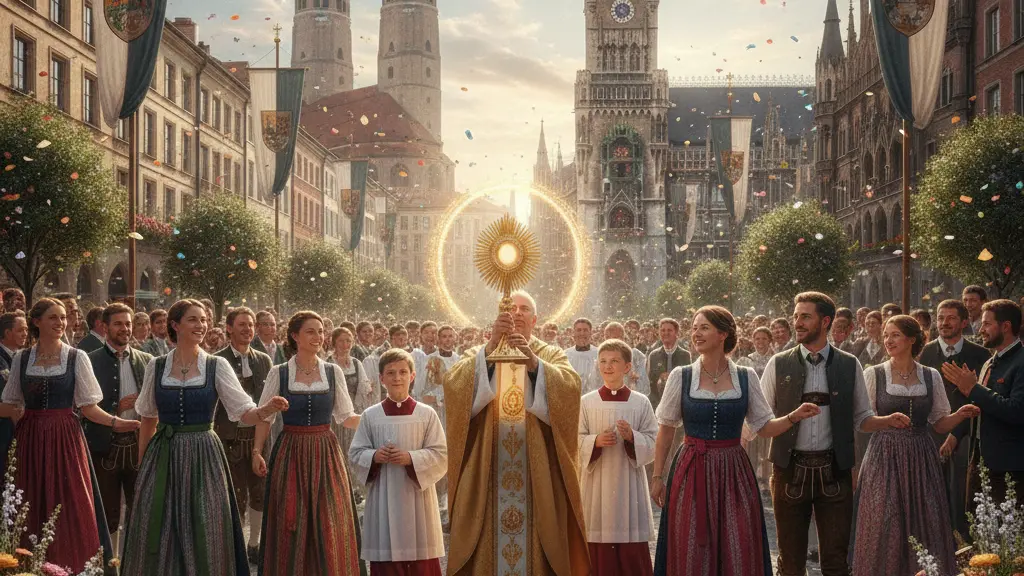
On Thursday, 4 June 2026 Munich will observe Fronleichnam (Corpus Christi), a Catholic public holiday in Bavaria. The day traditionally centers on a festive mass that begins at 9:00 on Marienplatz, followed by a public procession through the city. Thousands of faithful and curious visitors are expected to participate as the consecrated host is carried in a monstrance through the streets, a visible expression of the Eucharist and a long‑standing municipal tradition.
At the same time, the celebration shows how tradition adapts to modern life: organizers prepare rain alternatives and digital access so that people who cannot attend in person can still join. Local media summarize the mood of the day as “from the festive service to the festival”, highlighting the mix of sacred liturgy and lively cultural programming across Munich.
2. Religious significance and liturgy
Fronleichnam is a feast dedicated to the real presence of Christ in the Eucharist. The mass on Marienplatz and the following procession are acts of public worship and witness: the congregation gathers to celebrate the Eucharist, the Blessed Sacrament is displayed in the monstrance, and participants accompany it through key parts of the city. The procession is both a devotional practice and a public sign of faith that has shaped Munich’s urban life for generations.
Tradition and meaning
The procession dates back centuries and remains a deeply symbolic ritual. For many attendees, walking behind the Blessed Sacrament is a moment of prayer and reflection; for passersby it is a visual reminder of the city’s religious heritage. The ceremony connects liturgy, music, and community, and it takes place in a civic setting where narrow streets and historic squares underscore the solemnity of the rite.
Digital participation and weather plans
Organizers plan for contemporary realities: if heavy rain occurs, the outdoor service on Marienplatz can be moved into the cathedral and the procession shortened. In addition, live broadcasts on social platforms make the liturgy accessible to people at home or abroad. These adaptations keep the ritual alive while making participation possible even under difficult conditions.
3. Festivals, concerts and city life
Beyond the religious celebrations, Fronleichnam has become a popular day for culture, food and family activities across Munich. Many residents use the regional public holiday as a chance to visit festivals, open‑air concerts and neighborhood street fairs. The wider June program includes food festivals in urban quarters, multi‑day cultural programs at major culture centers, and a string of concerts and open‑air events at venues across the city and in the Olympiapark area.
- Champions Burger Festival in the Werksviertel area (4–7 June): a popular food and street‑festival atmosphere.
- Multi‑day cultural program at a major culture center (5–6 June): shows and special events across genres.
- Neighborhood and district street festivals starting in mid‑June: free, family‑friendly community events.
- Events at the Olympiapark throughout June: sport, concerts and festival formats that form part of the summer program.
- Large summer culture festival in the Olympiapark South beginning later in June: international cuisine, concerts and environmental activities.
- Film festival and Pride Weeks toward the end of June with major parades and city highlights.
4. Practical information for visitors
If you plan to attend the Fronleichnam mass and procession, expect crowds in the Altstadt and around Marienplatz in the morning. Arrive early to find a good spot for the service or for watching the procession route. Because the day is a regional public holiday, some shops may be closed but many cultural venues and festivals will run special programs. Check official channels for last‑minute updates about changes due to weather and for any livestream schedules.
- Arrive early for the 9:00 mass on Marienplatz if you want a seat or a clear view.
- Bring weather‑appropriate clothing; an umbrella may be useful but keep respectful distance during the procession.
- Follow guidance from church organizers if the service is moved indoors to the cathedral or if the procession is shortened.
- Use public transport to avoid car congestion; many central streets may be closed during the procession.
- Check city ticket platforms for paid concerts and reserve tickets in advance when possible.
5. Suggested day itinerary
Fronleichnam offers a natural split between a reflective morning and a festive afternoon. A simple itinerary helps you combine faith, culture and family time in one day.
- Morning (8:30–11:00): Attend the festive mass at Marienplatz and join or watch the procession as it moves through the city center.
- Late morning (11:30–13:30): Take a stroll to a nearby café or market; many food events and stalls open around central districts.
- Afternoon (14:00–17:30): Visit a neighborhood street festival, a family workshop or pick an open‑air concert or cultural program.
- Evening (18:00 onward): Finish the day with a larger concert, an outdoor show or a relaxed dinner at a festival site or city restaurant.
6. Final thoughts
Fronleichnam 2026 in Munich is a day of contrasts and continuity: a solemn Eucharistic celebration in the morning and a lively festival atmosphere across the city later on. Whether you come for the religious rite, the festivals, or both, plan ahead, respect the sacred moments during the procession, and enjoy the rich variety of cultural events that make June in Munich especially vibrant.
