
Introduction: Why Pentecost Monday Has Become Controversial
Pentecost is one of the major Christian festivals, celebrated fifty days after Easter. In many countries it is associated with deep religious meaning, yet one specific day—the Monday after Pentecost, known in German as Pfingstmontag—has become the focus of heated public debate. In 2026 Pentecost Sunday and Pentecost Monday fall on May 24 and May 25, offering millions a long weekend. That weekend rhythm, and the way people actually spend it, lie at the heart of the controversy over whether the state should continue to protect this day as a public holiday.
This article explains the religious roots of Pentecost, the historical reasons for Pentecost Monday, how the day is observed today, the economic arguments for and against keeping it as a public holiday, and the cultural case people make to preserve it. It aims to be clear and balanced so readers can understand both the theological and social dimensions of this debate.
Religious Meaning of Pentecost
Biblical background
Pentecost is rooted in the New Testament account in the Acts of the Apostles. The story describes the coming of the Holy Spirit as a sudden, powerful event—sound like a rushing wind and tongues of fire—after which the disciples speak in different languages and the mission of the church begins. Many Christians call Pentecost the “birthday of the church” because it marks the start of the early Christian mission.
Liturgical status
Within the church year Pentecost is a high feast. It concludes the Easter season and is celebrated in liturgies with special readings and hymns. However, the festival’s intensity varies: compared with Easter or Christmas, churches often hold fewer services and some congregations mark the occasion with outdoor prayers, youth camps or ecumenical gatherings rather than extensive liturgical programs.
How Pentecost Monday Originated
Pentecost Monday does not have its own separate biblical story. Historically it emerged from the practice of an “octave”—a festal week during which communities extended the celebration of a major feast. Over time the second day of these multi‑day celebrations remained as a distinct holiday even when longer festal periods lost practical relevance.
Legal and administrative decisions in the 19th and early 20th centuries solidified second days for major feasts—Christmas, Easter and Pentecost—as days off in several European regions. Later national constitutions and public holiday calendars incorporated these traditions, so Pentecost Monday became a protected work‑free day in countries with this custom.
In recent years the Catholic Church assigned the Monday after Pentecost a separate memorial in some contexts, but in practice many people continue to understand it primarily as the second day of Pentecost rather than as a distinct religious observance.
Everyday Practice: From Liturgy to Long Weekend
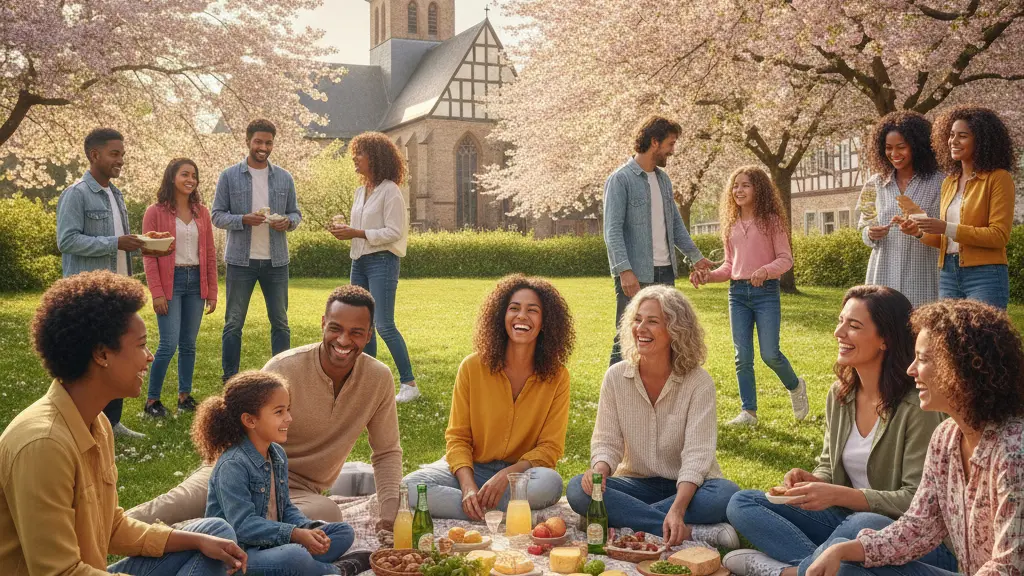
For many citizens Pentecost Monday functions as a social and cultural marker: a guaranteed long weekend that structures travel plans, family visits and leisure activities. Typical uses of the day include short trips, garden barbecues, brunches and outdoor events. Local reports and anecdotal evidence often show roads and tourist spots crowded during this holiday period.
At the same time, church attendance and explicitly religious observance on Pentecost Monday tend to be lower than on the main feast days of Easter and Christmas. Communities sometimes use the Monday for youth camps, ecumenical outdoor services or regional processions, blending religious practice with community celebration. For many, however, the spiritual meaning remains in the background.
The Economic and Political Debate
Economic arguments are central to the debate around public holidays. Business groups and some economic analysts argue that additional work‑free days reduce annual productivity and can have measurable effects on national output. Estimates circulated in public discussions suggest that removing a holiday could raise gross domestic product by a noticeable percentage—figures around 0.6 percent have been cited in such analyses—making holidays like Pentecost Monday an obvious target in productivity debates.
International comparisons feed this argument. In many non‑European countries the Monday after Pentecost is not a public holiday, and some countries in Europe have adjusted or abolished the day as part of broader calendar reforms. Those who advocate modernization point to these examples as models for reducing the number of statutory holidays without eliminating the cultural benefits of communal time off.
Politically the question becomes whether the state should maintain legal privileges rooted in religious tradition when the original religious meaning is less visible in everyday life. Opponents of keeping the holiday emphasize economic costs and the weak theological basis of the Monday itself; supporters warn of social disruption and the loss of predictable collective rest days.
Cultural and Social Arguments for Keeping Pentecost Monday
Despite economic pressures, surveys show that many people oppose the removal of established holidays. For large parts of the population Pentecost Monday is not just a religious relic but a dependable social anchor: it frames family rhythms, supports volunteer and community activities, and creates shared free time that many households plan around.
Trade unions, religious organizations and other groups often defend such holidays as part of a cultural heritage and as protection for workers’ rest. From this point of view, the value of a public holiday cannot be measured only in short‑term economic terms; it contributes to social cohesion, collective rituals and a predictable calendar of休息 and celebration.
Finding a Way Forward: Balance and Options
The debate over Pentecost Monday raises broader questions about how secular states handle religiously rooted holidays and how societies weigh economic efficiency against cultural continuity. Any constructive response requires distinguishing between theological origin and current social function.
Possible approaches for policymakers
- Keep the day as a nationwide public holiday, recognizing its social role as a predictable long weekend and community anchor.
- Introduce regional flexibility, allowing jurisdictions to decide which historic religious second days remain public holidays.
- Convert the holiday into a movable or compensated day off, preserving leisure time without fixing it to a specific religious calendar.
- Promote secular public programming on the day—festivals, volunteering, cultural events—to strengthen shared social meaning beyond religious observance.
- Encourage churches and communities to refresh the symbolic content of the day so that its religious and cultural messages remain accessible.
Any solution should respect that for some citizens Pentecost Monday still has genuine religious importance, while for many others it functions as essential shared free time. Open public debate that addresses theology, history, economic data and social needs can help find balanced reforms that do not reduce the issue to a simplistic trade‑off between faith and productivity.
In short: the discussion about Pentecost Monday is not only about one holiday. It asks how a modern, plural society honors historical traditions, protects collective rest, and adapts public calendars to current social realities while respecting religious diversity. Thoughtful, inclusive deliberation will be key to any future change.
