
1. Overview: Baden-Württemberg Day and the Traditionsfestmeile
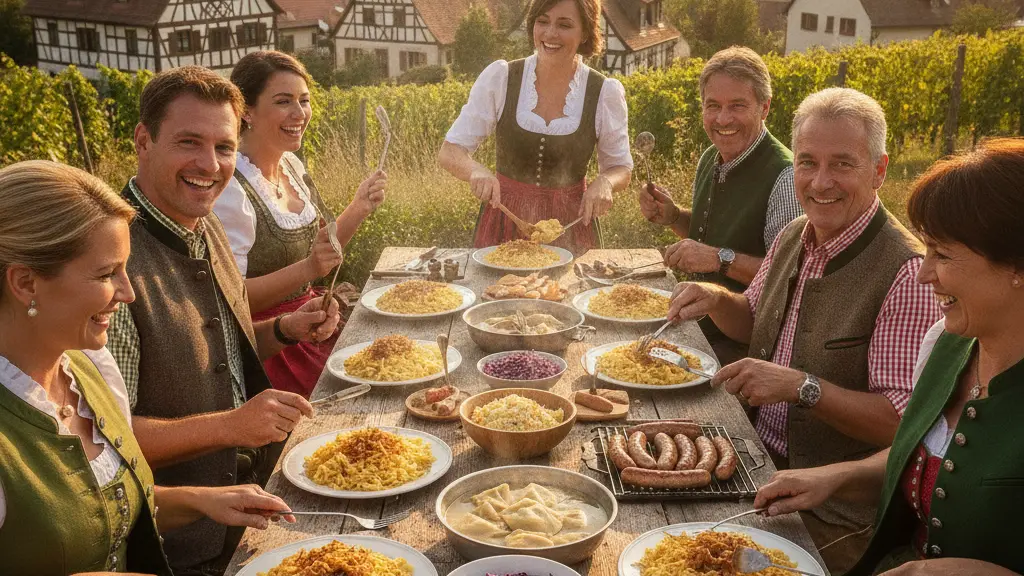
Baden-Württemberg Day, traditionally held within the state Heimattage, concentrates what many people associate with the Ländle on a single Traditionsfestmeile: regional cuisine, active clubs and associations, media attention and a living awareness of tradition. In the city centre the street becomes both stage and a long communal table. Whoever literally or figuratively ‘swings the wooden spoon’ stands in the spotlight of an entire state, making food, hospitality and local identity visible and shareable.
2. Culinary traditions and regional dishes
The festival is a walkable culinary map of the region. Local hosters and volunteer associations bring classics that link southern Germany: Käsespätzle, Maultaschen, bratwurst, hearty stews and regional cakes. Small differences in spice, sauce or garnish mark regional varieties the way dialects mark language. You will also find near-identical specialties shared across Baden-Württemberg and neighboring Bavaria or the Palatinate, showing how food culture crosses administrative borders.
Signature dishes to look for
- Käsespätzle: soft egg noodles with melted cheese and fried onions, a comfort-food favourite.
- Maultaschen: filled pasta pockets, served in broth or pan-fried with onions.
- Bratwurst: grilled sausages made from regional recipes and served with breads or potato salad.
- Hearty stews and one-pot dishes: traditional, filling and made with local ingredients.
- Regional cakes and pastries: local bakers presenting age-old recipes and seasonal specialties.
3. Who swings the wooden spoon: people behind the stoves
The Traditionsfestmeile features a wide range of people at the stoves: professional chefs, volunteer cooks from clubs and associations, hobby cooks and public figures who temporarily take on the role of host. This mix blurs the line between professional catering and communal kitchen work, emphasising participation and hospitality. Local examples show studio leaders and journalists stepping behind cooktops, while volunteer groups present recipes passed down through generations.
Community cooking and social bonds
Shared cooking is a strong social glue. Monthly hobby cooking groups, team-cooking offers for companies, children’s workshops and donation-based cook events all echo the same idea: when people ‘swing the wooden spoon’ together they create food, conversation and community. These activities recreate at small scale what the festival presents publicly—recipes, hospitality and a sense of belonging.
4. The stage and the kitchen: how cooking is presented
At Baden-Württemberg Day the kitchen becomes a stage. Cooking stations are performance platforms where music, storytelling and political exchange can happen alongside recipe demonstrations. The proximity between audience and cook means visitors can ask questions, taste as they go and take home both a nibble and a memory. This staged cooking brings attention to the craft of food preparation and the people who preserve local culinary traditions.
Staged versus everyday cooking
Festival cooking is deliberately performative, but the traditions it shows come from everyday kitchens and clubrooms. There are also contrasting cultural trends: some programmes playfully suggest putting down the spoon to make room for other cultural activities, while elsewhere discussions about automation ask provocatively what happens ‘when robots swing the wooden spoon’. The festival, however, largely celebrates the authenticity and human touch of hands-on cooking.
5. Modern trends: technology, social media and inclusivity
Social media amplifies the festival atmosphere, with short reels and posts showing local cooks, family cooks and themed team events. Portraits of home cooks or ‘Mama Susu’ style features create a link between the festival and everyday kitchens. At the same time, modern event formats—team cooking, cookshows featuring men and women equally, and workshops for children—make the wooden spoon an inclusive symbol: anyone can pick it up, from professionals to school classes.
- Use of local ingredients: a strong focus on regional sourcing and seasonal produce.
- Social media engagement: short videos, recipe exchanges and behind-the-scenes posts.
- Inclusive formats: mixed-gender teams, youth workshops and community cooking.
- Discussion of technology: questions about automation and the role of machines in catering.
6. Visiting tips and why the Traditionsfestmeile matters
If you visit Baden-Württemberg Day, move stand to stand like tasting different dialects of the same food culture: try small portions, talk to volunteers and cooks, join a workshop if possible, and look out for cook demonstrations on stage. Festivals like this are family-friendly and centred on participation—bring curiosity and an appetite.
Why the Traditionsfestmeile matters
The Traditionsfestmeile combines culinary diversity, civic engagement and cultural storytelling. By making kitchens public and inviting people to ‘swing the wooden spoon’, Baden-Württemberg Day connects food with identity, hospitality and regional roots. The event celebrates how everyday cooking and organised festival presentations together sustain the sense of Heimat in the Ländle.
