
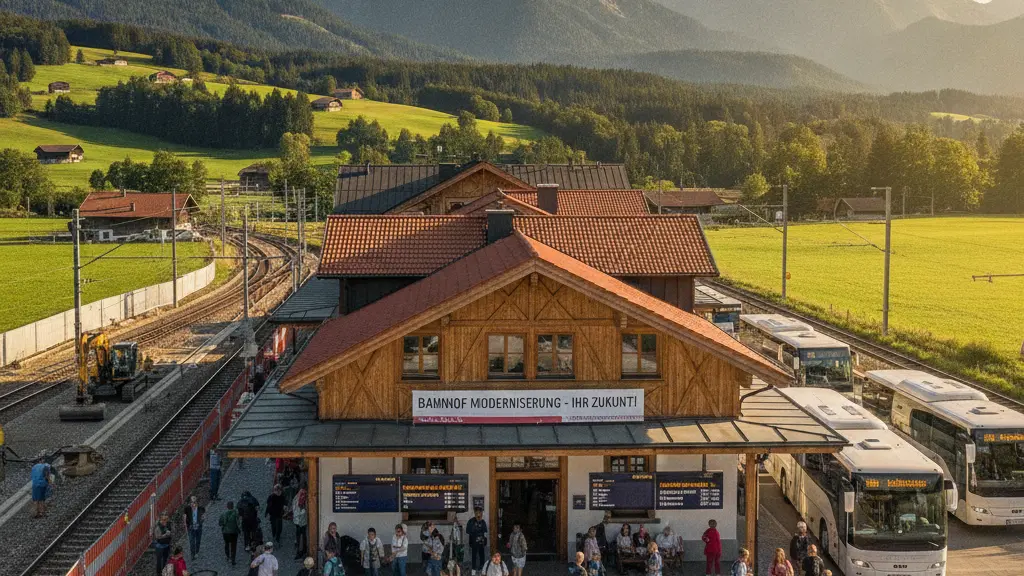
What is happening between Ostallgäu and Lechfeld?
Since early June a large-scale rail construction program is affecting train connections between Ostallgäu and Lechfeld and reaching into the Allgäu region. The work is causing train cancellations, reduced timetables and replacement services that will continue at least until 16 July 2026. The infrastructure operator describes the measures as a mixture of maintenance and modernization of the route; the short-term result, however, is fewer direct regional trains and more timetable deviations.
Timeline and phases
The construction is organized in two clear phases: a core construction phase with the most intensive work, followed by a phase with reduced offerings and replacement transport. Key dates to note:
- Core construction: beginning of June to 6 July 2026 — main works and targeted closures affecting regional services.
- Follow-up phase: after 6 July up to at least 16 July 2026 — reduced services and staged replacement transport on some routes.
Who is affected and how?
The changes mainly hit regional passengers: commuters, school students, seasonal visitors and day-trippers heading into the Allgäu and the foothills of the Alps. Expect more cancellations, longer journey times and forced transfers where direct trains normally run. Local and regional lines are particularly affected, while long-distance services may be reshuffled elsewhere because of the same nationwide modernization pressure.
Main travel impacts
- Train cancellations and partially reduced schedules on regional lines.
- Replacement bus services (Ersatzverkehr) replacing through trains on some sections.
- Longer total travel time because of slower buses and required transfers.
- Increased use of private cars if public options are seen as inconvenient.
Replacement services and timetable adjustments
On affected routes between Lechfeld and the Allgäu replacement buses are being used where through-train operation is not possible. These buses can extend journey times and may require passengers to change between bus and train. The aim of replacement services is to keep connections running, but they are often slower and less frequent than regular rail services.
How replacement transport usually works
Replacement concepts typically include coordinated bus links to key stations, adjusted arrival/departure times, and temporary timetable changes. Operators plan these to limit disruption, but connections can still be complex and may not match the convenience of a continuous train ride.
- Temporary bus shuttles on affected stretches replace direct trains.
- Adjusted train times on the preserved rail sections to match bus arrivals.
- Fewer services during off-peak hours; peak-hour capacity is prioritized where possible.
Why this is part of a wider program
The local works are part of a broader, multi-year modernization program across many lines. The national strategy accepts short-term large restrictions on numerous routes in order to deliver long-term improvements: more reliable, quieter and better-equipped infrastructure. While the long-term benefits should be a more robust network, the short-term effect is a concentration of disruptions on many corridors at once.
Context and comparisons
Similar projects elsewhere show the same pattern: months of intensive works with follow-up phases of replacement transport. Examples from other regions highlight that coordinated construction planning can still place substantial pressure on regional services, sometimes resulting in large numbers of canceled runs and temporary speed restrictions on remaining tracks.
Local station and crossing works in the Allgäu area
Alongside track modernization, there are additional local works such as station upgrades and level crossing renewals within the wider Allgäu and Bodensee region. These projects can affect local accessibility, require temporary traffic arrangements, and influence how passengers reach nearby stations.
What to expect at stations
Station works may change platform layouts, influence how long trains can stop at specific tracks and require careful planning of train lengths. Travelers should expect temporary signs, altered platform access and possible local traffic restrictions around construction sites.
Practical advice: how to travel during the works
Travelers can reduce stress and missed connections by planning ahead. Before each journey check the most recent service information, allow extra time and be ready to switch to a replacement bus or an alternative route. Flexibility and early planning are the most effective ways to cope with the temporary changes.
Concrete tips for travelers
- Always check current traffic messages and timetable updates before you travel.
- Plan generous time buffers—aim for earlier departures for important appointments.
- Be prepared to use replacement buses and to change between modes (train, bus, car).
- Consider alternative routes or departure times to avoid the most affected windows.
- For regular trips (commuting or school routes) look for published temporary timetables and keep a printed or saved copy.
Passenger representatives ask for clearer and earlier information across regions and recommend combining different transport options like regional trains, buses and private cars where necessary. The local operator encourages travelers to follow service notices closely.
Summary and outlook
The rail construction program between Ostallgäu and Lechfeld will continue to shape travel into the Allgäu until at least 16 July 2026. Expect reduced train frequencies, replacement bus services and timetable changes. While these measures create short-term inconvenience, they are part of a wider modernization effort intended to improve reliability and comfort in the long run. For now, plan each trip carefully, allow extra time and check for the latest service updates before you travel.
