
1. Incident overview
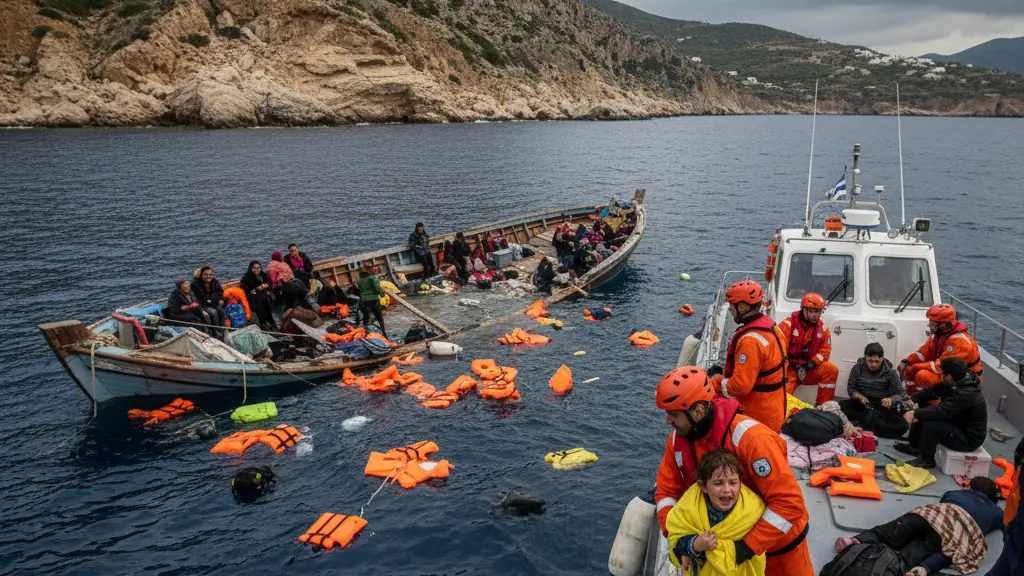
Near the Greek island of Chios in the Aegean Sea, a patrol boat of the Greek Coast Guard and a fast migrant boat collided in a tragic accident in 2026. The migrant boat had been coming from Turkey and was carrying dozens of people. The collision resulted in significant loss of life and multiple injuries, highlighting the dangers of irregular sea crossings in the region.
- Location: Off Chios, Aegean Sea
- Vessels involved: Greek Coast Guard patrol boat and a fast migrant boat
- Date: 2026 (reported in local and national media)
Reports indicate that the incident involved a high-speed contact between a Coast Guard vessel and a boat of migrants. Authorities immediately launched search and rescue efforts and brought injured people to medical facilities in Chios. The exact sequence of events and the cause of the collision remain under investigation.
2. Casualties and injuries
Initial reports indicate that between 14 and 15 people died in the collision. The deputy regional governor, Pantelis Vroulis, confirmed 15 bodies, while police information and other accounts cited 14 fatalities. All confirmed fatalities were reported to be migrants.
Death toll and reporting differences
At least 25 people were taken to hospitals with injuries. Among the injured were children — reports cite eleven children in hospital in some accounts and seven in others — a pregnant woman, and two members of the Coast Guard. The mix of ages and the presence of pregnant women and children underline the acute vulnerability of those aboard.
Injuries and vulnerable people
3. Search and rescue operations
A comprehensive search and rescue operation was launched following the collision. Greek authorities deployed helicopters from the air force and used thermal imaging equipment to search for survivors and bodies in the water. The search continued as more people were believed to remain in the sea after the incident.
Rescue teams and vessels worked to bring injured people to the port of Chios, and medical teams received and treated those transported to local hospitals. Authorities reported that injured people were being continuously brought ashore as the operation progressed.
4. Possible cause and investigation
The exact cause of the collision has not been determined. According to the Greek broadcaster ERT, the Coast Guard gave a warning signal, and the migrant boat then attempted to evade, which led to the collision. That account is part of ongoing inquiries but does not by itself establish final responsibility.
Authorities are investigating the circumstances of the accident to establish the sequence of events and any contributing factors. Investigations typically include interviews with survivors, Coast Guard crew, and examination of vessel damage as well as any available video or electronic records.
5. Broader migration context and statistics
This incident underlines the wider risks associated with boat migration from Turkey to the Greek Aegean islands. Since the start of the year, nearly 1,000 migrants are reported to have crossed to the Aegean islands, reflecting continued pressure on these routes.
On a broader scale, international agencies report large numbers of deaths and missing persons in the Mediterranean and Atlantic. The UNHCR has recorded more than 1,700 people dead or missing in these waters since the beginning of the year, and the International Organization for Migration (IOM) records roughly 33,000 deaths and disappearances across the central Mediterranean routes since 2014. These figures provide context for the persistent danger of irregular sea journeys.
6. Humanitarian concerns and next steps
The collision near Chios raises urgent humanitarian and operational concerns: the need to continue search and rescue efforts, to provide medical and psychological care for survivors and families, and to clarify what happened so steps can be taken to prevent similar tragedies. Local and national authorities are coordinating rescue, medical care, and the investigation.
As the investigation proceeds, officials will aim to determine the causes and responsibilities, while humanitarian agencies and local services focus on supporting survivors and handling the identification and care of victims. The event is a reminder of the persistent risks facing migrants on sea routes between Turkey and the Aegean islands and the heavy toll such incidents can take.
