
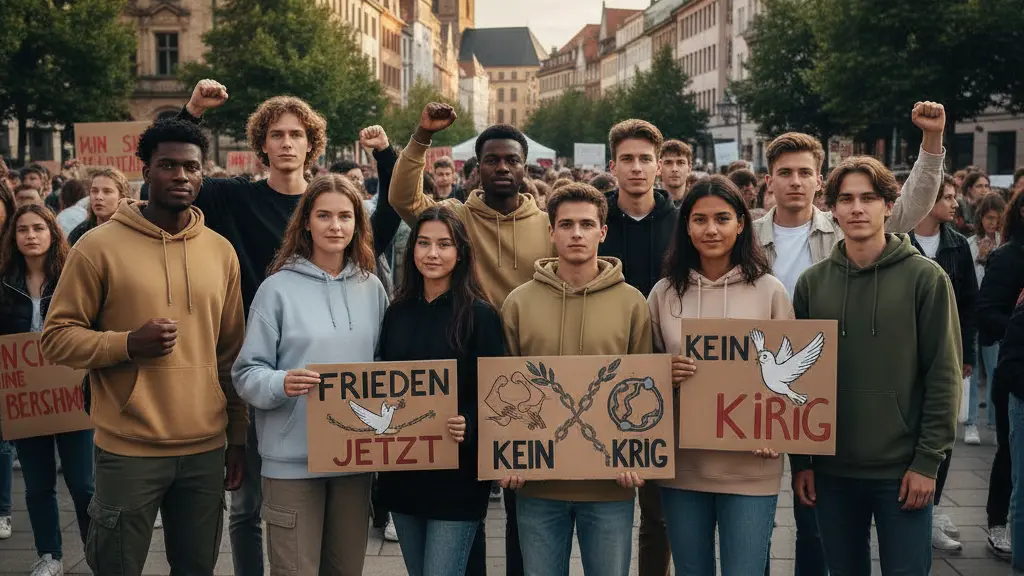
Overview of the student protests
In early 2026, students across several German cities have taken to the streets to protest a recent Wehrdienst reform passed by the Bundestag. The reform requires a mandatory Musterung (medical and suitability assessment) for young men born in 2008 or later, while the actual military service remains voluntary for the moment. Despite the risk of being marked as unexcused absences from class, pupils are organizing large demonstrations and school strikes to voice their opposition to changes linked to military service, conscription, and the draft.
Key facts at a glance
- New Wehrdienst reform: Bundestag decision introduces mandatory Musterung for young men born in 2008 and after.
- Service status: Musterung is required, but actual service remains voluntary initially.
- Widespread protests: Students have organized demonstrations in multiple cities despite school-time absences being classified as unexcused.
- Main organizer mentioned: the alliance ‘Schulstreik gegen Wehrpflicht’ played a role in recent actions.
Hamburg demonstration on 20 February 2026
On 20 February 2026, more than 1,200 students gathered in front of Hamburg’s town hall to protest the Wehrdienst reform. The demonstration, organized by the alliance ‘Schulstreik gegen Wehrpflicht’, featured banners and posters with clear anti-draft messages. Authorities in the school system have made it clear that participation during school hours will be recorded as unexcused absence, creating a conflict for pupils who choose to join the protest.
Organizer and message
- Organizer: Bündnis ‘Schulstreik gegen Wehrpflicht’ (School Strike Against Conscription).
- Central messages: opposition to reintroducing measures tied to conscription and concern about being funneled into military service.
- Notable slogan used by demonstrators: ‘Wir sterben nicht in Euren Kriegen’ (“We will not die in your wars”).
Spread and scale of protests
These February actions followed earlier waves of student protest in December, when thousands of pupils demonstrated in Hamburg, Munich and other cities. The movement has shown the ability to mobilize large numbers of young people in different regions, signaling sustained concern about the implications of the Wehrdienst reform and any return to broader mandatory military obligations.
Where protests are growing
- December protests: large demonstrations in Hamburg, Munich and other cities drew thousands of participants.
- February action: significant turnout in Hamburg (20 February 2026) with over 1,200 students.
- Planned rallies: further big gatherings are scheduled in Saxony, where organizers expect strong support.
School response and potential consequences
School authorities have warned that taking part in protests during lesson times will be treated as unexcused absence. This classification means those missed lessons are officially recorded as unauthorized. Reports from the protests also note that students risk what some media describe as ‘Schwänz-Ärger’ — trouble or disciplinary consequences for skipping classes to attend demonstrations.
What ‘unexcused absence’ means here
In this context, unexcused absence refers to missed school time that is not authorized by the school. It is recorded in attendance registers and can lead to school-level follow-up, which students and parents need to consider when deciding whether to join protests during school hours.
Why students are protesting
Students say they oppose measures that bring their generation closer to mandatory state control over military readiness. The requirement for a Musterung worries many young people because it is a formal step tied to conscription systems, even if service is voluntary for now. Demonstrators express ethical objections to being prepared for war and use slogans that emphasize refusal to be sent into conflict, reflecting deep concern about the broader political implications of the reform.
What comes next
Protesters plan further large demonstrations, particularly in Saxony, where significant rallies are expected. The demonstrations indicate ongoing public debate about the Wehrdienst reform and how mandatory Musterung will affect young people. As students and school authorities continue to react to the reform and to each other, the situation remains dynamic and closely watched in multiple cities.
