
1. What the school strike is about
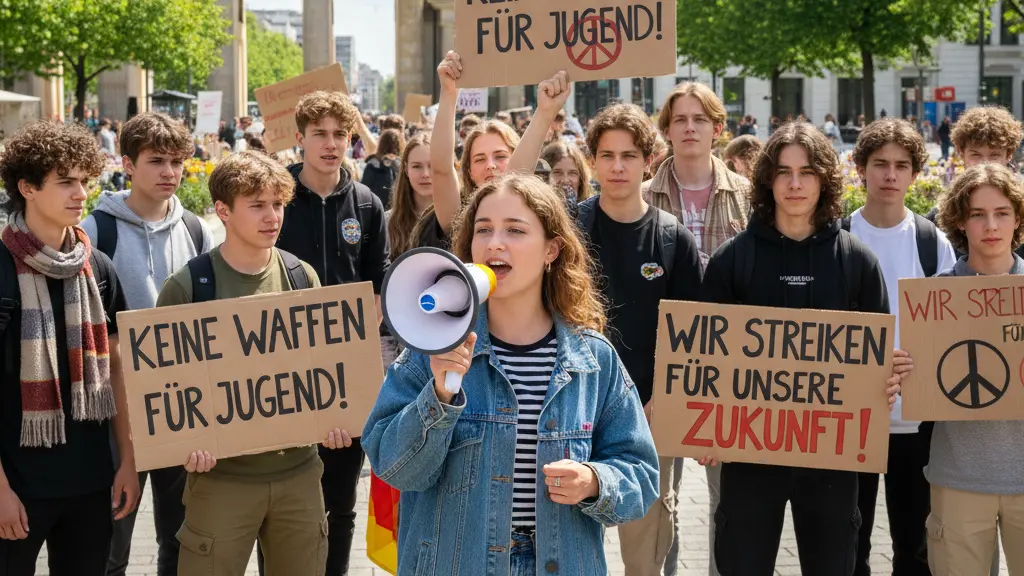
In recent weeks in Germany, a growing school strike against the reintroduction of mandatory conscription has seen pupils and young people skipping classes to protest plans announced by Defence Minister Boris Pistorius to bolster the armed forces. The action, inspired in part by youth climate movements, brought demonstrators into city centres with slogans like “No guns for youth” and clear demands against compulsory military service.
Who is taking part and why
Participants include secondary school students and youth groups who say they are striking to protect their future rather than to cause disruption. Activists such as Clara Mayer from the group “Youth against Conscription” have framed the walkouts as peaceful political protest against policy choices that would reintroduce conscription.
2. Legal basis and possible penalties
School authorities and police are responding by invoking school attendance laws that treat unexcused absences as administrative offences. Under these rules, authorities can issue fines of up to €1,000 per person for skipping school. Police and school officials have stressed that maintaining public order is a priority and that absences for protest are not automatically excused.
Conflicting legal views
Legal opinion is divided. Some lawyers advise affected students to challenge fines in court, arguing that school strikes can be a form of civil disobedience and should be protected as political expression. Other legal commentators warn that courts often rule against striking students and that parents can be held liable for fines in many cases. The mix of opinions has left families and young protesters unsure how enforcement will play out.
3. Scale of the protests and regional differences
The strike movement has reached significant numbers: several thousand students have participated nationwide, and statistics show thousands of fines and related measures tied to absences. Enforcement varies by state: some regions issue formal fines quickly, while others limit initial responses to warnings. This patchwork approach means the consequences depend heavily on local policy.
| Figure | Reported value |
|---|---|
| Estimated students affected | over 10,000 |
| Recorded fines or administrative cases | around 2,300 |
| Examples from one state | more than 500 fines issued |
| Typical maximum fine | €1,000 per person |
| Note | Enforcement and exact numbers vary by region |
4. Reactions: politics, unions and youth leaders
The debate around the strike is heated. Youth leaders insist fines will not end their protests, while some political actors have welcomed stricter enforcement as necessary to uphold rules. Teacher and educator representatives have urged alternatives to strikes, such as petitions and organised civic engagement, and public officials emphasise maintaining order in schools.
Voices on both sides
Supporters of the protesters underline the moral argument: young people raising their voices on a major public policy should be heard. Opponents stress legal duties and potential consequences: when students miss school without permission, authorities say sanctions are a legitimate tool. This split has produced a national conversation about civil disobedience, civic rights, and the limits of protest in educational settings.
5. Practical advice for students, parents and schools
Because the situation combines political protest with legal risk, those involved should be informed and cautious. Key concerns include the risk of fines, possible parental liability, differing regional rules, and the prospect of legal challenges. Teachers’ representatives have recommended pursuing petitions and formal channels as alternatives to unauthorised absences.
Steps to consider
- Know the risks: fines can reach up to €1,000 and parental liability is possible in many areas.
- Document everything: keep records of planned actions, communications with schools, and any official notices.
- Seek advice: consider legal counsel if a fine is issued; some lawyers recommend court challenges based on civil disobedience protections.
- Consider alternatives: petitions, organised after-school protests, and formal civic engagement can make voices heard without triggering attendance penalties.
- Communicate: students and parents should talk with school officials beforehand where possible to understand local rules and consequences.
