
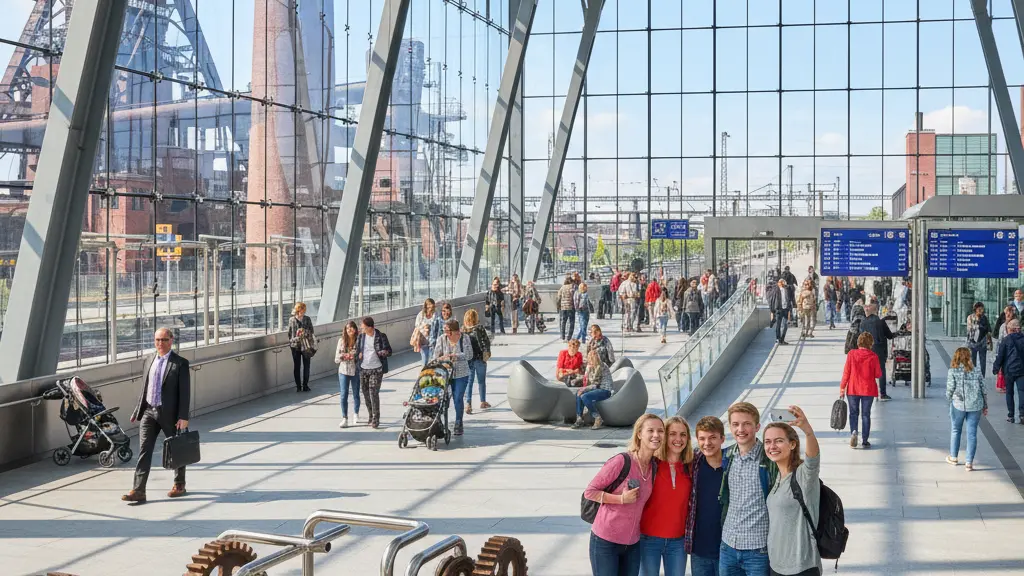
Overview of the VRR Stations Report 2025
The Verkehrsverbund Rhein-Ruhr (VRR) published its Stations Report 2025 covering the condition and quality of 296 railway stations and stops. The findings show a divided picture: many large stations perform well, while numerous small and medium stations face significant modernization deficits that affect the passenger experience.
Overall ratings in the report are mixed: 151 stations received the ratings “ausgezeichnet” or “ordentlich”, 122 were classified as “entwicklungsbedürftig” and 15 were considered “nicht tolerierbar”. Accessibility has improved notably — almost 90 percent of passengers now benefit from step-free access.
Major Stations: Examples of Good Practice
Large and well-invested stations stand out as positive examples in the report. Stations such as Herne-Wanne-Eickel, Essen Zollverein Nord and Xanten are highlighted for their good facilities, clear signage and overall maintenance. These stations demonstrate how modernization, accessibility and regular upkeep can improve the daily travel experience for many passengers.
Highlights from top-performing stations
- Herne-Wanne-Eickel: praised for well-maintained platforms and passenger facilities.
- Essen Zollverein Nord: notable for accessibility and clear information systems.
- Xanten: presented as an example of good station upkeep and traveler comfort.
Smaller and Medium Stations: Where Problems Remain
While many big stations perform well, the report makes clear that smaller and medium-sized stations often struggle with modernization and maintenance. Problems include outdated infrastructure, cleanliness shortfalls and lack of investment, which can reduce the attractiveness and safety of public transport for local passengers.
Problem hotspots named in the report
- Hattingen Mitte: cited for litter and persistent dirt.
- Essen West: reported issues with smells and a generally poor impression.
- Oberhausen Hauptbahnhof: affected by graffiti and hygiene problems that interfere with passenger comfort.
Ratings breakdown
| Category | Number of stations | Share of 296 stations |
|---|---|---|
| “ausgezeichnet” or “ordentlich” | 151 | 51.0% |
| “entwicklungsbedürftig” | 122 | 41.2% |
| “nicht tolerierbar” | 15 | 5.1% |
| Total | 296 | 100% |
What Needs to Happen Next: Recommendations and Passenger Impact
The Stations Report 2025 underlines that targeted measures are needed to close the gap between high-performing major stations and many neglected smaller stops. Improving cleanliness, tackling graffiti, removing odors and investing in modernization will help make regional public transport more attractive and reliable.
Priority actions
- Focus investments on modernization of small and medium stations to eliminate infrastructure deficits.
- Introduce regular cleaning and rapid graffiti removal to improve station hygiene and safety.
- Maintain and extend accessibility upgrades so that step-free access reaches remaining passengers.
- Use monitoring and passenger feedback to identify problem hotspots and track progress.
Passenger benefits and outlook
Passengers already benefit from a clear improvement in barrier-free access, with nearly 90 percent able to use step-free routes. Continued investment in small stations, better maintenance and targeted modernization will help ensure that more travelers can rely on comfortable, clean and accessible public transport across the VRR region.
