
1. Incident overview: Missing persons on the Rhine near Biblis
Three men are missing after separate bathing accidents in the Rhine near Biblis in Südhessen. The first person, a 50-year-old man, went swimming in the Rhine in the afternoon at about 15:45 and did not return. Later the same day two more men, aged 23 and 27, were reported to have disappeared under water in the area described as the N-Baustelle / N-Rampe. Extensive search operations were launched but so far there have been no recoveries.
Search operations and official statements
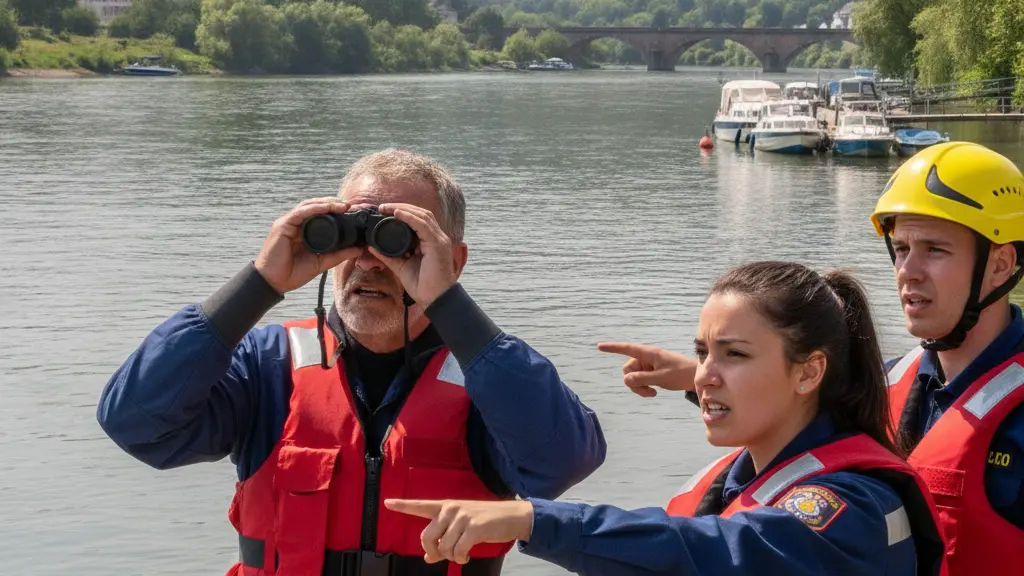
Authorities deployed multiple units to search for the missing men. The response included the water police (Wasserschutzpolizei), a police helicopter, the fire brigade, emergency medical services (Rettungsdienst) and the DLRG. According to an official message cited by the police, investigators said rescue teams must “assume the worst” in this case.
- Immediate alarm and scene coordination by local police.
- Search by water police and rescue boats.
- Aerial searches with a police helicopter.
- Support from fire brigade, emergency medical services, and DLRG teams.
2. Regional context: Bathing bans and public warnings
This incident comes amid a wider pattern of warnings and formal bathing bans along the Rhine. Local authorities in many Rhine cities have issued restrictions because of dangerous currents, heavy ship traffic and difficult-to-assess shoreline conditions. These bans aim to reduce the number of bathing accidents and protect people from the river’s hidden hazards.
Where bans currently apply and legal consequences
Bathing prohibitions have been reported in several cities along the Rhine. Authorities in many locations emphasize that violations can lead to fines of up to 1,000 euros. At the same time, some areas such as Bonn and the Rhein-Sieg-Kreis had not issued general bans at the time of the incidents, illustrating that rules vary by region.
Why authorities are strict: hazards on the Rhine
The Rhine presents several hazards that make unsupervised swimming dangerous: strong and variable currents, large commercial ship traffic that creates wakes, hidden drop-offs and quickly changing water levels. Many parts of the riverbank are difficult to exit safely, and conditions can change within minutes.
3. Local advice and official guidance
Cities with active bans warn residents and visitors to avoid entering the river. For example, officials in Duisburg have been explicit: if you see someone in danger in the Rhine, immediately alert rescue services and do not jump in yourself. They stress that swimming in banned areas is illegal and that safe alternatives are limited to designated bathing and outdoor pool facilities.
- Report emergencies immediately to local rescue services.
- Do not enter the water to attempt a rescue unless you are trained and properly equipped.
- Use only supervised, designated bathing sites for swimming.
4. Safety recommendations from rescue organizations
Rescue organizations link these missing-person cases to a broader summer trend of serious bathing accidents. They repeatedly advise clear safety rules to reduce risk and prevent tragedies.
- Swim only at lifeguarded or supervised bathing places.
- Never swim under the influence of alcohol or drugs.
- Avoid swimming in flowing waters such as rivers and currents, including the Rhine.
- Assess your own swimming ability honestly and do not overestimate yourself.
- Do not rely solely on swimming aids like arm floaties; these are not a substitute for supervision and skill.
5. What to do if you see someone in trouble
Bystander response can make a crucial difference, but it must be safe. Trained rescuers are best equipped to handle water emergencies; untrained attempts can increase the number of victims. Follow these steps if you encounter a person in danger in the river.
- Call emergency services immediately and give a clear location and description (if possible, note markers like the N-Baustelle / N-Rampe or nearby landmarks).
- Keep visual contact with the person and shout instructions to help keep them calm.
- If you can do so safely from shore, offer a buoyant object on a rope or long pole—do not enter the water yourself.
- Follow dispatcher instructions and prepare to guide rescue teams to the precise spot.
- Provide any first-aid information to responders when they arrive.
6. Wider trend, final thoughts and next steps
The missing-person cases near Biblis underline the dangers of the Rhine in summer: strong currents, heavy ship traffic and deceptively calm-looking water can quickly become deadly. The recent Pentecost weekend in 2026 saw a particularly high number of fatal bathing incidents nationwide, reinforcing calls for caution.
Authorities continue search efforts and investigations. For the public, the clearest advice is to obey local bans, use only designated swimming areas, follow guidance from rescue organizations, and call emergency services immediately if someone is in danger. These measures help protect individuals and support rescue teams working to save lives.
