
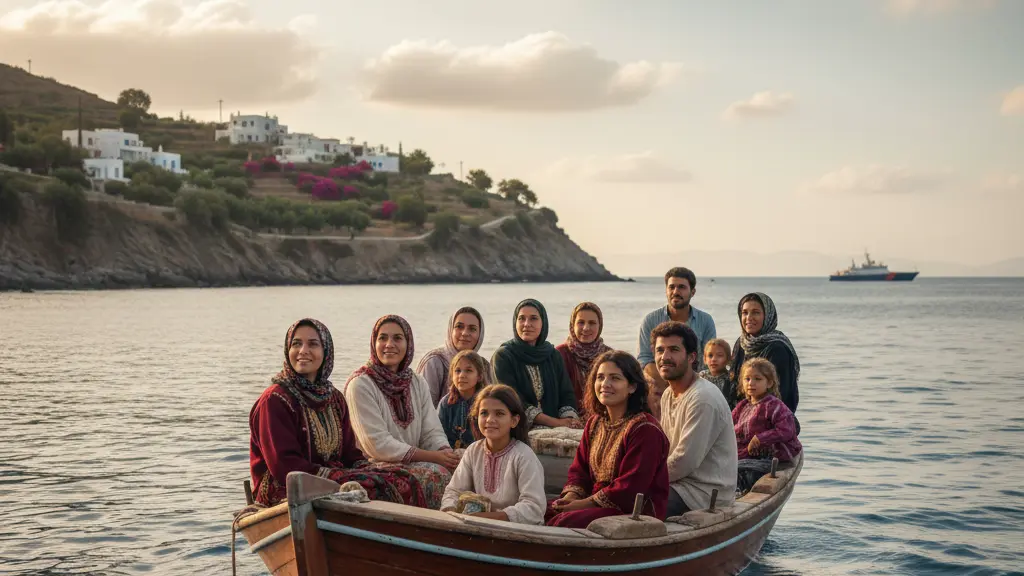
1. What is known about the reported collision
A headline reports that a migrant boat collided with the Greek coast guard near an island in the Mediterranean and that 14 people died. Based on the available information from the provided context, there are no detailed, independently verifiable reports about the specific incident that would allow a full, confirmed narrative. The context is from 2026 and makes clear that search results did not produce specific, corroborated coverage of this particular event.
Limits in available information
The sources summarized in the context are general and investigative in nature but do not supply the multiple, direct reports needed to confirm the collision, exact sequence of events, passenger numbers, or official findings. The summary explicitly notes only four relevant sources were found instead of the ten that would be preferable for a reliable narrative, so conclusions about cause or responsibility should be avoided until further verification is possible.
- Reported claim: migrant boat collision with Greek coast guard, 14 dead.
- Verification status: insufficient corroborating sources in the provided context.
- Recommended immediate step: seek official statements and independent eyewitness or NGO reports before drawing conclusions.
2. Broader context: migration policy and past maritime incidents
Even when a single incident is not fully documented in the sources at hand, it is important to understand the larger context in which such tragedies happen. The Mediterranean has seen repeated dangerous crossings, and debates over search and rescue, pushbacks, and the role of coast guards and EU agencies shape both the risks people face and how incidents are reported and investigated.
Past allegations of pushbacks and capsizings
The context refers to historical allegations in which survivors have accused the Greek coast guard of actions that led to boats capsizing. One account cited a Syrian survivor who said the coast guard caused a boat to capsize and was responsible for many deaths. Such testimonies are serious and have been part of wider reporting and documentary work that questions practices at sea and the treatment of people attempting irregular crossings.
Search and rescue, Frontex, and documentary evidence
Documentaries and investigative pieces referenced in the context highlight repeated incidents of boats found capsized after prior sightings by EU agencies. These sources criticize restrictive migration policies that appear to deprioritize lifesaving search and rescue operations. The presence or sightings by agencies such as Frontex before some accidents has raised questions about coordination, responsibility, and whether more could have been done to prevent loss of life.
- Concern: delayed or inadequate search and rescue responses.
- Concern: possible use of pushbacks that increase danger to boats and passengers.
- Impact: these dynamics can lead to higher numbers of drownings and fewer opportunities for independent investigation.
3. Policy developments, third-country agreements, and human rights concerns
The wider policy environment affects how migration flows are managed and how incidents at sea unfold. The context notes contrasting perspectives: EU officials and some reports point to a 25% reduction in irregular migration in 2025 following agreements with countries such as Tunisia, while human rights advocates report serious allegations of violence and torture linked to those arrangements. National initiatives, including proposals for third-country models for returns, are also part of this evolving picture.
Risks for vulnerable people and gender-specific concerns
NGOs and academics cited in the context warn that restrictive policies and third-country return models can expose vulnerable migrants—especially women—to gender-based violence and other harms. These warnings emphasize that migration policy decisions have direct human consequences and that safeguards are needed to protect asylum seekers and migrants from abuse, exploitation, and unsafe returns.
- Vulnerable groups: women, children, survivors of torture and trafficking.
- Documented risks: gender-based violence, arbitrary detention, lack of access to protection.
- Advocacy calls: include gender-sensitive protections and independent monitoring of return arrangements.
4. What to watch next and recommended actions
Given the limited verified information about the reported collision and fatalities, careful, responsible follow-up is essential. Authorities, journalists, and civil society should prioritize verification, transparent investigations, and the protection of survivors. At the same time, policymakers should keep humanitarian obligations and human rights safeguards at the center of any migration agreements or operational practices at sea.
- Verify: seek multiple independent sources, official statements, and eyewitness or NGO reports before publishing or concluding.
- Investigate: call for independent, transparent inquiries into maritime incidents that allege force, negligence, or pushbacks.
- Protect life at sea: advocate for robust search-and-rescue capacity and unhindered humanitarian access.
- Monitor policy effects: assess how third-country agreements and return models affect vulnerable people, including gender-specific impacts.
- Support survivors: ensure access to medical, legal, and psychosocial support for those affected.
