
1. What is the Maypole (Maibaum)?
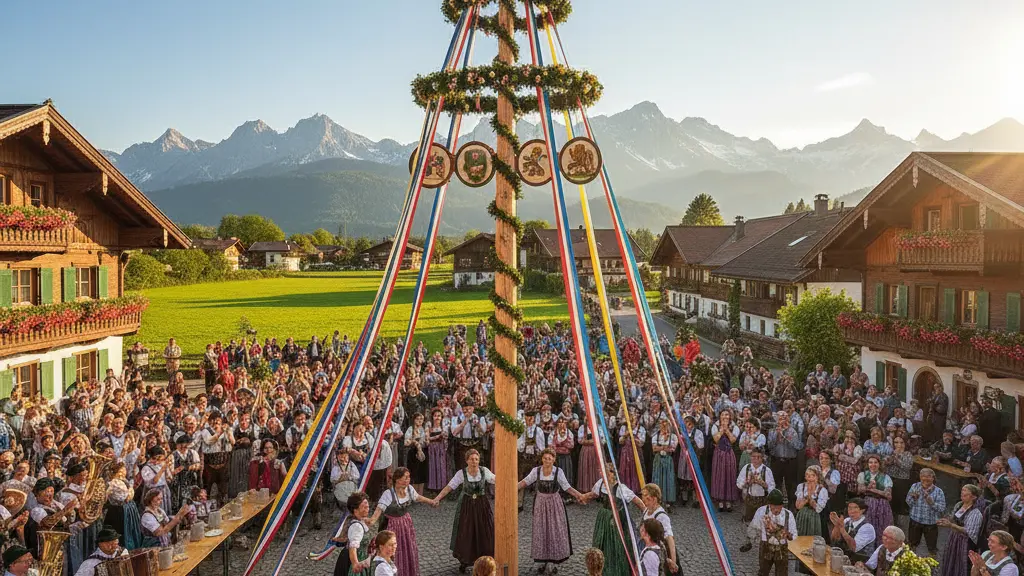
The Maypole, known in German as the Maibaum, is a classic spring tradition in Germany, Austria and South Tyrol. Typically a tall spruce or fir trunk decorated with colorful ribbons, wreaths and local signs, it stands as a symbol of new life and the arrival of spring. Communities raise the Maibaum on May 1st with music, dance, competitions and communal celebration; in many places the tree is playfully ‘stolen’ by neighbors beforehand as part of the fun.
2. Origins and symbolism
The Maibaum has deep roots in Germanic fertility rites and seasonal rituals. The custom was revived and romanticized in the 19th century, becoming a visible symbol of local pride and rural identity. The decorated tree conveys renewal, fertility and community bonds—an outward sign that winter has ended and life is beginning anew.
Historical highlights
- Ancient: Linked to pre-Christian, springtime fertility practices.
- 19th century: Popularized again through Romantic-era interest in folk customs.
- Modern: Blends village pageantry with regional music, dance and competition.
3. Where to celebrate in 2026
In 2026, several central Maibaum events are planned across regions famous for their Maypole traditions. These gatherings offer a chance to see regional variations and big community celebrations.
- Bavaria: Munich (Viktualienmarkt) and Oberammergau — large public celebrations with traditional music and processions.
- Swabia: Stuttgart — urban events mixing city entertainment with folk elements.
- Black Forest: Freiburg — regional customs and community-focused festivals.
- Saxony: Dresden — local clubs and groups erect symbolic poles with music and dance.
- Austria: Salzburg and Innsbruck — alpine variants and hearty local food traditions.
4. Traditions, activities and events
Maibaum celebrations combine spectacle with participatory customs. Expect brass bands, folk dancing, family-friendly activities and contests. Many towns add local flavors—such as climbing contests, specific food traditions and unique decorations that reflect regional identity.
Maibaumklettern and competitions
One popular attraction is the Maibaumklettern, a test of strength and skill where participants climb the polished trunk to reach prizes. Other contests can include log-throwing, dancing competitions and best-decorated Maibaum awards.
Music, dance and food
Traditional brass bands, folk dancers in regional costume and communal feasting are central to the atmosphere. In many places local food such as sausages and pretzels are staples—events often feature Wurstessen (sausage feasts) that bring people together around shared regional tastes.
The playful ‘stealing’ of the tree
A charming local ritual is the playful abduction of the Maibaum by neighboring villages or youth groups. The tree is secretly taken and held until a friendly ransom—often beer, sanctioned festivities or a challenge—is paid. This custom strengthens local bonds and adds lively competition to the celebrations.
5. Practical tips for visitors in 2026
If you plan to attend a Maibaum celebration, a little preparation helps you enjoy the day. Events take place outdoors and can be crowded, so dress for changeable spring weather, wear comfortable shoes and arrive early for good viewing spots. Respect local customs and any event rules—many celebrations are family-oriented and organized by clubs volunteering their time.
- Check local start times and meeting points for the Maibaum raising.
- Bring warm, waterproof layers—spring weather can be unpredictable.
- Arrive early to find space for dances and competitions.
- Carry small local currency or check payment options for food stalls.
- Join in respectfully: clap, sing along with bands and follow local etiquette.
6. Tradition vs. adaptation: the debate in 2026
As climate patterns shift, some organizers advise more weatherproof planning and contingency measures for outdoor festivals. At the same time, many traditionalists insist on preserving the original timber construction and hand-raising methods without machines. This tension is part of an ongoing conversation about how to keep customs alive while adapting to practical challenges.
As the Bavarian Brauchrat puts it: “Der Maibaum verbindet uns mit der Naturkraft des Frühlings”—a reminder that the Maypole remains a living symbol connecting people to the season and to one another, even as practices evolve.
7. Final notes
Whether you seek lively town festivals, intimate village traditions or regional specialties like Maibaumklettern and Wurstessen, Maypole celebrations in 2026 offer a vivid taste of springtime culture across Germany, Austria and South Tyrol. Plan for weather, arrive with an open spirit and enjoy the music, dance and community that make the Maibaum a beloved spring ritual.
Keywords: Maypole celebrations, Maibaum, May Day, spring ritual, German traditions, Bavarian customs, Maibaumklettern, Wurstessen, festivals 2026, community events, climate planning.
