
1. Overview
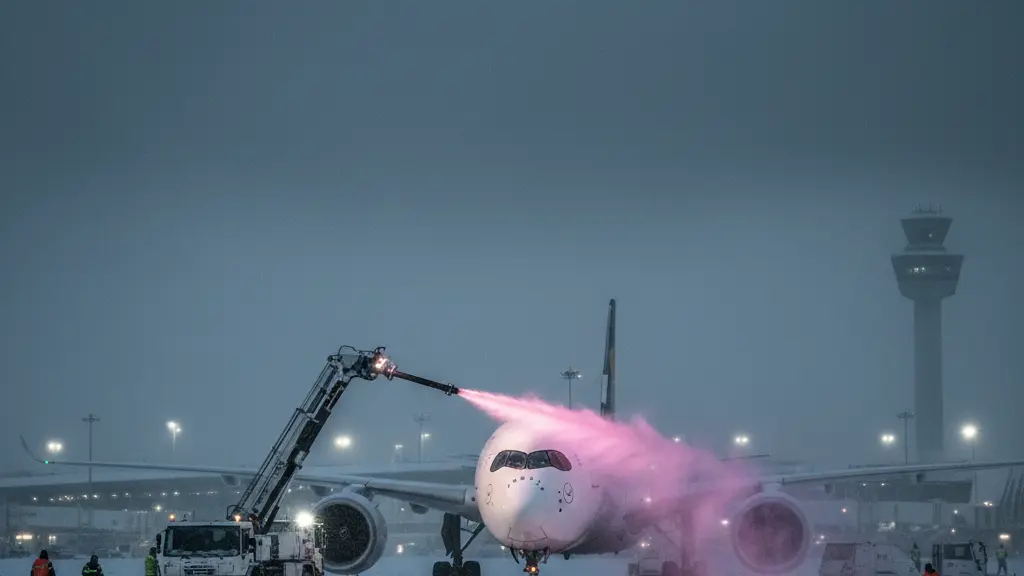
Hamburg Airport faced significant disruption over the weekend around January 6–7 as winter storm “Elli” brought heavy snow, freezing rain and strong winds to northern Germany. The combination of snowfall, icy conditions and disturbances at major European hubs led to flight cancellations, widespread delays and a continuous winter service effort on the airfield. Airport teams used large de-icing and snow‑clearing machines nicknamed the “Elephants” to try to keep runways and aircraft safe and operational.
2. What happened on January 6–7
The immediate cause of the disruptions was the winter storm Elli, which had already affected the region in the days before the weekend and returned with renewed intensity. On the Friday before the worst of the weekend conditions the airport reported dozens of flights cancelled — for example, 25 departures and 22 arrivals were called off — as snow, ice and knock-on effects from other European hubs put schedules out of sync.
On January 6 and 7 the airport operated in a constant cycle of runway clearing, aircraft de‑icing and short‑term operational decisions. Even moderate snowfall forced frequent interventions: the airport clears runways once a thin layer of snow (already from around two millimetres) accumulates. A single runway clearing can take about half an hour, and during persistent snowfall this may be needed up to ten times a day. Those repeated operations, combined with lengthy aircraft de‑icing procedures, reduced capacity and forced airlines to cancel or reschedule flights.
3. How de‑icing and snow clearing work
3.1 The “Elephants”: de‑icing and snow‑clearing vehicles
Ground crews use heavy, specialized vehicles that airport staff commonly call “Elephants” because their telescoping booms and slow, powerful movements resemble an elephant’s trunk. These machines perform two linked tasks: they remove snow and ice from runways and service aircraft surfaces directly with heated de‑icing fluids.
- Approach: The de‑icing vehicle positions its telescoping arm (the boom) alongside the aircraft.
- De‑icing wash: A hot glycol–water mixture (warmed to roughly 60–80 °C) is sprayed to remove existing ice.
- Anti‑ice application: After the ice is cleared, an anti‑ice fluid is applied to delay re‑icing for a limited time.
- Time window: A full de‑icing cycle typically takes about 45 minutes per aircraft; if conditions change, re‑de‑icing or slot adjustments may be required.
3.2 Runway clearing and safety checks
Runway surfaces are monitored continually. Airport teams measure braking performance (friction coefficients) and only allow departures when runways meet safety thresholds. Because safety is the top priority, a fully cleared runway and a properly de‑iced aircraft are both required for take‑off. If the weather worsens during the de‑icing-to‑take‑off window, a take‑off may be delayed or cancelled.
4. Impact on passengers and transport
For passengers the weekend brought uncertainty and disruptions not only at the airport but also on the journeys to and from it. Local and regional rail services were strongly affected: some S‑bahn lines were disrupted and long‑distance train services in the north were reduced. Road conditions and reduced feeder services made reaching the airport harder for many travellers, while information systems for public transport and trip planners were not always reliable in real time.
- Check your flight status with your airline before you travel to the airport.
- Allow extra travel time and consider alternative routes or modes of transport.
- Pack essentials in carry‑on luggage in case checked bags are delayed.
- Expect longer processing times for de‑icing and security during severe winter weather.
Flight cancellations and delays were compounded by disturbances at major European hubs such as Amsterdam and the Paris area, which created ripple effects across airline schedules. The visible effect for passengers was a mix of cancelled flights, long waits and last‑minute changes to departure times or boarding slots.
5. Passenger rights and airline responsibilities
EU rules cover passenger rights for delays and cancellations, but extreme weather and other unusual circumstances can affect compensation entitlements. While airlines may be exempt from paying financial compensation when cancellations are caused by severe weather, they are generally required to provide care — for example, meals or hotel accommodation when necessary — depending on the length of the delay and the specific situation. Passengers with questions about entitlements are advised to consult official passenger rights guidance for details on what help they can expect.
6. Airport preparedness and practical limits
Hamburg Airport and other regional airports maintain continuous winter‑service preparedness, increasing staffing and equipment before a storm. For example, city road services and airport fleets operate around the clock with hundreds of staff and dozens of heavy vehicles to keep roads and airfield surfaces clear. Despite extensive preparation, natural limits exist: heavy, wet snow with ice formation can overwhelm capacity, and the use of de‑icing chemicals is regulated and limited for environmental reasons.
Airport spokespeople emphasize that local readiness alone cannot prevent knock‑on effects caused by disruptions at other airports. When major hubs reduce operations, aircraft and crew are delayed or rerouted, creating cascading schedule problems that individual airports cannot fully absorb.
7. Practical tips and where to get reliable information
Travellers can reduce stress by using several information sources in parallel and planning conservatively. Keep in mind that live conditions can change quickly, and decisions about cancellations or re‑scheduling often happen at short notice for safety reasons.
- Check the official airport departure and arrival boards before leaving for the airport.
- Monitor weather live‑tickers and traffic updates for the wider region.
- Confirm status directly with your airline shortly before departure.
- Use local transit information tools to assess whether trains or buses are running; expect limited service on some routes during severe weather.
- Review passenger rights guidance to know what to request from airlines in case of long delays or cancellations.
In summary: the sight of heavy snow‑clearing and de‑icing machinery at Hamburg Airport during the January 6–7 weekend showed both the scale of the effort to keep flights moving and the real operational limits that severe winter weather imposes. Passengers should plan ahead, stay informed through multiple channels and be prepared for delays when winter storms like Elli affect air travel.
