
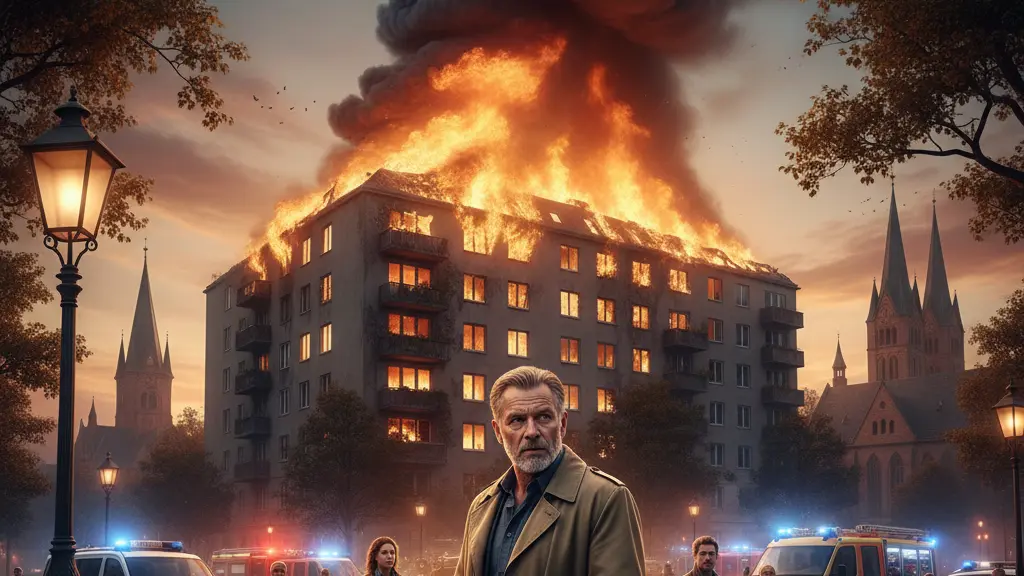
1. A Dramatic Premise: Frankfurt (Oder) on Fire
This article examines a fictional 2026 episode of the long-running crime format ‘Tatort’, in which the town of Frankfurt (Oder) is rocked by a series of fires and linked criminal incidents. The story mixes arson, street crime, youth violence, graffiti, and a simmering local rivalry into a complex investigation. Key elements include a cellar break-in that sparks a major blaze, parallel robberies, and worrying signs of young people experimenting with fire.
2. The Inciting Incident: Cellar Break-In and the Big Fire
The plot begins with a reported break-in into a cellar on Berliner Straße. Witnesses describe three Polish nationals fleeing into a tram, a detail adapted from police reports dated 15 March 2026. Shortly after, sparks fly during the escape and a multi-family house erupts in flames. The fire quickly overwhelms local fire brigade resources and forces police to coordinate rescue and containment under chaotic conditions.
Eyewitness Detail and Scene
To heighten realism, the episode uses direct-sounding police dialogue. One patrol officer tells a colleague, ‘Die Spur der Sprayer zog sich von der Lindenstraße über die Gartenstraße bis zur Freilichtbühne’, suggesting graffiti and tag wars may link different scenes and motives. This piece of dialogue ties visible urban signs to possible retaliation or escalation.
3. Parallel Crimes and Youth-Related Incidents
Alongside the blaze, the plot threads include a street robbery on Karl-Marx-Straße where a phone and money are taken, and scenes inspired by youth robberies in nearby areas where young people use knives and even firearms to intimidate. These parallel crimes increase pressure on investigators and create a sense that the town’s safety is unraveling.
Prenzlau and Ahrensfelde Echoes
The script draws on local reports of teens playing with fire. In Prenzlau, 12- to 14-year-olds are shown starting a plywood fire that rapidly grows out of control. Other references echo events in Ahrensfelde where youths used knives or guns in robberies. These elements raise questions about youth delinquency, supervision, and the line between vandalism and serious arson.
4. The Investigation: Conflicting Theories and Pressure
Detectives face conflicting advice and rising public pressure. The criminal police push for fast arrests of the cellar intruders and suspects seen on trams, while members of the investigative team raise deeper questions about motive, intent, and mental health. The tension between quick law enforcement action and careful psychological assessment becomes a central drama in the episode.
Psychological Angle and Prevention Debate
A team psychologist cautions that some violent fires could stem from severe psychological instability rather than simple criminal intent. The script explicitly references a tragic self-immolation case used as an analogy to underline how individual instability can lead to catastrophic fires and complicate legal interpretation of arson.
- Police perspective: prioritize arrests to stop further crimes.
- Psychologist perspective: investigate mental health and prevention.
- Public debate: prevention versus repression becomes a running theme.
5. Clues, Motive, and Resolution
As evidence accumulates, investigators trace a chain of small incidents to a local rivalry. What starts as the theft of a football jersey in Fürstenwalde escalates into retaliation, vandalism, and ultimately a destructive fire. The final reveal connects graffiti trails, street robberies, and the teens who played with fire into a network of escalating acts that led to the major blaze.
| Incident | Location | Key Detail |
|---|---|---|
| Cellar break-in and resulting blaze | Berliner Straße, Frankfurt (Oder) | Three suspects seen fleeing into a tram; sparks cause a multi-family house fire |
| Street robbery | Karl-Marx-Straße | Phone and money taken during a mugging |
| Youth armed robberies | Nearby districts, Ahrensfelde-inspired | Young suspects using knives and firearms |
| Teen plywood fire | Prenzlau | 12- to 14-year-olds ignite a plywood fire that spreads |
| Rivalry spark | Fürstenwalde | Theft of a football jersey escalates tensions |
| Symbolic accident | BAB 20 (motorway) | A Sattelzug accident used as a metaphor for the town ‘in flames’ |
| Total incidents covered | 6 | |
6. Themes, Keywords, and Practical Takeaways
The fictional episode blends crime drama with social commentary. Themes include arson and fire prevention, the role of graffiti and youth culture in escalating conflicts, policing under pressure, and the need for mental health awareness. Keywords naturally tied to the story are: Tatort, Frankfurt (Oder), arson, fire brigade, police investigation, graffiti, youth crime, prevention, mental health, and rivalry.
What Viewers and Communities Can Learn
- Prioritize fire safety education for youth and community fire prevention programs.
- Balance rapid police response with careful psychological assessment where mental instability may be a factor.
- Address small conflicts, like theft or vandalism, before they escalate into serious violence.
- Support community policing and outreach to reduce alienation that can lead to delinquency.
Ultimately, the episode uses the literal and metaphorical idea of a city ‘in flames’ to explore how small acts of crime and neglect can combine into community-wide crisis. The story is a reminder that prevention, mental health support, and timely policing all have roles to play in keeping towns safe.
