
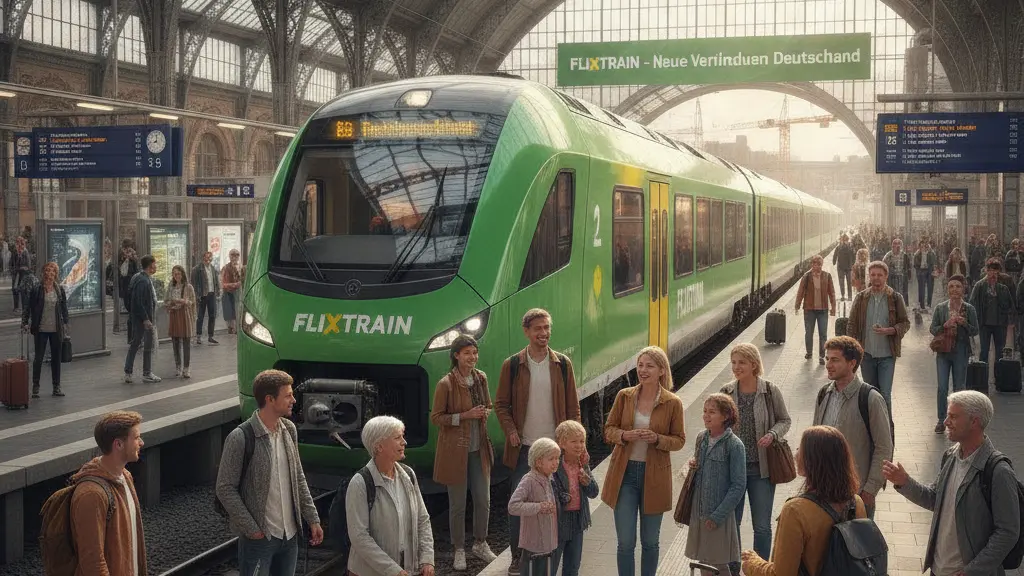
Summary: Flixtrain’s Planned Expansion in Germany
Flixtrain, the long-distance rail arm of Flix, has announced plans to double the size of its service offering in Germany within the next two to three years. Building on routes it has operated since 2018, the company aims to deliver more connections, denser timetables and longer trains on key corridors. This expansion is part of a two‑stage approach: a short‑term increase in frequencies and train lengths using the existing fleet and a medium‑term boost driven by new Talgo trains expected from 2028.
In plain terms, passengers can expect more departures, especially on high‑profile routes, while the wider German rail market faces fresh competitive pressure. The plan highlights tensions between the promise of increased choice and the practical limits of an already busy rail network.
Where the Growth Will Be Most Visible
Flixtrain has identified a small number of core corridors for the fastest and most visible expansion. The company speaks of densifying its existing network first, then adding new relations as track capacity permits. The three corridors most often mentioned in reporting are Berlin–Hamburg, Hamburg–Köln (Cologne) and Berlin–Leipzig.
Berlin–Hamburg
On the Berlin–Hamburg corridor Flixtrain plans one of its boldest moves: by 2027 the operator wants trains to run up to ten times a day in a two‑hourly rhythm. That would markedly densify the timetable compared with today and aims to make Flixtrain a regular alternative to Deutsche Bahn on this high‑demand route.
Hamburg–Cologne (Hamburg–Köln)
Reports indicate a planned doubling of weekly departures between Hamburg and Cologne. This is framed as a substantial capacity increase that could give travelers more flexibility and competitive pricing options on a major north‑west axis.
Berlin–Leipzig
The Berlin–Leipzig relation is another target for a doubling of services. Increased frequency here would support regional connectivity and offer an alternative for travelers between the capital and central Germany.
Fleet Strategy and Timing
Flix’s fleet strategy combines quick operational adjustments with a longer‑term procurement plan. In the short term the company says it will add more departures and run longer trainsets where possible. For the medium term, Flix has ordered up to 65 Talgo trains, which are scheduled for delivery starting in 2028 and are expected to raise capacity, comfort and the potential to serve new routes, including possible expansion toward Munich.
That dual approach means the announced “doubling” of the network is staged: some of the capacity gains should arrive before the Talgo fleet is in service, while the new trains will enable broader and more sustainable growth after 2028.
Implications for the Deutsche Bahn and the Rail Network
The planned expansion by Flixtrain increases competitive pressure on Deutsche Bahn in long‑distance travel. More private operators on busy corridors can mean better prices and choice for passengers, but they also intensify the competition for limited track capacity and timetable slots.
- Increased competition: potential downward pressure on fares and improved service options.
- Trassen constraints: limited number of slots and clashes with renovation projects and long‑running construction works.
- Punctuality risks: denser timetables on busy lines may exacerbate delays if infrastructure performance does not improve.
Industry observers and infrastructure managers warn that the German rail network is heavily loaded and faces major construction projects and bottlenecks that will continue for years. These structural limits mean that adding operators and services does not automatically translate into more trains on the track unless the infrastructure owner can provide additional usable slots.
What Passengers Can Expect
For travelers the most tangible benefits would be more departure times, shorter waiting windows and often lower ticket prices. A reliable two‑hourly service on routes like Berlin–Hamburg would make Flixtrain a practical alternative to established providers, while doubled weekly departures on Hamburg–Cologne and Berlin–Leipzig should improve flexibility for both daily and occasional travelers.
- More choices on key corridors
- Higher frequency and longer trains on busy routes
- Potentially lower fares and better competition
- Dependency on infrastructure capacity and timetable slots
Still, passengers should be aware that the arrival of additional services depends on track access and timetable approval. The quality of the travel experience will also hinge on punctuality and the ability of Flixtrain to scale operations smoothly while the rail network undergoes major maintenance and upgrades.
Outlook: Opportunities and Open Questions
The Flixtrain expansion signals renewed private investment interest in German long‑distance rail and could push the market toward more competitive pricing and improved service offers. Yet credible doubts remain: can the network supply the necessary trackage? Will construction works and existing bottlenecks prevent the full realization of the promised timetables? And how will Deutsche Bahn respond to a stronger private competitor on commercial and operational fronts?
Ultimately, the success of this expansion will depend on a mix of factors: effective use of the current fleet, timely delivery and integration of the Talgo trains from 2028, and cooperation from infrastructure managers to allocate the required train paths. If these pieces fall into place, passengers could see a noticeably richer long‑distance rail offer in Germany within a few years. If not, the announcement may become another example of ambition constrained by infrastructure realities.
