
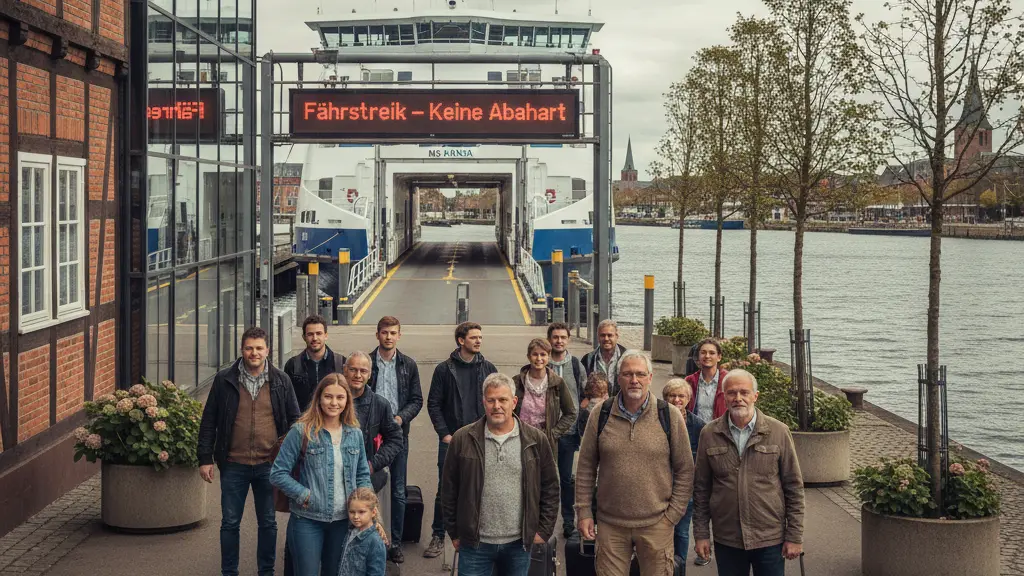
1. Overview: National Warnstreik and Potential Ferry Disruptions
On Monday, 2 February 2026, the trade union Verdi called a nationwide warnstreik in public transport (ÖPNV) that is planned to take place in almost all federal states. The action is expected to cause significant restrictions for passengers in many cities and could also affect ferry connections, raising the risk of ferry disruption and broader transport strike chaos—particularly in regions with water-dependent traffic such as northern Germany.
Reporting is currently limited: this summary is based on a single central news report describing the call for warnstreiks in local public transport. Because only one primary source is available, exact details about which ferry lines will be cancelled or how schedules will change remain unconfirmed.
2. Where and how ferry services may be affected
Although buses, trams and local rail are the main focus of the warnstreik, ferry services that form part of integrated public transport networks may face cancellations, reduced frequency or delayed departures. Coastal routes, island connections and commuter ferry lines in northern Germany and other water-dependent areas are especially vulnerable to disruption.
- Cancellations of scheduled ferry sailings.
- Reduced frequency and longer intervals between services.
- Delays caused by staffing shortages or rerouting.
- Overcrowding on the remaining services and at terminals.
- Missed connections to buses, trams or trains that are also affected by the warnstreik.
3. Advice for passengers: How to prepare
Before you travel
- Check the status of your planned route early on the day of travel. Operators may update schedules or announce cancellations.
- Allow extra travel time and build in buffer for missed connections.
- Have a backup plan: know alternative routes or modes of transport in case ferries are cancelled.
- Buy tickets in advance where possible and keep digital or printed confirmations accessible.
- If travel is not essential, consider rescheduling to avoid the busiest times.
Alternative transport and options recommended by media
- Carsharing and private car options can be useful for trips that would otherwise rely on ferries.
- Working remotely or postponing non-essential travel reduces the need to be on affected routes.
- Taxis, ride-hailing and cycling are other alternatives where available and practical.
- Use combined alternatives—for example, drive to a park-and-ride and complete the journey by unaffected services.
4. Why the warnstreik is happening and what the union says
The warnstreiks are part of ongoing tariff negotiations. Verdi stresses that the action aims to put pressure on employers to reach fair collective agreements for public transport workers. As a Verdi spokesperson put it: ‘Die Warnstreiks sind notwendig, um faire Tarifangebote durchzusetzen.’ This statement emphasizes the union’s view that industrial action is a necessary tool to achieve better terms for staff in the ÖPNV sector.
What this means for passengers
The immediate effect is uncertainty: timetables can change at short notice and services may be reduced. Passengers should assume that delays and cancellations are possible and plan accordingly until negotiations conclude and normal service resumes.
5. Practical checklist and how to stay informed
| Action | Why it helps | Tip |
|---|---|---|
| Check service updates | Confirms cancellations or alternative timetables | Look for official operator or local transport announcements early |
| Allow extra travel time | Reduces stress from delays and missed connections | Plan to arrive at least 30–60 minutes earlier than usual |
| Use alternatives like carsharing or remote work | Avoids dependence on potentially cancelled ferry services | Arrange carsharing or a remote-work plan in advance |
| Pack essentials | Comfort during longer waits or detours | Bring water, snacks and charged mobile devices |
| Preparedness reduces disruption | Have at least one backup option for key trips | |
How to stay updated
Follow local news and official transport operator announcements for the latest information. Listen to radio updates, check regional news outlets, and monitor official statements from unions and transport providers. Because reporting is currently limited to a central source, expect details to emerge over time and verify information before travelling.
