
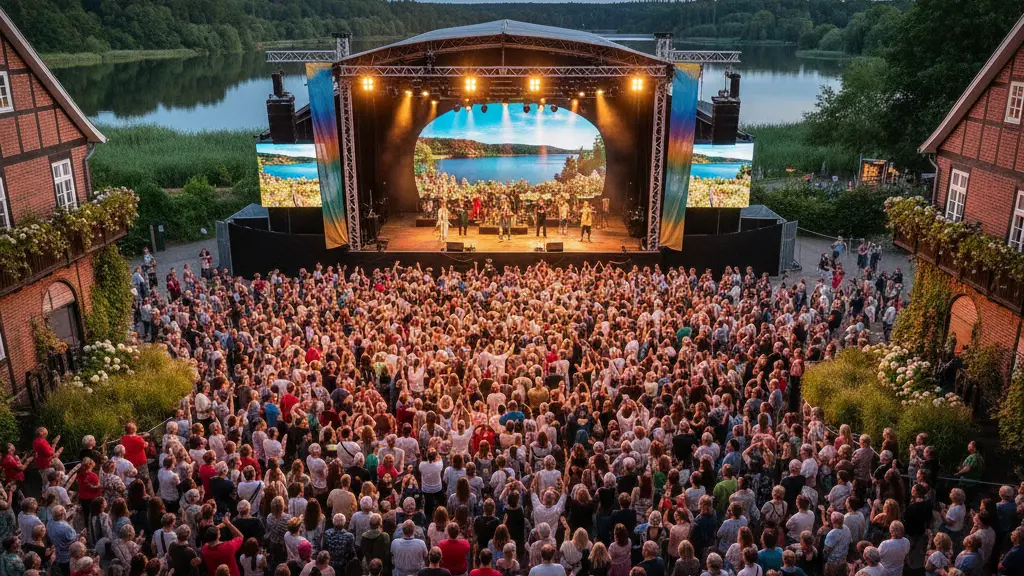
Brief overview: A surprising cancellation despite record attendance
The Eutiner Festspiele, a long-standing open-air summer festival on the shore of the Eutiner See in Schleswig-Holstein, has cancelled all performances for 2026. This decision follows the sudden resignation of festival director Falk Herzog and comes even after a season that reached a visitor record of 650,000. The contrast between strong public demand and the festival’s abrupt halt highlights deep questions about funding, leadership, and political support for cultural events.
Key facts at a glance
- Event: Eutiner Festspiele (open-air summer festival)
- Most recent season attendance: 650,000 visitors
- Decision: All 2026 performances cancelled
- Cause cited: Resignation of director Falk Herzog and accusations of insufficient political support
- Location: Freilichtbühne at the Eutiner See, Schleswig-Holstein
History, tradition and economic importance
The Eutiner Festspiele have been a cultural fixture for decades, attracting local residents, regional visitors and tourists to open-air opera, theatre and music performances. The festival’s setting at the Freilichtbühne on the Eutiner See is iconic and has helped build a loyal audience over many seasons. Beyond culture, the festival brought measurable economic benefits: ticket income, local hospitality revenue, seasonal jobs and tourism spending in the surrounding towns.
| Aspect | Detail |
|---|---|
| Recent peak attendance | 650,000 visitors in the last season |
| Venue | Open-air stage at Eutiner See |
| 2026 status | All performances cancelled |
| Primary concern | Resignation of artistic/administrative leadership and alleged lack of political support |
| The figures show strong public interest but a fragile operating framework. | |
Why the festival stopped: leadership and funding issues
Resignation and accusations from management
Festival director Falk Herzog stepped down and publicly criticised the political and financial support available to the festival. According to reports from mid-January 2026, Herzog argued that despite the festival’s economic success and large audiences, public funding and political backing fell short of what was needed to maintain operations and artistic standards. His resignation left organizers without immediate leadership and prompted the decision to cancel the season.
Public funding versus economic reality
The situation illustrates a mismatch that can occur between economic indicators and cultural funding: strong attendance does not always translate into guaranteed public subsidies or political will to support long-term infrastructure, staffing and program development. Festivals often depend on a mix of ticket income, private sponsorship and public grants; when one pillar weakens or political priorities shift, even popular events become vulnerable.
Consequences for the region, artists and audiences
The cancellation affects many groups: the local hospitality and tourism sector will lose seasonal revenue, freelance artists and technical crews may face lost contracts, and regular attendees lose a beloved cultural tradition. The Freilichtbühne itself now faces an uncertain future, with questions about maintenance, programming and potential reuse of the site if the festival remains inactive.
- Economic impact: Reduced income for hotels, restaurants and local vendors during summer months.
- Artistic impact: Fewer performance opportunities for musicians, actors and stage crews.
- Community impact: Loss of a cultural meeting place and a summer highlight for residents and visitors.
Outlook and possible next steps
The future of the Eutiner Festspiele depends on a combination of finding new leadership, securing reliable funding and rebuilding trust between organizers and political stakeholders. There are practical steps local decision-makers, community groups and cultural advocates can pursue to try to revive the festival or preserve the open-air stage’s cultural role.
- Search for interim or permanent festival leadership with a clear operational plan.
- Explore emergency funding measures from regional cultural budgets or temporary grants to bridge the gap.
- Build partnerships with cultural institutions, local businesses and community organizations to diversify support.
- Engage the public: information sessions, petitions or community fundraising can demonstrate continued popular support.
- Consider alternative event formats or reduced-scale seasons that can be staged while long-term funding is negotiated.
