
1. Overview: Cancellation of the Eutiner Festspiele 2026
The Eutiner Festspiele, one of Schleswig-Holstein’s best-known open-air festivals, has announced the cancellation of its 2026 season and the start of winding down its nonprofit GmbH. The decision follows a successful 2025 season with a record audience of around 65,000 visitors, but growing financial and organisational pressures made continuation impossible. Managing director Falk Herzog, who served in a voluntary capacity since 2017, described the step as necessary given the lack of professional structures and rising costs since the pandemic and the Ukraine war.
Key facts at a glance
- 2026 season cancelled; company dissolution and administrative wind-down initiated.
- Record attendance in 2025: ~65,000 visitors.
- Main reasons: missing professionalisation of structures, steeply increased costs, and unpaid musician fees.
- Festival financed itself for over 95% of its budget; public subsidies from city, district and state were about 240,000 euros.
- Planned productions such as the musical ‘Hair’ and Puccini’s ‘Turandot’ were cancelled; tickets will be fully refunded.
2. Why the festival had to be cancelled
The organisers point to several combined factors: rising operational costs since the coronavirus pandemic and the regional and international effects of the Ukraine war, a lack of full-time professional management, and outstanding musician fees that made running the seasonal festival unsustainable. Despite a strong ability to raise private income, the festival lacked the stable public financial backbone and governance needed for long-term planning and risk management.
Financial and organisational challenges
Although the Festspiele covered more than 95% of their budget through earned income, modest public support of around 240,000 euros from local and state authorities was not enough to bridge growing deficits. Proposals to increase municipal involvement and to create a paid, full-time management position were put forward but failed to gain the necessary political majority. Organisers emphasise that a seasonal cultural operation of this size is no longer viable without professional leadership and reliable funding.
3. Cancelled productions and ticket refunds
Planned highlights for the 2026 season, including the musical ‘Hair’ and the opera ‘Turandot’, have been taken off the programme. The festival has confirmed that ticket holders will receive full refunds. The official festival announcement describes the cancellation as being made with a heavy heart and asks visitors and partners for patience while the administrative wind-down and refund process are completed.
4. Local and regional reactions
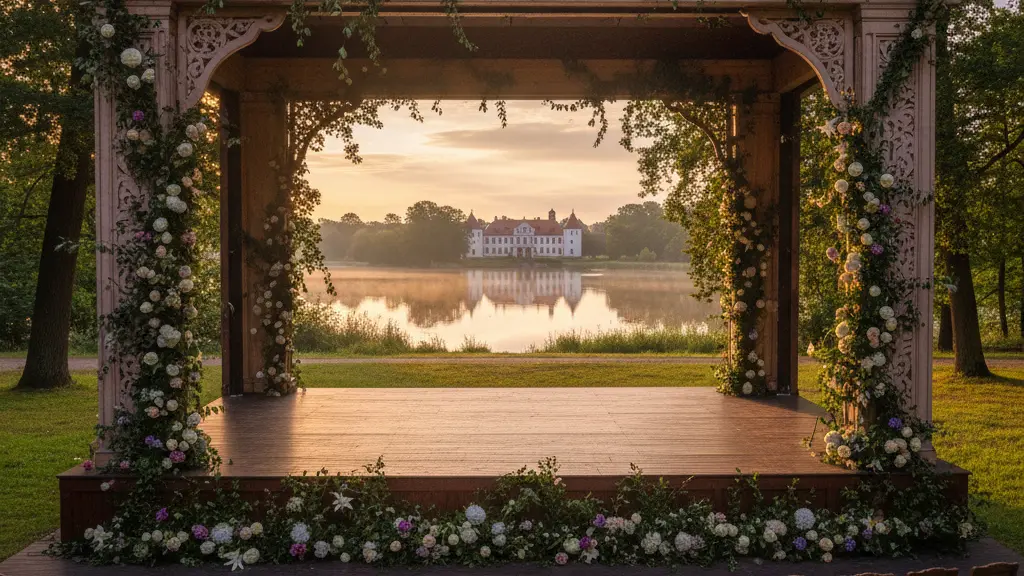
The news prompted a strong emotional response locally and regionally. Some voices described the end as the loss of a cultural lighthouse for the region, while others stressed the need to explore rescue and restructuring options. Mayor Sven Radestock called the development ‘bitter’, thanked Falk Herzog for his many years of commitment and pointed to the municipality’s recent investment of 18 million euros in the new lakeside stage (Seebühne). He promised further talks and highlighted that optimism is the only realistic stance for now.
Political and economic perspectives
State leaders and economic representatives reacted with concern. The state minister-president said he was ‘shocked’ but suggested exploring integration into existing cultural networks such as the regional music festival structures to secure future prospects. Economic actors emphasised the festival’s strong return on investment for the region; a 2018 study cited by supporters found that each euro invested in the festival generated roughly seven euros back into the local economy. Local media called the development a ‘cultural shock’ despite the artistic success of recent seasons.
5. Rescue plans and future options
There are ongoing discussions about whether the festival can be saved in a different form. Reports point to intensive rescue planning that could include new shareholder structures, stronger municipal or regional involvement, or a formal affiliation with larger regional festival structures. Any viable plan would need to resolve outstanding liabilities, secure sustainable funding and introduce a professional, possibly full-time, management team.
What would be required to revive the festival
- Clear governance and new legal or shareholder structures that share responsibility and risk.
- Reliable, long-term funding including stronger public support or committed private partners.
- Professional, full-time management to handle the complexity of a seasonal open-air festival.
- Immediate settlement of outstanding musician and contractor fees to restore trust.
- Revised programming and budgeting that match current economic realities.
6. What visitors and partners should know now
Ticket holders will be fully refunded and the festival’s official channels have confirmed the cancellation. Visitors, artists and sponsors should await direct communication from the festival administration about refund timelines and any follow-up steps. Partners who are interested in supporting a potential re-launch or restructuring are encouraged to participate in the planned talks and public discussions.
7. Conclusion: an uncertain future, strong local value
The cancellation of the 2026 season marks a difficult moment for the Eutiner Festspiele and for regional cultural life. While the situation is uncertain, local leaders, cultural advocates and business representatives continue to explore options for rescue or reinvention. The festival’s proven ability to attract large audiences and to deliver strong economic benefits to the region underlines its value. Any successful revival will require professional structures, reliable funding and shared commitment from public and private stakeholders.
