
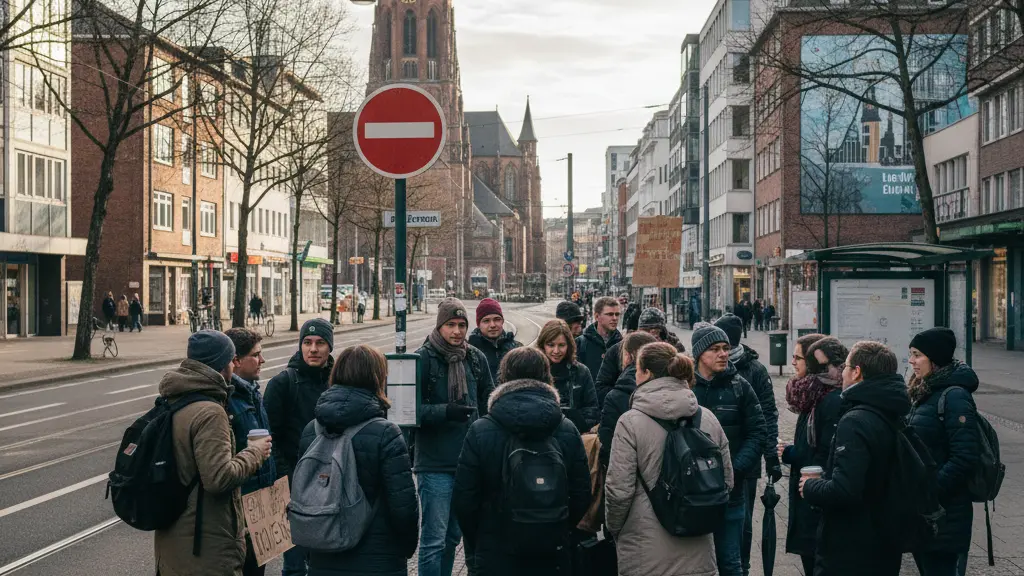
1. Transit disruption in Dortmund on Monday, March 9, 2026
On Monday, March 9, 2026, a full-day warning strike called by the union ver.di brought nearly all local public transport run by DSW21 in Dortmund to a halt. The work stoppage started with the beginning of service at around 3:30 a.m. and lasted until approximately 1:30 a.m. the following Tuesday, affecting the city’s buses, Stadtbahn (light rail) lines and the H-Bahn people mover.
Services affected and scope
The strike covered virtually the entire DSW21 network. In addition to standard day services, night lines including NightExpress departures from the Reinoldikirche were disrupted. Several bus lines in neighboring towns were also impacted, for example lines 480, 481, 482 and NE 11 in Castrop-Rauxel and lines 430, 435 and NE 25 in Schwerte. Parts of the ExpressBus X13 to Waltrop and Datteln were affected as well. Some services operated by other companies, such as certain runs by the Vestische, continued in isolated cases.
- All DSW21 Stadtbahn and bus lines stopped.
- H-Bahn services suspended.
- NightExpress lines from Reinoldikirche disrupted.
- Selected outer-city and express routes partly affected (e.g., X13 segments).
There were important exceptions: independently operated airport lines such as AirportExpress, AirportShuttle and line 490 continued to run normally. Long-distance and regional rail services by Deutsche Bahn – including S‑Bahn, RegionalExpress (RE) and RegionalBahn (RB) trains – were not part of the DSW21 stoppage and remained in service.
Customer service centers operated by DSW21 in Petrikirche, Hörde Bahnhof and the Castrop operating depot were closed for the day. Passengers were encouraged to consult official journey planners and the DSW21 mobile app for the latest information and to seek alternative connections where possible.
2. Why the strike took place
The warning strike was part of ongoing collective bargaining for the public transport sector in North Rhine-Westphalia. ver.di pressed for improvements aimed at easing pressure on employees across the sector. Central demands included a reduction of the standard weekly working time from 39 to 37 hours with full pay compensation, higher allowances for night and Sunday work, and other measures to reduce workload and increase staff relief.
Context of the negotiations
Strikes earlier in February and further actions in other cities underlined that the dispute reflects broader pressures in the public transport sector: staffing shortages, high workloads and the cost of living are driving demands from around 30,000 affected employees. The union considers the warning action a necessary step to increase pressure on employers to present a negotiating offer that addresses these concerns.
According to union representatives, employer proposals during the recent bargaining round were judged unacceptable because they included cuts or weaker conditions, for example suggested changes to sick pay and reductions in some night‑shift surcharges. After the second round of talks in Bochum on March 3, negotiators were unable to reach an agreement, prompting the strike action as leverage to restart serious negotiations.
3. Impact on passengers and practical alternatives
The sudden loss of buses, trams and the H-Bahn caused immediate disruption for commuters, students and others who rely on public transport for daily trips. While monthly and time-based tickets such as the Deutschland-Ticket remain valid for users who still find alternative services, critics have argued that operators lose little fare revenue from such day-long stoppages, while passengers face major inconvenience.
Suggested alternatives and travel tips
- Use regional and long-distance rail (S‑Bahn, RE, RB) where possible, which continued to operate.
- Check whether independently run airport services such as AirportExpress or AirportShuttle serve your route.
- Consider car sharing, taxis or ride pooling for essential trips.
- Allow extra travel time, and plan routes in advance using journey planners and the DSW21 app.
- For short distances, walking or cycling may be quicker than waiting for disrupted connections.
Passengers were advised to check live departure information and to expect packed alternative services. If travel is non-essential, postponing trips or working from home where possible can reduce stress and congestion on the remaining transport options.
4. Local actions, reactions and next steps
During the strike, brief rallies and gatherings took place at several DSW21 sites, including Deggingstraße and the depots in Dorstfeld, Brünninghausen and Castrop-Rauxel. These short actions accompanied the work stoppage and served as visible demonstrations of the workforce’s demands.
Public reaction was mixed. Supporters of the strike emphasize the need to improve working conditions for transport staff and the wider benefits of a healthier workforce. Critics, including some local commentators, called the timing unfair to passengers and argued that the measure disproportionately affects daily commuters who must improvise other means of travel.
The next round of negotiations was scheduled for March 24. Both sides face pressure to find common ground, as further strikes would cause repeated disruption for passengers and businesses while unresolved labor disputes continue to strain local transport networks.
5. Quick facts and affected services
| Item | Details |
|---|---|
| Date | Monday, March 9, 2026 |
| Duration | From service start (~3:30 a.m.) until ~1:30 a.m. on Tuesday |
| Main operator affected | DSW21 (Dortmunder Stadtwerke) |
| Services suspended | All DSW21 Stadtbahn, buses and H-Bahn; NightExpress lines and many regional bus lines |
| Examples of affected routes | NightExpress from Reinoldikirche; Castrop-Rauxel lines 480, 481, 482, NE 11; Schwerte lines 430, 435, NE 25; parts of ExpressBus X13 |
| Exceptions | AirportExpress, AirportShuttle and line 490 continued; Regional and long-distance trains (S‑Bahn, RE, RB) unaffected; some Vestische trips ran |
| Customer centers | Petrikirche, Hörde Bahnhof and Castrop depot were closed |
| Next bargaining date | March 24, 2026 |
| Note | Information based on official announcements from the operator and union statements |
6. How to stay informed
Passengers should use the operator’s journey planner tools and the official mobile app to get the latest departure and disruption information. Local radio, news outlets and station displays are also useful for updates during a strike. If you must travel on strike days, plan alternatives in advance and expect longer journeys and crowded replacement services.
Keep in mind that labor disputes can evolve quickly. Checking information shortly before departure is the best way to avoid surprises and to identify available alternatives such as regional trains, airport shuttles or other transport providers that may still be running.
