
Program overview and purpose
In 2026 the initiative ‘Gemeinsam unterwegs: Identität, Anerkennung, Begegnung’ operates as a targeted measure under national provisions to support late resettlers (Spätaussiedler) in their integration process. Funded by the Federal Ministry for Interior and Community, the program complements standard integration courses and migration counseling by informing participants about social topics, strengthening personal resources and encouraging local initiative. It connects with a wider set of nationwide projects that aim to strengthen social cohesion and promote exchange between newcomers and receiving communities.
Main goals
- Provide cultural orientation and practical information to ease daily life and participation.
- Strengthen personal and social resources so participants can act with confidence and initiative.
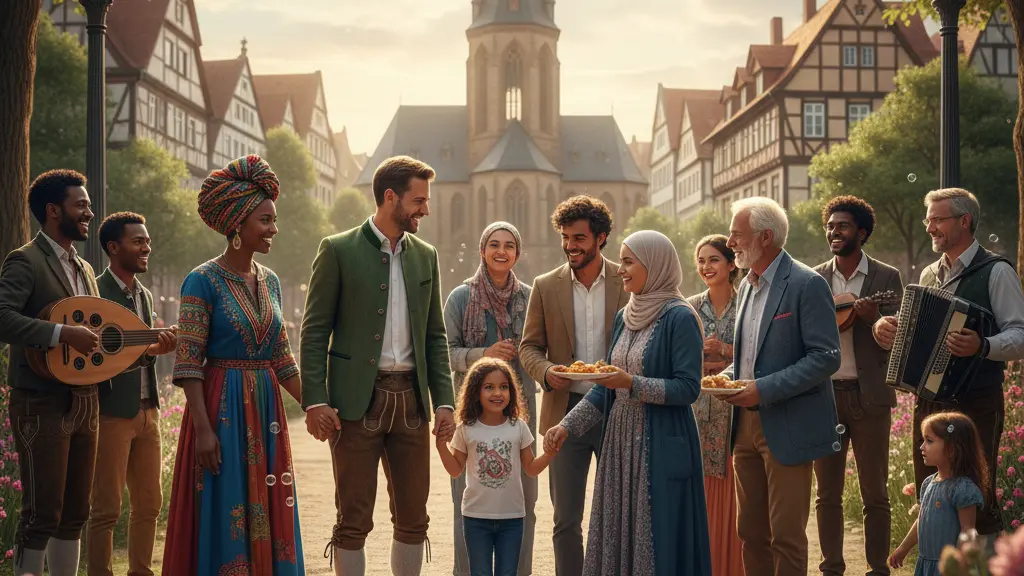
- Promote encounters between late resettlers and the local population to build social cohesion.
- Support local organizations, volunteers and small migrant groups to increase sustainability of offers.
Who benefits and key needs
The program primarily serves late resettlers who face the double challenge of relocating and re-establishing cultural traditions in a new environment. Many need tailored support beyond language training: orientation to social norms, help accessing institutions, and opportunities to rebuild social networks. Programs also pay special attention to women with migration backgrounds and people with disabilities, offering adapted formats and targeted outreach.
Specific needs highlighted by experts
Experts working with integration initiatives emphasize cultural orientation and social networking as central needs. Cultural continuity and the sense of loss are often part of the resettlement experience: as one author observed, ‘Uns geht es ja nicht nur um Übersiedlung , sondern um den Verlust von gewohnten Traditionen , die wir in eine uns völlig fremde Gegenwart zu integrieren versuchen.’ Addressing these emotional and identity aspects is vital to successful long-term integration.
Services, measures and complementary offers
The initiative complements long-standing instruments such as integration courses and migration advice for adults. It includes supplemental workshops, local events, multipliers’ training and activities that strengthen volunteer engagement. Specialized measures exist for people with disabilities and for targeted groups, while model projects focus on professionalizing local migrant organizations to better serve their communities.
Community and cultural initiatives
Local cultural initiatives and peer groups play an important role. Examples include long-running literature circles that create safe spaces for reading and discussion, sport-based integration projects that get people involved in clubs, and ‘Houses of Resources’ that help small migrant organizations grow their capacity. Women-focused offers emphasize practical strength in daily life and targeted empowerment activities.
- Integration courses adapted to need and ability
- Migration counseling and social advice for practical everyday challenges
- Model projects to professionalize migrant associations
- Volunteer-driven events and local clubs to build social networks
Local implementation: examples and approaches
Implementation happens close to where people live. Local adult education centers, social welfare organizations and volunteer groups develop joint offers such as community workshops, identity and integration projects, and cooperation with regional migration agencies. Some areas prioritize formal professional development and institutional strengthening, while others rely on spontaneous, volunteer-led meetings—both approaches can be valuable depending on local context.
Illustrative local examples
| Local Example | Focus |
|---|---|
| Identity and Integration Plus (local adult education cooperation) | Joint courses and support with migration authorities and community partners to offer practical orientation and social meeting points. |
| Integration courses in smaller towns | Language and civic orientation directly where people live, enabling access to education and work. |
| Regional agency development projects | Professionalization of local authorities and agencies to improve service delivery and coordination. |
| Local projects combine formal offers and community-driven activities to meet diverse needs. | |
How to participate and find support
Late resettlers and community members can engage with these offers through a few practical steps. Local adult education centers, migration counseling services and voluntary associations are typical entry points. Multipliers and trained volunteers help orient newcomers toward the right mix of courses and events for their situation.
Practical steps to get involved
- Contact local migration counseling or adult education providers to ask about courses and events.
- Join community activities—sports, cultural circles or volunteer groups—to build social networks.
- Look for targeted offers for women, people with disabilities or specific language needs.
- Consider volunteering or joining a small migrant association to strengthen local capacity and mutual support.
Impact, legal framework and recommendations
These measures contribute to social cohesion by combining practical integration services with cultural and community-building activities. Statistical trends show a growing migration population, underscoring the need for diverse, locally accessible offers. Legal and administrative guidelines secure entitlements and ensure consistent support for late resettlers. Successful integration rests on a balance of structured services and flexible, community-led initiatives.
Recommendations for policy makers and communities
- Maintain a mix of professionalized services and low-threshold volunteer offers to reach different needs.
- Invest in local capacity building for small migrant organizations and multipliers.
- Ensure targeted outreach to women, people with disabilities and older adults to remove participation barriers.
- Encourage sporting, cultural and educational activities that foster everyday contact and mutual understanding.
