
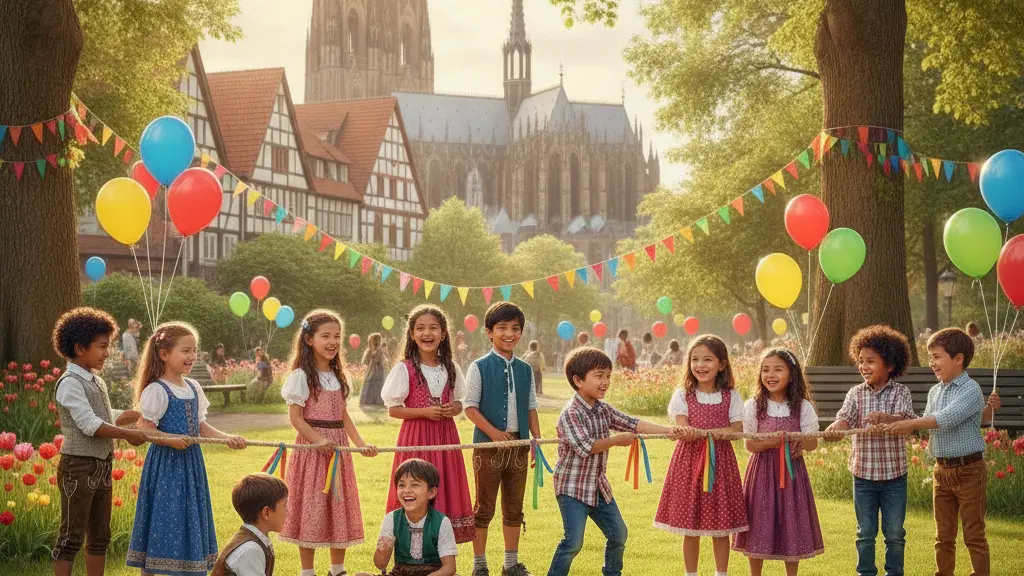
What International Children’s Day (June 1) Is
International Children’s Day on June 1 often looks like a day of balloons, small gifts and colorful festivals. But at its core it is a political action day focused on children’s rights, protection and participation. In many countries — especially across parts of Central and Eastern Europe and Asia — June 1 remains the central day to highlight the well-being of children and to call for concrete improvements in their lives.
Historical origins and how the date evolved
The modern idea of a day for children grew from early 20th-century efforts to improve child welfare. In the 1920s the notion of a dedicated action day for the needs of children began to spread. After World War II, the International Democratic Women’s Federation proposed June 1 as an international day to remember children harmed by conflict and to urge better protection. From about 1950 the German Democratic Republic (East Germany) institutionalized June 1 as an official Kindertag, combining celebration with state messaging about care for children. That historical imprint helps explain why the date still has particular resonance in parts of eastern Germany today.
At the same time, the United Nations recommended in 1954 that member states adopt some form of children’s day; different countries chose different dates. In Germany the federal authorities later promoted September 20 as the national World Children’s Day, while November 20 is observed internationally as the day connected to the UN Convention on the Rights of the Child. So three related but distinct commemorations coexist: June 1, September 20 and November 20, each with its own history and emphasis.
What the Day Means: Themes and Focus
Despite varying calendars and traditions, several core ideas run through all versions of the children’s day: raising public awareness for children’s rights, celebrating childhood and insisting on protection and participation. The day is symbolic rather than a legal holiday in most places: it puts children’s needs, dignity and voices in the spotlight.
The three main dimensions
- Celebration: A day for play, culture and attention where children are visibly put at the center of community and family life.
- Reminder / warning: A mahntag that draws attention to violence, poverty, exploitation and the many situations where children need better protection.
- Participation: A day to demand and practice children’s participation in decisions that affect them, from school life to local policy.
How People Observe June 1
Observances vary widely: public festivals, educational events, media campaigns and quiet family actions all belong. In many towns and cities, local authorities and civil society combine playful programming with information and participation formats so that children experience both joy and agency on the same day.
Examples of events and activities
Communities and organizations use June 1 to make children’s rights visible while also offering entertainment. Events often mix circus acts, music, dance and play stations with workshops, involvement projects and exhibitions about children’s needs.
- Public festivals that turn squares into “children’s rights” spaces with play and learning stations.
- School and kindergarten projects that teach children about their rights and invite them to suggest changes.
- Family-focused ideas such as a shared favorite breakfast, a day trip or a conversation hour where parents ask children about their wishes and worries.
- Campaigns and actions by child protection groups to highlight areas where children need better support.
For families the central message is simple: attention matters more than presents. Planning the day as a family opportunity to listen and to give children uninterrupted time signals that they are seen and respected.
Dates, Official Status and What to Remember
Because different countries and institutions use different dates, confusion sometimes arises about which “children’s day” is the “right” one. Knowing the distinctions helps put June 1 into context.
Key dates compared
| Date | Name / Focus | Notes |
|---|---|---|
| June 1 | International Children’s Day | Historic action day for children’s welfare, widely celebrated in over 145 countries; strong tradition in parts of Central and Eastern Europe. |
| September 20 | World Children’s Day (in some countries) | Chosen by many states after a UN recommendation; in some countries (including parts of Germany) used as the national children’s day. |
| November 20 | UN Day of the Rights of the Child | Linked to the UN Convention on the Rights of the Child; emphasizes legal rights, protection and policy commitments. |
| These dates overlap in purpose but have different historical and political roots. | ||
In Germany specifically, June 1 is not a statutory public holiday: schools, day-care centers and workplaces are usually open. The existence of multiple children’s days means that communities can choose which date to emphasize while keeping the shared aim of protecting and promoting children’s rights.
How Adults Can Make the Day Matter
June 1 is an opportunity to turn good intentions into concrete practices. Simple, consistent actions by families, schools and local authorities reinforce the idea that children’s rights are everyday responsibilities, not occasional gestures.
Practical steps for families, schools and communities
- Listen actively: Ask children what they wish for and what worries them; take answers seriously and follow up.
- Create visible spaces: Make a public place or event where children can play and be heard, such as a festival, a council session or a school forum.
- Teach rights: Use age-appropriate activities to explain basic children’s rights: safety, education, health and participation.
- Combine fun with learning: Mix play and celebration with workshops or information corners about safety and rights.
- Advocate: Local decision-makers and institutions should use the day to review protection measures, participation structures and resources for children.
In short, treating June 1 as a day that is about both joy and responsibility helps embed children’s rights into everyday practice. The true meaning of International Children’s Day is not only to celebrate childhood for a day, but to strengthen respect, protection and participation for children throughout the year.
