
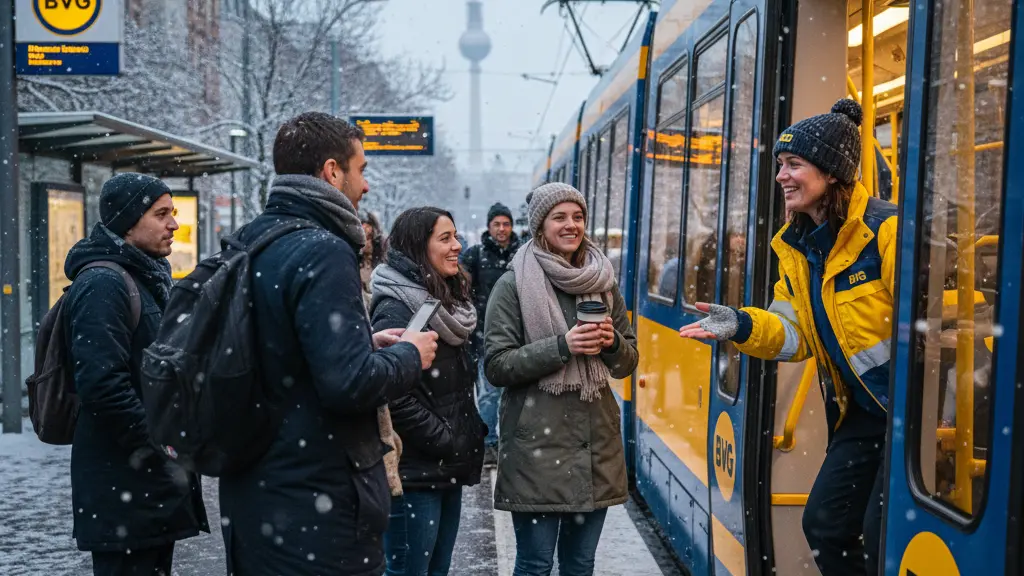
1. Overview: Wage talks and warning strike in Berlin
Negotiations between the Berlin public transport operator BVG and the trade union Verdi over a new collective agreement for 2026 have stalled after two rounds. Tensions have risen and Verdi announced a full-day warning strike across Berlin’s public transport system (bus, U-Bahn and tram) on Monday, 2 February 2026. The S-Bahn is not affected. Recent freezing rain has already disrupted tram services, adding to travel uncertainty. The next negotiation round is scheduled for 18 February 2026.
Key facts at a glance
- Who: Verdi (trade union) and BVG (Berlin transport operator).
- What: Warning strike planned for Monday, 2 February 2026, affecting bus, U-Bahn and tram; S-Bahn unaffected.
- Why: Stalled collective bargaining over working conditions, rest times, vacation and weekly hours.
- Next step: New negotiation round on 18 February 2026.
2. What Verdi is demanding
Verdi’s package focuses on improvements to working conditions and includes a set of 17 demands. Key elements include more vacation days, longer minimum rest between shifts, increased turnaround time, higher vacation pay and a shorter standard working week starting in 2027 — all aimed at improving employee retention and wellbeing in Berlin’s public transport workforce.
- 33 vacation days per year.
- 11 hours minimum rest time between shifts.
- Increase of turnaround time (Wendezeit) to six minutes.
- Higher vacation pay (Urlaubsgeld).
- Introduction of a 35-hour workweek from January 2027 with full wage compensation.
| Topic | Verdi demand | BVG response / concern |
|---|---|---|
| Vacation days | 33 days | BVG notes higher costs and staffing needs |
| Minimum rest | 11 hours between shifts | BVG flags scheduling and operational constraints |
| Turnaround time | 6 minutes | BVG says impacts service planning and fleet use |
| Working week | 35 hours from Jan 2027 with full pay | BVG calls the package financially unrealistic |
| BVG estimates the Verdi package would cost about 150 million euros per year and require some 1,330 additional staff, a burden the company calls unaffordable while on a stabilization course. | ||
3. BVG’s position and company constraints
The BVG describes the Verdi demands as ‘far from financially feasible’. The company is currently pursuing a stabilization plan and already operates a 37.5-hour workweek, below the industry average. BVG leadership stresses the need for realistic, prioritized demands and flexible working models to balance better conditions for staff with the economic stability of the operator and reliable service for passengers. BVG has warned of possible legal steps and asked Verdi to withdraw the strike notice.
BVG statements and proposals
- Emphasize prioritized and realistic demands instead of a broad package.
- Offer choice models to increase flexibility in working time arrangements.
- Call for responsible negotiations that consider the company’s economic framework.
- Affirm commitment to better working conditions while safeguarding long-term stability for staff and passengers.
4. Impact on passengers and practical advice
The announced full-day warning strike will affect core parts of the city’s public transport network. Passengers should expect significant service reductions or cancellations for buses, U-Bahn and trams on the strike day. The S-Bahn will continue to run as usual, offering one of the main alternatives for cross-city travel. Winter weather (freezing rain) has already been causing tram disruptions, which may worsen travel conditions on the strike day.
Tips for passengers
- Plan extra travel time and allow for delays.
- Use the S-Bahn where possible; expect higher passenger volumes there.
- Consider alternative routes, cycling or walking for short trips.
- If possible, work from home or rearrange appointments for that day.
- Dress for winter conditions and leave extra time in case of weather-related disruptions.
5. Next steps and outlook
The situation remains fluid. Negotiations resume on 18 February 2026, and both sides emphasize different priorities: Verdi stresses the necessity of improved working conditions to retain staff, while BVG highlights financial limits and service responsibility. The union accuses the operator of blocking meaningful discussion, and the operator calls the strike an excessive escalation. Passengers and employees should follow local updates for changes, and expect further developments as talks continue.
