
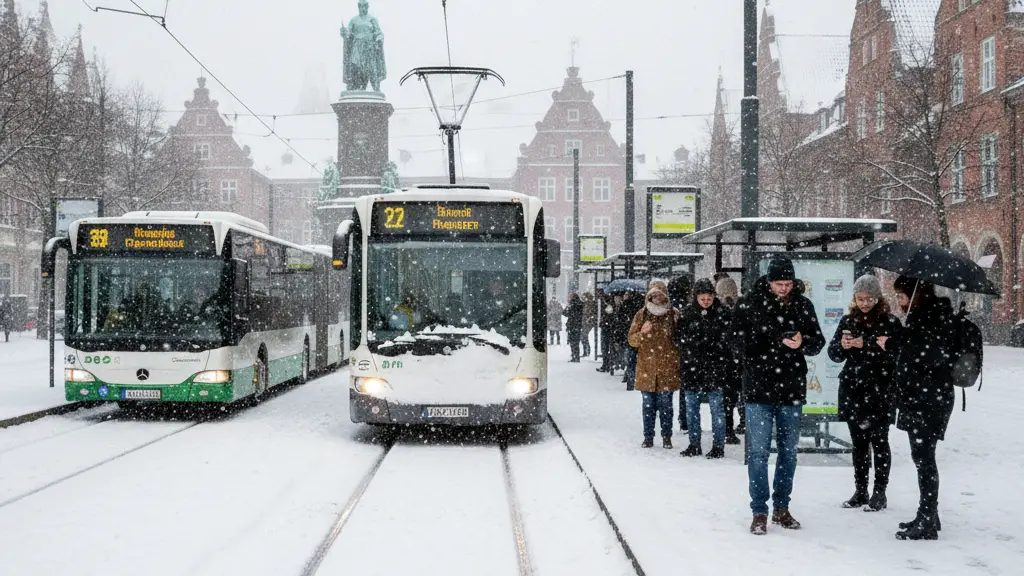
Current status of tram operations in Bremen
Heavy winter weather led to a temporary suspension of the Bremen tram service operated by BSAG. The company halted all tram and bus services on the evening of 9 January 2026 and then replaced parts of the tram network with a staged bus emergency service (Schienenersatzverkehr, SEV). Since then, bus services have largely returned to normal while trams have been reintroduced only on selected lines and sections after safety checks of tracks and infrastructure. This situation is weather-related and temporary; gradual normalization is underway.
Timeline: what happened and when
Below is a concise timeline of key decisions and operational changes during the winter incident that began on 9 January 2026.
- 9 January, around 20:00: BSAG warned of heavy snow and ice and announced that regular service should be resumed ‘if possible’ on 10 January, but further restrictions were possible.
- 9 January, 23:15: The company decided to suspend bus and tram operations until the end of the day to coordinate with the city clearing services, aiming to restart in Bremen-Stadt and Bremen-Nord on the following morning.
- 10 January, morning: Bus operations were reported as largely restored while trams remained suspended; SEV with buses began to be built up.
- 10 January, 09:50: Bus service in Bremen-Stadt resumed, but tram service still paused and some bus lines in Bremen-Nord stayed suspended.
- 10 January, 15:15: Emergency bus services were put into operation for tram lines 1, 4 and 10. Buses covered the east–west and north–south corridors initially at 30-minute intervals, later hourly until the end of service.
- 11 January, 10:00: BSAG announced the gradual return of trams: line 6 (airport–city–Hauptbahnhof–Bürgerpark) and a shortened section of line 1 (Bahnhof Mahndorf to Kurt-Huber-Straße) resumed in timetable operation after track inspections. Bus emergency services continued alongside the limited tram return.
Replacement services and routes affected
To maintain mobility while tram tracks were inspected and cleared, BSAG set up Schienenersatzverkehr (SEV) using buses. These replacement services focused on the busiest corridor links and on restoring connections between major hubs.
East–West corridor (line 10 route)
In the east–west corridor, buses ran along the route similar to tram line 10, connecting Sebaldsbrück, Hauptbahnhof, Walle and Gröpelingen. This SEV provided a continuous connection across the city center and was operated initially every 30 minutes, later at hourly intervals in the evening.
North–South corridor (lines 1 and 4 relations)
The north–south replacement service covered the relation from Huchting via the BSAG center and Neustadt to Hauptbahnhof and continued as a substitute for line 4 to Borgfeld. Additionally, a shuttle was placed between Kurt-Huber-Straße and Kirchbachstraße to bridge a gap between the shortened section of line 1 and the SEV of line 4.
Which tram lines returned first and what remains affected
The first trams to return to scheduled operation were line 6 (airport to Bürgerpark via city and Hauptbahnhof) and an abbreviated section of line 1 (Bahnhof Mahndorf to Kurt-Huber-Straße). Other tram lines remained suspended or only partially served, with bus emergency services covering the networks that still could not operate by rail.
Key affected places and route names mentioned during the incident include Bahnhof Mahndorf, Kurt-Huber-Straße, Sebaldsbrück, Hauptbahnhof, Walle, Gröpelingen, Huchting, Borgfeld and the Bürgerpark/airport corridor.
What passengers should know and practical advice
If you planned to travel in Bremen while the situation evolved, keep these practical points in mind to make your journey smoother.
- Check live updates before travel: BSAG digital channels such as timetable information, the FahrPlaner app and official messaging channels provided the latest changes to routes, timetables and SEV operations.
- Allow extra travel time: replacement buses can be slower than trams and service frequencies changed during the incident.
- Expect changed transfer points and temporary shuttle services for short gaps between tram sections and SEV routes.
- Plan alternatives: where possible, consider alternative routes or modes if a direct tram service is unavailable.
- Accessibility: if you need step-free access, verify the vehicle type for SEV buses as arrangements can vary during emergency operations.
Operational response, safety checks and recovery measures
BSAG coordinated an intensified operational response to the winter conditions, deploying extra winter service resources, additional standby vehicles, a track-mounted snowplough and strengthened control center staffing. Teams inspected rail infrastructure for ice and frost damage before reintroducing trams to timetable operation to ensure passenger safety.
Track inspections focused on switches, points and sections exposed to freezing; the phased return of tram lines followed only after safety confirmation. The company stated the goal of safe, step-by-step restoration rather than a full immediate resumption.
Context, outlook and final summary
The temporary stoppage caused by heavy snow sits alongside a broader, expansion-focused strategy that had just increased bus service on major corridors on 5 January 2026 to make public transport faster and more frequent. BSAG and the regional transport authority emphasize that the winter suspension is an exceptional, weather-related interruption and not a change in long-term plans to grow and improve local public transport.
Outlook: trams will be gradually put back into full service as track conditions allow. In the meantime, rely on official service updates, expect SEV buses on affected corridors and allow extra time for journeys. The phased approach balances the need for mobility with an obligation to operate safely during and after extreme winter weather.
