
1. Current situation at Berlin Airport (BER)
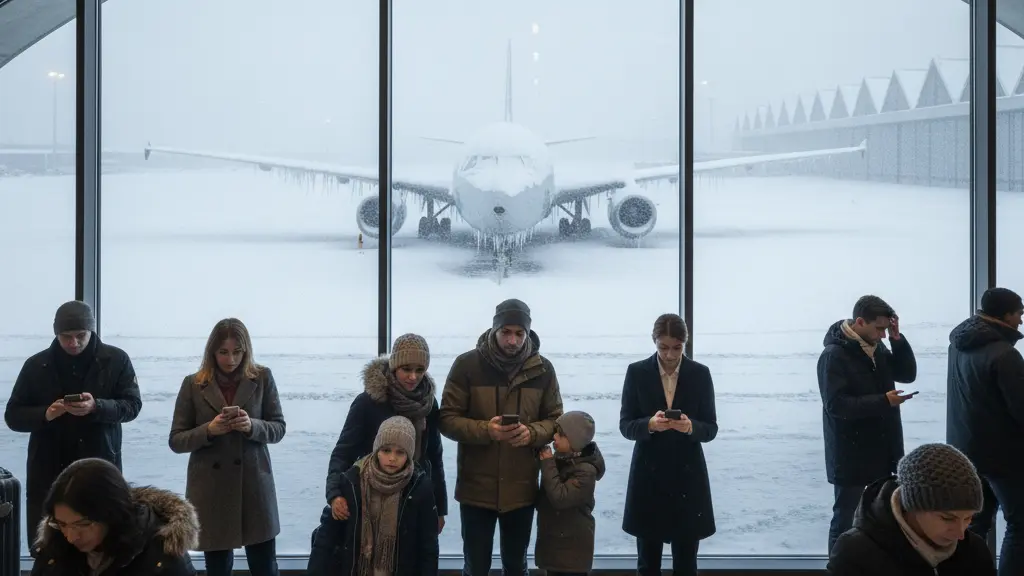
On the morning of Thursday, 5 February 2026, Berlin Brandenburg Airport (BER) halted aircraft departures because freezing rain created widespread black ice conditions. A airport spokeswoman told the Deutsche Presse-Agentur that currently no departures are taking place due to the weather. De-icing efforts are hindered because the rain refreezes almost immediately, while landings are still possible but experience delays.
Flights: cancellations and delays
By midday roughly a dozen flights had been cancelled. Passengers should expect significant delays and additional cancellations as conditions evolve. Airlines are the primary source for up-to-date flight status, and travelers are urged to check with their airline before traveling to the airport.
De-icing challenges
Aircraft de-icing operations are proving ineffective while freezing rain continues: de-icing fluid and procedures cannot prevent the immediate refreezing of moisture on critical surfaces. This greatly increases safety risks for departures and is the main reason for the temporary ground stop of takeoffs.
2. Weather situation and official warnings
The German Weather Service (DWD) has issued warnings for severe icy conditions across eastern Germany, with alarm level red in 19 districts until 10:00. The DWD cautions of high glatteis (black ice) danger caused by freezing rain and snow affecting Berlin, Brandenburg, Saxony, Saxony-Anhalt and Mecklenburg-Western Pomerania.
Why freezing rain is occurring
A DWD meteorologist explained that the persistent large-scale situation—high pressure over northern and eastern Europe bringing cold surface air combined with milder, moist air aloft—creates the ideal conditions for freezing rain. This mix means precipitation falls through a warm layer and then refreezes on contact with cold surfaces, producing hazardous black ice.
Localized snowfall and storms
In northern Brandenburg, up to five centimeters of fresh snow are possible before midday, with snow changing to rain later and the potential for local thunderstorms. Authorities warn that conditions will remain changeable and dangerous across affected areas.
3. Impact on public transport and rail services
The same weather that grounded departures at BER also disrupted local and regional transport. Underground and suburban rail services are affected, and long-distance trains face delays and some cancellations. Surface transport like buses and trams are largely running but can be delayed or rerouted.
| Transport | Typical impact |
|---|---|
| Airport departures (BER) | Ground stop for takeoffs; de-icing problems; a dozen flights cancelled by midday |
| Arrivals | Still allowed but delayed |
| U-Bahn | Partial interruptions on some lines (e.g., U2, U3) from rail icing |
| S-Bahn | Delays across the network |
| Regional/long-distance trains | Delays and some cancellations (between Hannover and Berlin noted) |
| Buses and trams | Mostly running, but slower and subject to local restrictions |
| Advice | Check status with operators and allow extra travel time |
Details on urban rail services
Several U-Bahn lines experienced partial interruptions because the electrified third rails or power rails iced up; notably U2 and U3 were partially impacted. S-Bahn services reported delays. Between Hannover and Berlin there were still some train cancellations, though fewer than on the previous day. Preparations by the city operator—such as using brush trains and setting up salt and de-icing points—helped prevent a total shutdown like at the end of January.
4. Advice for passengers and travelers
If you are traveling today, safety should guide your decisions. Monitor official updates, allow extra time, and be prepared for cancellations and long waits. Conditions on footpaths, platforms and roads can be extremely slippery due to black ice.
- Check your flight status directly with your airline before leaving for the airport.
- Allow plenty of extra time for journeys to stations and the airport; expect delays.
- Avoid walking on untreated surfaces when possible; wear shoes with good grip and move slowly on ramps and steps.
- Consider postponing non-essential travel until warnings are lifted and conditions improve.
- Follow local transport operators’ updates and instructions from staff on site.
5. Safety outlook and what to expect next
Authorities emphasize that the situation is hazardous for both road and rail users and for anyone moving near transport infrastructure. The weather pattern may persist while the warm air aloft and cold surface air remain in place, so travelers should stay alert throughout the morning and into the day.
- Expect continued operational changes at BER until de-icing can be carried out reliably.
- Public transport services may resume normal operation gradually as tracks and power rails are treated.
- Keep monitoring weather warnings from the national service and follow safety advice.
