
Overview
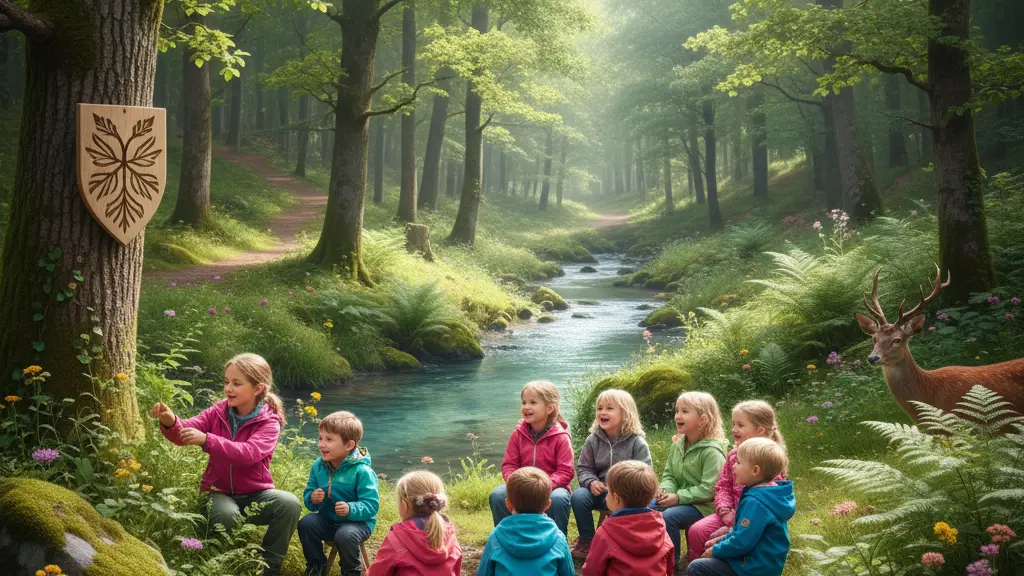
On 29 April 2026, 23 daycare centres from the Eifel region gathered in Schleiden-Gemünd to celebrate their certification as “Nationalpark-Kita Eifel” after two years of active participation in the Nationalpark Eifel cooperation project. This national park recognition highlights a strong commitment to nature-based learning, outdoor education, sustainability and early childhood environmental awareness. The certified daycares proved through practical activities that connection to nature can be fostered from the sandbox years onward.
What the certification means
Certification as a Nationalpark-Kita is both a quality mark and a practical framework for day-to-day work with children. It recognizes programs that bring environmental education, mindful outdoor experiences and sustainable thinking into early childhood practice. Examples highlighted during the project include forest mindfulness, wild herb identification and philosophical circles held outdoors—activities that show children can learn respect for nature, basic scientific observation and reflective thinking at a very young age.
- Stronger everyday connection between children and nature
- Greater emphasis on outdoor education and play
- Staff development in nature-based pedagogy
- Enhanced cooperation with local partners and communities
- Clear public outreach and visibility for sustainability efforts
The participating institutions met six clear criteria—contents, outdoor time, public outreach, cooperation, participation, and continuity & development—and are integrating the concept into their pedagogical mission so that nature and sustainability become a regular part of everyday life in the kindergarten.
Ceremony and local reporting
The recognition ceremony on 29 April 2026 in Schleiden-Gemünd marked the successful conclusion of a two-year collaboration. Local coverage repeated the key facts of the project and celebrated it as a milestone for environmentally conscious early education in the Eifel region. Reports emphasized the same core message: whether through forest mindfulness, identifying wild plants or holding outdoor philosophical discussions, the participating daycares demonstrated sustained commitment to nature-based education.
Activities and methods used
The project used simple, child-centred methods to build curiosity, sensory awareness and environmental knowledge. Educators guided sensory forest walks to sharpen observation skills, introduced children to common wild herbs and their uses in age-appropriate ways, and encouraged reflective group conversations outdoors to promote listening and critical thinking—all while prioritising safety and playful learning.
- Sensory forest and meadow walks to explore smells, textures and sounds
- Guided plant and wild herb identification with hands-on examples
- Seasonal nature projects (e.g., leaf studies, insect observations)
- Outdoor story times, creative play and simple scientific observation
- Philosophical circles and reflective sessions held in natural settings
Certification criteria and pedagogical integration
The six certification criteria provided a practical checklist for integrating nature and sustainability into everyday pedagogy. Each daycare demonstrated content-rich activities, regular outdoor time, public communication about their work, cooperative links with local partners, real participation of children and families, and a clear plan for continuity and future development.
Six certification criteria
| Criterion | Description |
|---|---|
| Contents | Rich, age-appropriate nature and sustainability topics integrated into daily activities. |
| Outdoor Time | Regular and meaningful time spent outdoors for exploration and play. |
| Public Outreach | Communication with parents and the public about nature projects and goals. |
| Cooperation | Partnerships with local organisations, parks and community actors. |
| Participation | Involving children, families and staff in planning and decision-making. |
| Continuity & Development | Long-term planning to maintain and grow nature-based education efforts. |
By embedding the concept into their pedagogical guidelines, these daycares make nature-based learning part of routine practice rather than an occasional special event. This strengthens long-term sustainability education and helps children develop environmentally responsible attitudes early on.
Impact, next steps and contacts
The project received unanimous, positive coverage in the local media and municipal communications, underlining its regional significance. Although only a few dedicated sources reported the story, they agreed on the facts and celebrated the initiative as an important step for early environmental education in the Eifel area. No controversies were reported, and the focus remained on practical achievements and future development.
Contact information and suggestions for parents and educators
For questions about the Nationalpark-Kita initiative or the certification process, the following contact persons are available: Maike Schlüter (schlueter@nationalpark-eifel.de) and Martin Menninghaus (menninghaus@nationalpark-eifel.de).
- If you are a parent: ask your daycare how nature and sustainability are included in daily routines and look for regular outdoor activities.
- If you are an educator: consider small, practical steps such as sensory walks, plant identification or outdoor story times to strengthen nature-based learning.
- If you represent a local partner: explore cooperation opportunities with nearby daycares to support continuity and public outreach.
