
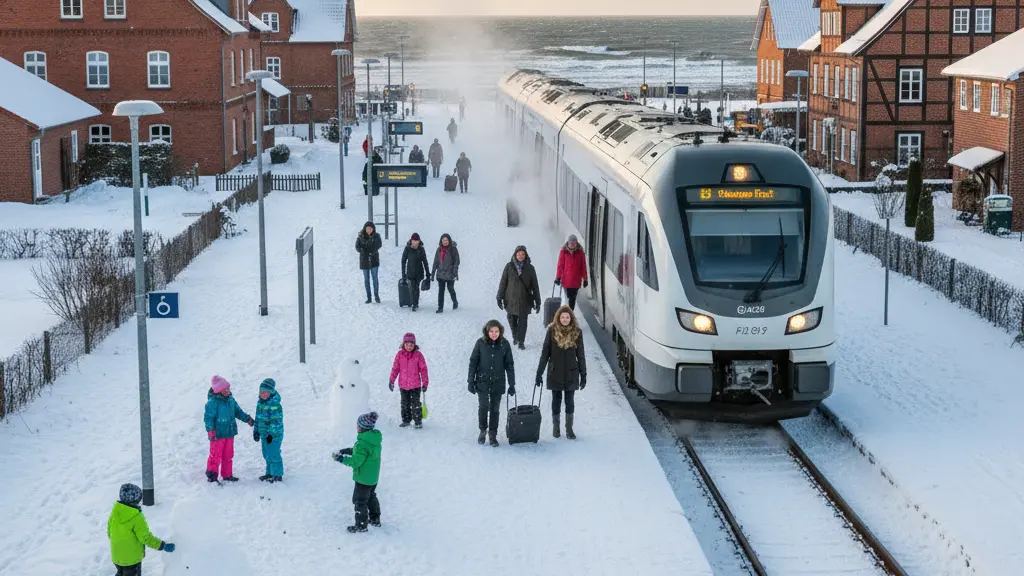
1. Current situation in Mecklenburg‑Vorpommern
In the hours after Storm Elli swept across northern Germany, Mecklenburg‑Vorpommern is showing cautious signs of normalization. The strongest gusts have passed, persistent snowfall has eased, and major transport links — especially key railway lines and ferry connections — are gradually resuming service. Authorities stress that the situation is improving but not yet fully safe: side roads remain uncleared or icy, snowdrifts make rural routes treacherous, and strong, cold winds continue to affect travel conditions.
- Storm name: Sturmtief Elli — a powerful winter storm with heavy snow, freezing rain risk and strong winds.
- Transport status: Rail and many ferry routes are restarting services step by step, with delays and some cancellations still possible.
- Snow and wind: Local new snow totals ranged widely, and coastal gusts reached strong storm levels that led to higher sea levels and local flooding at some harbours.
- Warnings: The national meteorological service has lifted its explicit severe-weather warning for the state, but cold and icy conditions persist.
Key facts at a glance
2. Rail services: what’s happening and what to expect
Rail services in Mecklenburg‑Vorpommern moved from emergency stops back to a staged restart. Clearing teams and technicians have been working along the main corridors that connect the state with Hamburg, Berlin and coastal towns to remove snow drifts, de-ice points and restore overhead lines. While some long-distance and regional trains are running again, timetables are being rebuilt gradually and passengers should expect changed frequencies, replacement services and continued delays.
- Clearing snow from tracks and platforms and removing drifted snow from lines of travel.
- De-icing and warming critical track points such as switches (points) and crossings.
- Inspecting and repairing overhead power lines and signalling equipment affected by ice.
- Running replacement bus services where sections remain closed and adding extra staff to manage passengers and information.
- Gradually restoring scheduled services in a controlled manner to avoid re-disruption if fresh snow or new ice forms.
Why rail traffic was hit hard
The most disruptive combination was fine, easily wind-transported powder snow plus strong gusts. Snow drifted across tracks and formed banks up to half a metre in exposed areas, while freezing temperatures after the storm created iced switches and frozen equipment. Where wet snow or freezing rain occurred, adhesion and signalling equipment were also affected, creating extra challenges for repair crews.
Steps rail operators are taking now
3. Ferry services and coastal conditions
Ferry operators in and out of Mecklenburg‑Vorpommern halted or limited services while Elli pushed water levels up and produced strong east-to-northeast winds. As the storm core moves east and wind patterns shift, many ferry lines are cautiously returning to service. Some sailings were canceled or postponed; operators are catching up where port facilities and pilotage conditions allow.
- Risk factors: high seas, strong gusts near piers, icy ramps and limited manoeuvring space in harbours.
- Operational responses: postponed sailings, consolidated trips, and catch-up services when safe.
- Advice for travellers: expect timetable changes, and allow extra time at terminals for safe boarding and disembarkation.
Harbour safety and operational constraints
High waves and temporary local flooding in harbor areas forced port closures or limited activity during peak storm conditions. Even after wind and sea state ease, frozen ramps, icy decks and poor visibility can delay re-opening. Pilots and port authorities check conditions closely before authorizing departures or arrivals to protect passengers, crew and port infrastructure.
4. Weather outlook and continuing risks
Although the storm warning for the state has been eased, a prolonged cold spell is following Elli. Arctic air masses are moving in and night temperatures may drop sharply in some areas. That transition raises the risk of persistent black ice, refreezing of thawed areas, and further problems with frozen infrastructure.
- Prolonged freezing temperatures: maintain ice and snow cover longer, making roads, platforms and ramps hazardous.
- Frozen switches and overhead lines: can cause renewed rail delays even without fresh snow.
- Hidden ice under fresh snow drifts: creates a slipping hazard for vehicles and pedestrians.
Specific winter hazards to watch
5. Practical travel advice for passengers
- Check the latest travel information with your operator shortly before departure: timetables may change quickly.
- Allow additional travel time and consider earlier connections where possible to avoid missed transfers.
- Pack essentials for winter travel: warm clothing, a charged mobile phone, necessary medication and some food and water in case of long delays.
- Use sturdy footwear to avoid slips on icy platforms and ramps.
- Follow staff instructions at stations and ports, and keep clear of restricted areas where crews are working.
- Be prepared for replacement buses or altered boarding points and stay informed via station announcements or official channels.
Before you travel
On your journey
6. What authorities and operators are doing
Emergency services, clearing crews and transport operators are coordinating to restore safe operations as quickly as possible. The focus is on safety-first reopening: clearing main lines and ports, repairing damaged equipment, and running reduced but reliable timetables while risks remain.
- Snow-clearing teams and technicians working round the clock on corridors and at key junctions.
- Port inspections and pilot decisions to confirm safe departures and arrivals.
- Extra staff at stations and terminals to support passengers and provide information.
- Targeted warnings and travel updates from regional authorities and the national meteorological service.
7. Conclusion
The gradual restart of trains and ferries in Mecklenburg‑Vorpommern is an important step toward normality after Storm Elli. However, the following cold phase means winter hazards will persist: ice, frozen infrastructure and unpredictable local conditions can still disrupt travel. Passengers should prepare for delays, follow official advice and plan journeys with extra time. The combined efforts of clearing crews, technicians and port staff are key to keeping services running safely through the continuing winter challenges.
