
1. Reopening after a major renovation
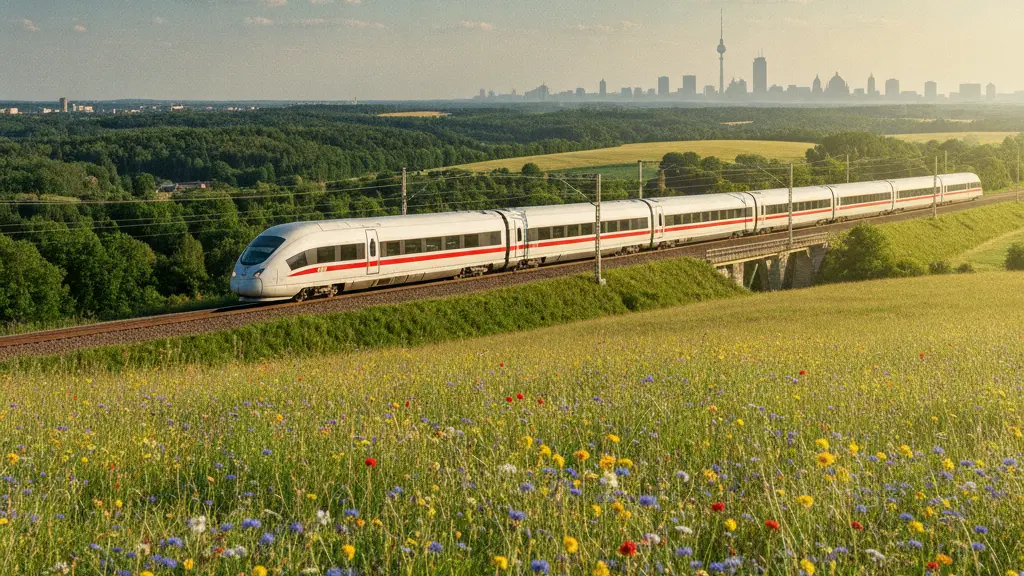
After roughly ten months of full closure and a building period extended by six weeks, the Berlin–Hamburg rail corridor was returned to full service in mid‑June. The rail operator describes the project as the corridor programme’s largest single measure: more than 160 kilometres of track were renewed, switches and overhead lines replaced, bridges and 28 stations refurbished, 249 switchpoints installed and signalling and control technology modernized. The upgrade aims to allow about 470 daily long‑distance runs and to bring the two main stations again within a journey time of under two hours.
The reopening was widely welcomed as the end of prolonged bus replacement services and detours that had lengthened journeys for months. At the same time, the return to service came with caveats from the operator: the line would be brought back into operation, but an initial phase with adjustments and checks could affect travel times and punctuality.
2. What passengers experienced after the reopening
In the first working days after reopening, almost all high‑speed trains between Berlin and Hamburg recorded delays in both directions. Most reported lateness was in the order of ten to fifteen minutes on top of a blanket 15‑minute provisional increase in scheduled travel time that remained in place until the end of June. Independent reporting and timetable checks suggested that journey times were, at least temporarily, around two hours and fifteen minutes instead of the pre‑works one hour and forty‑five minutes.
The immediate result for many travellers was a sense that punctuality had not returned with the new infrastructure. Even when trains were running and capacity was available, timetable padding and technical restrictions meant that the advertised fastest connection in the booking system could not always be achieved in practice.
3. Main technical reasons for slower running and delays
| Technical issue | Immediate effect |
|---|---|
| Unaccepted modern train protection centres | High‑speed operation limited; long‑distance trains restricted to lower speeds (≈160 km/h) |
| Load and acceptance runs | Temporary speed limits on sections; reduced timetable buffers |
| Remaining commissioning tasks at signal boxes | Sectional restrictions and punctuality impact across multiple stretches |
| Short‑term result | Longer scheduled travel times and higher risk of delays |
3.1 Train protection and acceptance of new systems
A central technical issue is the commissioning of modern train protection centres intended to allow speeds up to 230 km/h. Until those control centres are formally accepted by the relevant authorities, high‑speed trains have to use an older, simpler train protection system that limits speeds to around 160 km/h on affected sections. Several signal boxes depend on the new centres; where acceptance is still pending, the faster system cannot be used and long‑distance trains are obliged to run more slowly over extended parts of the route.
3.2 Track settling and acceptance runs
Another factor is the need for so‑called load runs with heavy freight trains to compact the ballast in the renewed track bed. These test and settlement runs were required in places such as the section around Falkensee. While those runs took place, other trains were subject to temporary lower speed limits. Parallel acceptance drives for the updated signalling and interlocking equipment further reduced timetable buffers.
4. Operational measures and official framing
The infrastructure company and the rail operator stated that regional services returned to their regular timetables and bus replacement services ended. They also announced that planned long‑distance trains would run at full capacity where possible. To manage the ramp‑up safely, long‑distance timetables were adjusted on a minute‑by‑minute basis until the end of June as a precaution to create a stable and reliable offering.
The overall message from the operator was: the line is open and services run again, but in the short term some punctuality is being traded for deliberately longer journey times while outstanding technical approvals and commissioning work are completed.
5. Incidents, wider network effects and passenger impact
5.1 Notable incidents and their consequences
A few days after parts of the line were reopened, a signalling‑box failure near Deutsch Evern brought traffic between the two cities to a near standstill for a period. During that disruption, some high‑speed services ran only every two hours, and there were delays and cancellations. A regional operator had to reduce its frequency to one train per hour in the affected corridor, which increased congestion and stow‑on effects on connecting services. After repair work, normal circulation resumed the following day, but the episode illustrated how single point failures can still badly affect a modernised route.
5.2 User experience and public perception
For many commuters the experience is mixed. On the positive side, direct services and denser frequencies returned and generous goodwill measures such as discounted tickets were offered as a thank‑you for passengers’ patience. On the negative side, travellers were urged to check the timetable app or online before every journey because acceptance runs, sectional speed restrictions and possible additional disturbances can change departure and arrival times at short notice. Public debate and online forums highlighted the gap between the large technical investment and the immediate day‑to‑day experience of delays and timetable uncertainty.
6. Outlook and practical advice for travellers
In the medium and long term, the upgraded infrastructure should bring higher capacity, faster and more reliable services once all new systems are accepted and fully operational. The modernisation work is intended to cut detours and restore journey times that are substantially shorter than the months with replacement routes.
In the short term, passengers are advised to allow extra time, check official timetable information in the national timetable app or online before travelling, and expect minute‑level schedule adjustments as commissioning work continues. The current situation is best seen as a transitional phase: the physical infrastructure has been renewed, but punctuality and the highest permitted speeds depend on the completion of remaining technical acceptance steps.
