
1. Conference overview and key themes
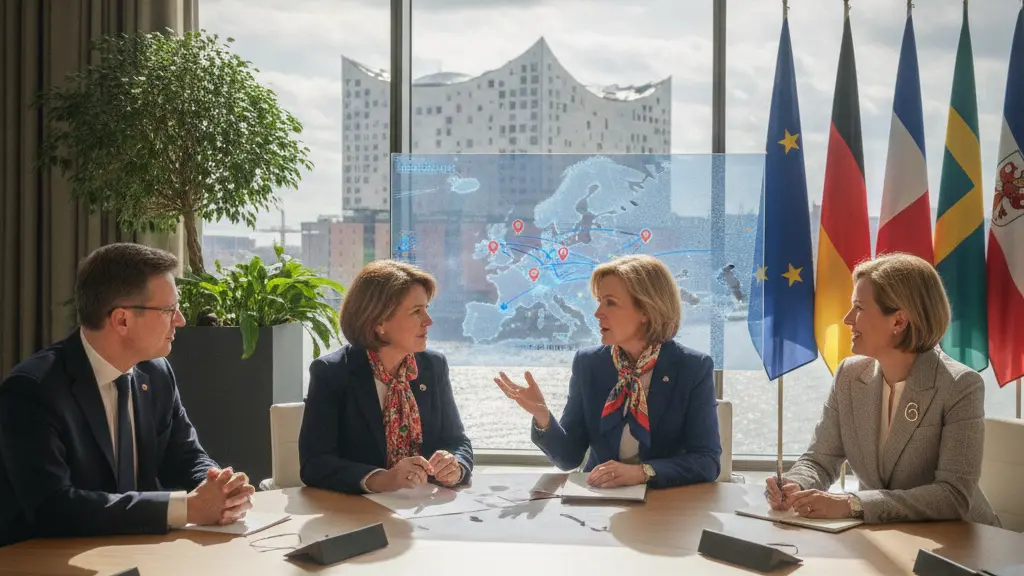
The 2026 Interior Ministers’ Conference (IMK) in Hamburg focused on two major, interlinked topics: migration policy and Germany’s civilian defence and population protection. Although these subjects can seem separate, ministers discussed them together as parts of a broader public security and resilience agenda. Reports indicate roughly 80 proposals were on the table, with debate centering on asylum implementation, returns and enforcement on the migration side, and on modernization, warning systems and hybrid threat defence for civil protection.
Why these two themes matter together
Migration measures such as faster returns and stricter enforcement are connected to public security concerns, while investments in civil defence aim to strengthen society against crises, disasters and hybrid threats. Framing migration and civilian defence together reflects a shift toward linking internal security, administrative capacity and resilience planning under a single policy conversation.
2. Migration: asylum rules, returns and enforcement
Ministers discussed implementation of the new Common European Asylum System (GEAS), and sought administrative solutions for applying the updated asylum rules. A clear emphasis was placed on enforcement: speeding up deportations, increasing returns of convicted offenders, and tackling social fraud connected to benefits and asylum processes. Several reports quoted calls to lower procedural hurdles for deporting criminal offenders, including some who hold protection status.
Implementing the Common European Asylum System (GEAS)
Participants focused on practical aspects of putting the GEAS into effect after it entered into force. The agenda included streamlining procedures, clarifying responsibilities between federal and state authorities, and preparing for the legal and operational demands that new asylum rules bring.
- Review administrative steps needed for GEAS implementation;
- Allocate resources to speed up asylum processing;
- Cooperate across states to ensure consistent application.
Returns, deportation and social fraud measures
Migration debates at the IMK were characterized by calls for faster and tougher returns, especially for people convicted of crimes. Reports also noted a push for stronger action against fraud in social benefits. Sources differed on motivation: some portray the approach as deterrence-oriented, others as a response to administrative bottlenecks that hamper enforcement.
- Proposals to reduce legal and procedural obstacles to deportation;
- Enhanced coordination for returns of convicted offenders;
- Measures targeting benefit and social fraud within migrant populations.
3. Civil defence, population protection and hybrid threats
The civil defence strand of the conference focused on strengthening population protection, modernizing warning systems and preparing to counter hybrid threats. The federal government has moved to increase investment in civil protection, while states emphasized their role in implementation and local preparedness.
‘Pakt für den Bevölkerungsschutz’ and funding
According to reports, the federal cabinet approved a ‘Pakt für den Bevölkerungsschutz’ proposed by Federal Interior Minister Alexander Dobrindt, providing up to 10 billion euros through 2029 for civil protection. Funding priorities include modernization, personnel, equipment and specialized vehicles, alongside enhancements in warning and communication systems.
- Modernize civil protection infrastructure;
- Invest in personnel and training;
- Procure about 1,000 specialized vehicles for response capabilities;
- Integrate public shelter information into digital warning systems and the NINA app.
Linking armed forces, federal agencies and hybrid threat defence
The IMK discussion also covered the closer integration of the Defence Ministry and the Bundeswehr with interior and civil protection work. This reflects an intent to align civil defence, crisis management and measures to counter hybrid threats with internal security planning at federal and state levels.
4. Political tone, trade-offs and differing emphases
Reporting shows a noticeably sharper security-oriented tone in the conference language, including statements that aim to make deportations easier for criminal offenders. At the same time, other voices prioritized preventive resilience: building capacity so that federal-state collaboration for civil protection “does not only take effect in an emergency.” These positions are less open conflict than differing priorities within a shared agenda.
Two main policy directions
Two broad approaches emerged in the debate: one stresses migration enforcement—faster returns, tougher controls and legal clarity—while the other prioritizes long-term investments in civil protection, warning systems and societal resilience. Both strands overlap in the shared concern about public safety and hybrid threats, but they imply different tools and timelines.
5. Takeaways, next steps and expectations
From the IMK in Hamburg, the most reliable conclusions are that migration enforcement and asylum implementation remain central, and that Germany is committing significant resources to strengthen civil defence and warning systems. The conference set the stage for closer Bund-Länder cooperation and for involving defence structures in internal security planning, but it did not produce a single, finalized outcome on all contested points.
What to watch for after the conference
- Implementation steps for the GEAS and related administrative reforms;
- Concrete allocation and roll-out of the ‘Pakt für den Bevölkerungsschutz’ funding through 2029;
- Legal and operational changes related to returns of convicted offenders;
- Efforts to integrate the Bundeswehr and defence ministry roles into civilian resilience planning.
Expect ongoing debate as ministries and states translate conference agreements into law, budgets and operational plans. The combined focus on migration policy and civil defence suggests that internal security, administrative capability and societal resilience will remain closely linked topics in German policy-making throughout 2026 and beyond.
