
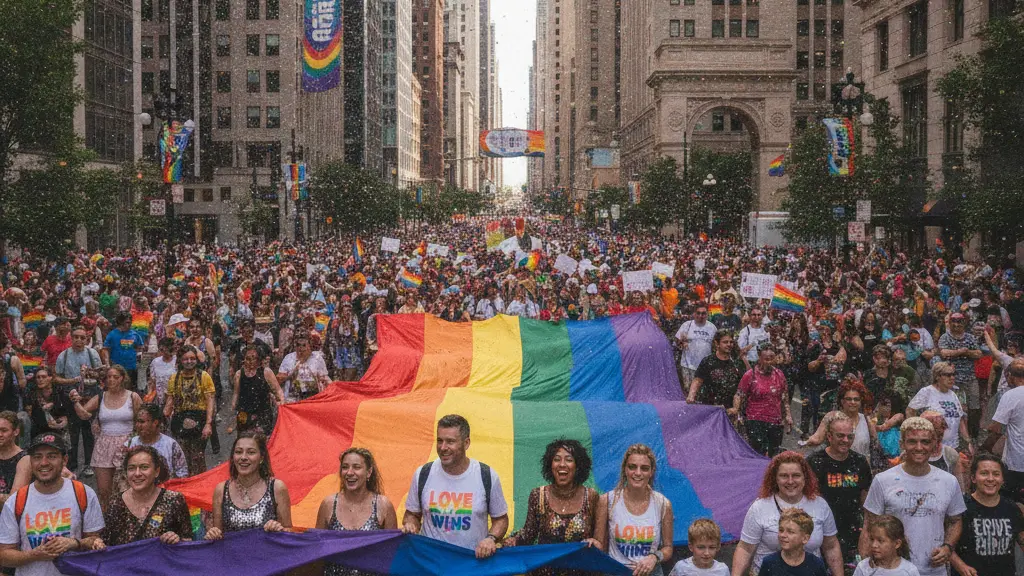
1. Why Pride must be more than a month
Pride Month started as a political moment of resistance, rooted in the Stonewall protests and the ongoing fight for rights, safety, and visibility for LGBTQIA+ people. Over time June has become a season of visibility, parades, and corporate statements of solidarity. But visibility in June alone is not enough. Companies are increasingly judged not by a single symbolic gesture, but by whether they embed inclusion and respect into everyday practices year-round.
This matters because Pride is not only a celebration. It is a call for long-term changes in policies, culture, and operations. When organizations limit Pride to logos, social posts, and flags, they risk appearing inauthentic. In a values-driven public sphere, stakeholders expect that statements about diversity and inclusion are backed by structural commitments and measurable action.
2. The problem of Rainbow-Washing and why it hurts trust
What is Rainbow-Washing?
Rainbow-washing refers to the practice of adopting Pride imagery and slogans during June while failing to support LGBTQIA+ rights through policy, benefits, or corporate behavior the rest of the year. It creates a gap between outward symbolism and internal reality when companies present themselves as queer-friendly without aligning their governance, HR, procurement, or sponsorship decisions with those values.
Consequences for companies and communities
Social media and employee voices make the discrepancy between symbolic support and lived experience visible. When employees still face unclear complaint mechanisms, lack of protections, or exclusion in benefits, public Pride gestures can backfire. The result is reputational risk, loss of trust among customers and talent, and harm to the very communities companies claim to support.
3. What meaningful, year-round Pride looks like
Meaningful Pride moves from seasonal symbolism to structural inclusion. That means integrating LGBTQIA+ needs into HR systems, benefits, workplace design, and supplier choices. It also means listening to queer employees and community partners and acting on their priorities rather than relying on one-off campaigns.
Concrete policies and practices
- Anti-discrimination policies that explicitly name sexual orientation, gender identity, and gender expression.
- Clear and accessible complaint and protection mechanisms for harassment and discrimination.
- Employee networks and resource groups that receive dedicated support and budget.
- Inclusive HR systems allowing chosen names and pronouns to be recorded and respected.
- Trans-inclusive healthcare benefits and coverage for gender-affirming care.
- Parental leave policies that are neutral to gender and family models.
- Inclusive facilities planning, for example accessible and safe toilet concepts.
- Inclusive recruiting and fair career development to prevent bias in hiring and promotion.
Connecting programs to core activities
Organizations with long-term commitments use Pride Month as a launchpad to deepen representation in core areas: social services link Pride to their mission, universities make queer literature more visible year-round, and culture institutions use June to sustain long-term programs. The key is to embed queer inclusion into everyday operations and strategy.
4. Communicating commitments and ensuring accountability
Public statements that Pride is political and that inclusion must be lived every day are useful signals. But communication must be paired with transparent accountability. Stakeholders expect measurable goals, regular reporting, and evidence that policies are enforced consistently across the organization and supply chain.
| Symbolic action | Structural action |
|---|---|
| Changing a logo to rainbow colors in June | Adopting anti-discrimination policies and tracking incidents year-round |
| Posting support messages on social media | Providing ongoing allyship and sensitivity training for managers and teams |
| Hanging a rainbow flag | Ensuring benefits and health coverage are inclusive of trans and non-binary employees |
| Short-term visibility | Long-term inclusion and trust |
Measure what matters
Useful metrics include employee experience surveys broken down by LGBTQIA+ status, participation and impact of employee networks, uptake of inclusive benefits, resolution rates for discrimination complaints, and supplier diversity measures. Publicly reporting progress around dates such as IDAHOBIT and other awareness moments reinforces continuous commitment.
5. A practical roadmap for companies
Companies can move from seasonal gestures to sustained inclusion by following practical steps. This roadmap focuses on listening, acting, embedding, and reporting.
Step-by-step actions
- Assess current state: review policies, benefits, HR systems, and employee feedback to identify gaps related to LGBTQIA+ inclusion.
- Consult the community: involve LGBTQIA+ employees and external civil society experts in designing measures.
- Update HR systems: allow chosen names, pronouns, and gender options that respect diversity.
- Revise benefits: ensure trans-inclusive healthcare and gender-neutral parental leave are available.
- Train and educate: run regular diversity and allyship trainings for leaders and teams.
- Support networks: fund and resource employee resource groups and connect them to decision-making bodies.
- Align procurement and partnerships: avoid suppliers that undermine LGBTQIA+ rights and partner with organizations that strengthen inclusion.
- Measure and report: publish progress, set targets, and use feedback loops to improve.
- Celebrate year-round: use Pride Month as a focal point, but program events, awareness and learning throughout the year.
6. Benefits of a 365-day commitment
A sustained approach to Pride and inclusion is not just ethical; it is strategic. Companies that align symbol and structure strengthen trust with employees, customers, and communities, improve talent attraction and retention, and benefit from more diverse perspectives that drive innovation.
- Increased credibility and stakeholder trust when words are backed by actions.
- Better employee wellbeing and retention when protections and inclusive benefits are in place.
- Stronger employer brand and broader talent pool through inclusive recruiting.
- Reduced legal and reputational risk from inconsistent or discriminatory practices.
- Deeper social impact by connecting Pride to the organization’s mission and services.
7. Conclusion: Pride as an everyday responsibility
Pride Month remains an important moment for visibility and solidarity, but it should be a starting point, not an endpoint. Companies that show continuous commitment to inclusion by embedding LGBTQIA+ needs into policies, benefits, culture, and governance will be seen as genuine allies. In the end, flying a flag in June matters only if the organization sustains respect, protection, and opportunity for queer people every day of the year.
Final note
Small gestures can open a door, but lasting change comes from consistent, measurable action. Treat Pride as a 365-day theme in language, decisions, and design, and companies will not only avoid rainbow-washing but also contribute to a fairer and more inclusive society.
