
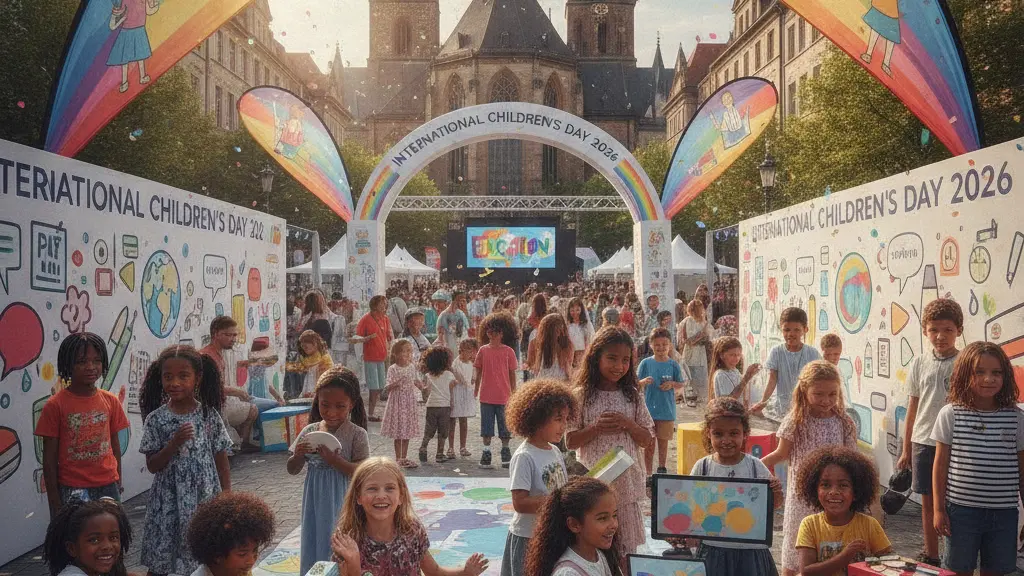
Overview: International Children’s Day 2026 and its central message
On June 1, 2026, International Children’s Day focuses attention on children’s rights, equal educational opportunities, and how society can shape a fair future for young people. The day is more than festivities: it is a public and political appeal to move beyond symbolism and to implement children’s rights in concrete ways. Education, participation and protection are highlighted as interconnected pillars that enable children to grow safely and learn fully.
While many communities celebrate this June date, it coexists with the official World Children’s Day observed on September 20. This coexistence underscores that children’s rights are not tied to a single date but must be negotiated and practiced throughout the year.
Local events: playful learning and visibility for children
Across towns and cities, organizers combine play with learning to make children’s rights tangible. In one city, a zoo-based action day invites families to a child rights rally with five stations that explain core rights such as education, participation and equal opportunity using animal characters as friendly guides. This format shows how political topics can be presented in child-friendly, playful ways.
Another town’s programme called “Laugh, Play, Wonder” mixes inflatable play structures, creative workshops, a book market and fire service demonstrations with longer-term educational offers. A multi-day ‘play city’ project for children aged 7 to 14 simulates urban life and helps participants practise social skills. The low participation fee and subsidies for families with municipal passes aim to improve access for children from lower-income households.
Many smaller communities host street festivals, stage programmes and afternoon activities to create visibility for children and to celebrate their contributions to community life. These local events are important signals of appreciation and invite families to experience education as playful and social.
Political and social messages: protection, investment and credibility
Campaigns around the day link child protection directly with the future: messages like “Protecting children means protecting the future” stress that every child deserves the chance to grow up safe, healthy and educated. Social media posts reinforce that children have rights to protection, education, participation and a carefree childhood. These short slogans bundle key political demands into memorable calls to action.
At the same time, advocacy groups warn that children’s rights—and especially the right to education—are under pressure when public budgets face cuts. One prominent social organization cautioned that children, adolescents and families risk becoming a political margin if spending on childcare, all-day schools, youth work and support systems is reduced. This raises questions about the credibility of public commitments to “strengthen education and enable the future” if resources for those services are being constrained.
Rethinking education: broad definitions and digital health
In 2026, education is widely framed as more than school learning: it includes emotional security, health, participation and access to cultural and extracurricular opportunities. Stakeholders emphasize that without a safe environment, meaningful participation and basic material security, educational outcomes cannot be achieved. Inclusive access to high-quality early childhood education, school and out-of-school learning is presented as non-negotiable.
Digital education and #digitalgesund2026
The annual theme #digitalgesund2026 highlights how children are growing up with digital media and why guided, healthy digital development matters. The initiative advocates for parental accompaniment rather than strict control: parents should play, watch and ask questions alongside their children, set clear rules and screen-free times, and avoid using media as punishment or reward. Digital education here combines media literacy, protection from harmful content and the promotion of autonomy so children can thrive in a digital world.
Research, data and professional action
Statistical and research institutions use the day to present findings and projects that target the protection and promotion of children. Empirical analyses on children’s and family living conditions, as well as research-driven programmes, aim to reduce disadvantage and improve participation and learning opportunities. These contributions make the day a platform for evidence-based planning and cooperation among practitioners.
Professional networks, family research projects and public authorities often use the visibility of the day to connect stakeholders and to communicate concrete measures that can improve children’s life chances. Linking data-driven insights with community practice helps translate symbolic support into targeted interventions.
Tensions: celebration versus structural realities
The International Children’s Day 2026 reveals a recurring tension: colourful local festivities and child-centred activities offer important moments of recognition, yet they can stand in contrast to everyday realities shaped by budget constraints, performance pressures in schools and unequal access to services. While pedagogical associations call for genuine child participation and agency, public debates often focus on tests, rankings and efficiency. The day opens a space to discuss these discrepancies and to demand that commitments to children are matched by long-term investments.
How communities and individuals can act
International Children’s Day is a moment to reflect and to act. Communities, parents, educators and policymakers each have roles to play: supporting inclusive local offers, advocating for stable funding, fostering participation and promoting healthy digital practices help turn slogans into lasting change.
Practical steps to support children’s rights and education
- Attend or volunteer at local events that combine play and learning to show visible support for children’s participation.
- Advocate with local representatives for sustained investment in early childhood education, all-day schools and youth services to prevent cuts that harm the most vulnerable.
- Encourage inclusive pricing and subsidy schemes so that low-income families can access educational programmes and cultural offers.
- Promote guided digital learning: parents and educators should accompany media use, teach media literacy and establish healthy routines.
- Listen to children and create structured opportunities for their meaningful involvement in decisions that affect their everyday lives.
Conclusion: Education strengthens children and secures the future
Under the guiding idea “Strengthen education, enable the future,” International Children’s Day 2026 brings together festive visibility, research-based action and urgent political messages. Whether through playful rights rallies, multi-day learning projects, digital health initiatives like #digitalgesund2026, or advocacy against budget cuts, the day emphasizes that every child—regardless of background—deserves a safe, supportive environment and full access to quality education. Turning this shared insight into sustained policy and everyday practice is the long-term challenge that the day invites us all to embrace.
