
1. What is Pentecost?
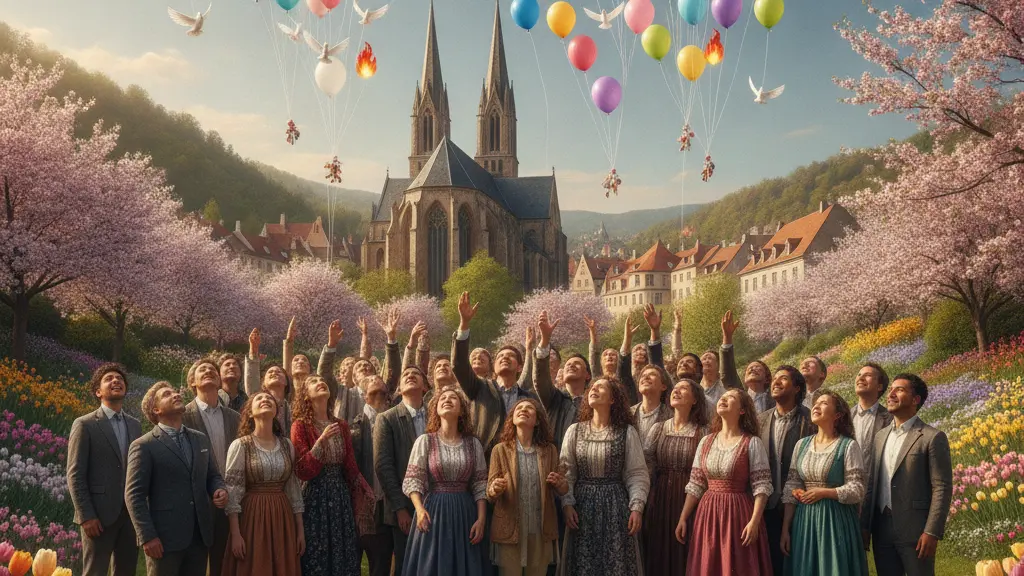
Pentecost is a major Christian feast that celebrates the coming of the Holy Spirit and is often called the “birthday of the Church.” In 2026 Pentecost falls on 24 and 25 May (Pentecost Sunday and Pentecost Monday). The name comes from the Greek word pentekosté meaning “the fiftieth,” because Pentecost is celebrated fifty days after Easter and closes the Easter season.
2. The biblical account: Acts 2
The primary biblical source for Pentecost is Acts chapter 2. According to this account, the followers of Jesus were gathered in Jerusalem when a sound like a violent wind filled the house, and tongues of fire rested on each of them. They were filled with the Holy Spirit and began to speak in other languages. This scene is read and remembered in many churches as the foundational event that sends the apostles out in mission.
2.1 Key images in the Pentecost narrative
- Wind: a powerful, audible sign that accompanies the Spirit’s arrival.
- Fire/tongues: visible signs that often symbolize purification, presence, and inspiration.
- Speaking in other languages: an event highlighting communication across cultural and linguistic barriers.
- Filling with the Holy Spirit: empowerment for witness and mission.
3. Theological meaning
Pentecost is theologically rich. Many churches teach that it celebrates God’s Spirit giving new life, courage, and direction to Jesus’ followers and empowering them for mission. Pentecost completes the Easter mystery: what began with Jesus’ resurrection continues through the Spirit’s presence, enabling the community to proclaim the good news publicly and to form the global church.
3.1 Core themes
- Empowerment: the Spirit equips people for service, witness, and leadership.
- Unity and diversity: the Spirit enables shared witness across languages and cultures.
- Mission: Pentecost marks the sending of the community into the world.
- Presence and transformation: the Spirit brings inward renewal and communal change.
4. Historical and Jewish roots
Pentecost has deep roots in Jewish tradition. The Christian feast connects to the Jewish festival of Shavuot (the Feast of Weeks), which comes seven weeks after Passover and was originally an agricultural harvest festival later associated with the giving of the Torah at Sinai. The Acts account places the Spirit’s coming during this festival context, and many theologians speak of Pentecost as a “new Sinai” experience where God’s presence is written into hearts rather than on stone.
5. Liturgical and denominational variations
Different Christian traditions emphasize different aspects of Pentecost. The Roman Catholic Church often links Pentecost to sacraments such as Confirmation (also called “Firming” in some traditions), where the Holy Spirit is invoked and received sacramentally. Many Protestant churches highlight the Spirit’s empowerment of all believers and encourage reflection on gifts and vocation. Pentecostal and charismatic movements especially emphasize the personal experience of the Spirit and expect charisms such as healing, prophecy, and speaking in tongues to be active.
5.1 Worship and celebration
- Liturgical services: special Pentecost liturgies often include readings from Acts, prayers for the Spirit, and symbolic colors such as red.
- Sacraments and rites: Confirmation or similar rites are commonly scheduled near Pentecost.
- Charismatic practices: prayer meetings, extended worship, and expectation of spiritual gifts are typical in charismatic contexts.
6. Spiritual practice and pastoral suggestions
Pentecost invites both communal and personal responses. Some believers mark the feast with sacramental participation, such as attending Eucharist or Communion and Confirmation services. Others focus on prayer, asking for the Spirit’s guidance, renewal, and boldness. Still others see Pentecost as a time for practical action: working for justice, peace, and care for creation as concrete fruits of the Spirit’s presence.
6.1 Ways to observe Pentecost
- Attend a church service with Pentecost readings and prayers.
- Set aside time for quiet prayer or a short retreat asking for renewal of the Holy Spirit.
- Reflect on spiritual gifts and consider how to use them in community service.
- Engage in an act of social solidarity, such as volunteering or supporting initiatives for justice and peace.
7. Cultural and social aspects
In many countries with Christian heritage, Pentecost is also a public holiday. In Germany, Austria, and Switzerland, Pentecost Sunday and Monday are public holidays; schools and many businesses are closed and people often use the long weekend for travel or family time. Popular customs can include Pfingstfeuer (Pentecost bonfires), processions, and decorating buildings and churches with fresh greenery. For many people the holiday’s social and seasonal elements are as prominent as its religious meaning.
7.1 Secular resonance and critique
- Secular celebration: for some, Pentecost equals a spring weekend or family holiday more than a religious observance.
- Continued symbolism: images of the Spirit—inspiration, freedom, and new beginnings—remain meaningful beyond church walls.
- Critical perspectives: scholars and church leaders sometimes debate whether Pentecost has been culturally “hollowed out” or whether its themes can be translated into public life.
8. Contemporary relevance and conclusion
Pentecost continues to speak to both church and society. It is a festival of mission, of communication across differences, and of renewal. Some read the story as a call to intercultural dialogue and global solidarity, while others stress the Spirit’s prophetic role in challenging injustice. Whether celebrated primarily as a liturgical feast, a personal moment of renewal, or a cultural holiday, Pentecost invites reflection on how the Spirit empowers people to build communities of understanding, service, and hope.
In short, on 24 and 25 May 2026 Christians worldwide remember the coming of the Holy Spirit, the sending of the apostles, and the beginning of the global church. The feast draws together biblical memory (Acts 2), Jewish roots (Shavuot), theological themes (empowerment, unity, mission), and a variety of practices—from sacramental worship to prayer, social engagement, and cultural customs. Pentecost remains a moment to seek renewal, to celebrate diversity, and to recommit to witness and service in the world.
