
1. News roundup — April 21, 2026
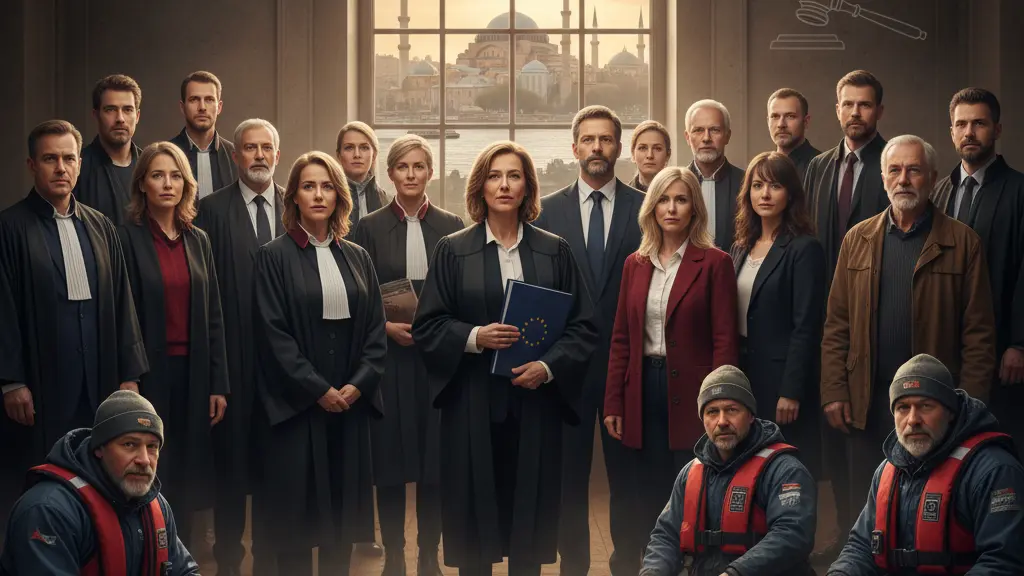
This news collection from April 21, 2026 summarizes three important developments: a landmark ruling by the European Court of Justice on whether travel time counts as working time, an ongoing criminal trial linked to the poisoning death of a Hamburg family in Istanbul, and the continuing rescue mission for a stranded humpback whale off the Baltic Sea island of Poel. The following sections explain the background, the key points, and what to expect next in clear, easy-to-understand language.
2. EU verdict on work hours — travel time and employee protections
On April 21, 2026, the European Court of Justice (ECJ) issued a decision that affects how travel time is treated under working time rules. The ruling clarifies when travel between locations should be counted as working time and reinforces protections for employees who perform tasks away from their employer’s premises. This decision has implications for employers, employees, and collective bargaining across EU member states.
Background: why travel time matters
Many jobs require employees to travel: visiting clients, moving between job sites, attending off-site meetings or training. Whether that travel counts as working time affects maximum working hours, overtime payments, rest breaks, and health and safety rules. The ECJ often interprets EU working time law to protect employee rights and ensure fair application across countries.
What the court decided
The court’s decision clarifies that certain types of travel that are an integral part of an employee’s duties should be classified as working time. This includes travel that is necessary to perform assigned tasks and where the employee is under the employer’s control or performing work-related activities during the journey. The ruling emphasizes that national rules and employer policies must comply with EU standards on working time and rest periods.
Implications for workers and employers
- Worker rights: More travel may count toward a worker’s total working hours, improving protections for overtime, rest periods, and health and safety.
- Employer obligations: Employers may need to record travel time more carefully, adjust schedules, and consider compensation for time spent travelling for work.
- Collective agreements: Unions and employers may update agreements to reflect the ruling and to clarify when travel time counts as working time.
- Compliance: Companies operating across borders should review their policies to ensure they meet EU working time law.
Practical steps and advice
- Review job descriptions and identify activities that require travel as a core duty.
- Keep clear records of travel times, destinations, and tasks performed while travelling.
- Consult with employee representatives or legal advisors to align policies with the ruling.
- Update scheduling and payroll systems if travel time becomes compensable or affects working time limits.
3. Istanbul poisoning case — trial over tragic family deaths
A trial is underway concerning the poisoning deaths of a family from Hamburg in Istanbul. The case, which continues to draw public attention, raises questions about criminal responsibility, toxicology findings, and how the incident happened. Court proceedings are ongoing, and investigators are presenting evidence to determine who is accountable.
Case details and context
The proceedings focus on establishing the facts: how the poisoning occurred, what substances were involved, and who may have had the intent or negligence that led to the deaths. Forensic toxicology, witness testimony, and chain-of-custody of evidence are central to the case. Because the victims were from Germany and the incident occurred in Turkey, legal and consular cooperation has been important.
Legal process and key issues
Key legal issues include proving causation between the alleged act and the deaths, identifying responsible parties, and determining the appropriate criminal charges. The court will consider expert reports, timelines, and any motive or negligence. Trials of this nature can be complex and may take time as forensic and testimonial evidence is evaluated.
What to watch next
- Publication of forensic results and expert testimony summaries.
- Witness statements that clarify the timeline and actions leading up to the poisoning.
- Decisions on charges and potential sentencing if convictions occur.
- Cooperation between jurisdictions, especially regarding evidence exchange and victim support.
4. Whale crisis update — stranded humpback off Poel in the Baltic Sea
Rescue teams continue efforts to help a humpback whale stranded near the island of Poel in the Baltic Sea. The situation remains delicate: rescuers must balance the whale’s physical condition, tidal patterns, and weather while coordinating vets, marine experts, and local authorities. The incident highlights wider concerns about marine mammal strandings and human responses to wildlife in distress.
Current status and health concerns
Teams are monitoring the whale’s breathing, mobility, and visible injuries. Stress, dehydration, and internal health problems are common risks for stranded whales. Veterinarians and marine biologists are assessing whether refloating is possible or if the animal requires more intensive medical care. The goal is to maximize the whale’s chance of survival while minimizing further stress.
Rescue efforts, timeline and challenges
| Stage | Action | Challenges |
|---|---|---|
| Assessment | Veterinary check and condition scoring | Limited access, animal stress |
| Stabilization | Hydration, protection from sun and tide | Keeping the whale calm, logistics |
| Refloat attempt | Use of pontoons, boats, tide timing | Weather, strong currents, shallow seabed |
| Efforts depend on weather windows and the whale’s response to treatment. | ||
How locals and readers can help — environmental context
Local authorities are coordinating the rescue; well-meaning volunteers should follow official guidance to avoid disturbing rescue operations or stressing the animal. Reporting sightings, keeping boats clear, and supporting local marine rescue organizations are practical ways to help. The incident also raises broader environmental questions: why are large whales entering shallow Baltic waters, and what can be done to reduce risks to marine life in changing seas?
