
1. Overview
On April 20 and 21, 2026, public transport in Hannover is heavily affected by two days of warning strikes called by the trade union Verdi. The action targets local operators Üstra and Regiobus and will interrupt many city tram and bus services in Hannover, with an expanded stoppage on the second day. The strike coincides with the start of the Hannover Messe and comes amid a wider wave of ÖPNV labour actions in several Lower Saxony cities.
Quick facts
- Dates: Monday, 20 April 2026 and Tuesday, 21 April 2026.
- Main operators affected: Üstra (Hannover) and Regiobus (regional services).
- Services: Most city trams and many bus lines will be out of service; Regiobus runs normally on April 20 but is included in the strike on April 21.
- Unaffected: S‑Bahn, regional trains and long‑distance Deutsche Bahn services continue to run; on‑demand services like sprinti and sprintRad generally remain available, though local restrictions may apply.
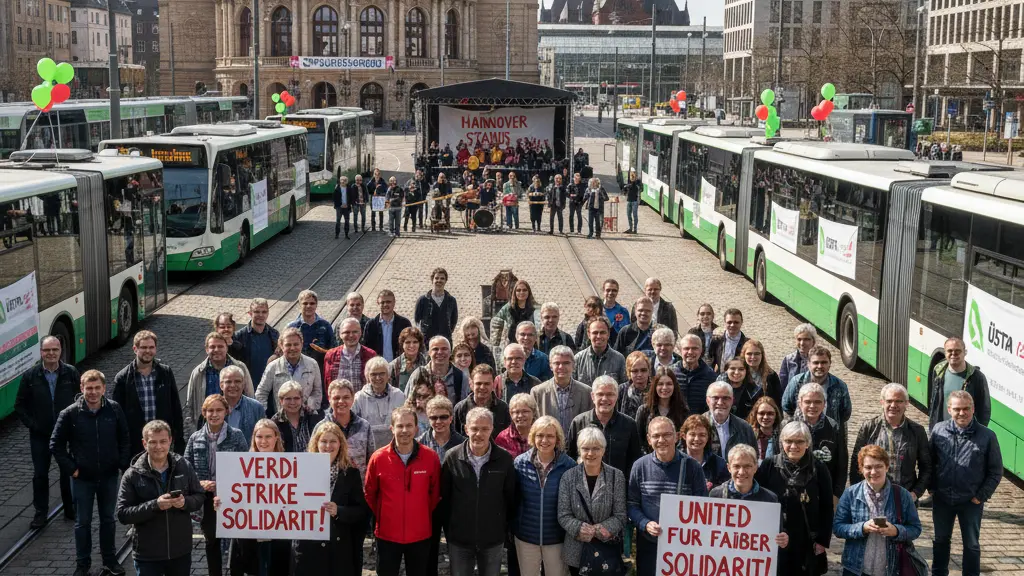
- Demonstration: A procession from the Betriebshof Glocksee to Platz der Menschenrechte concludes with a rally from 12:00 on April 21.
2. What runs and what doesn’t
The strike pattern differs between the two days, so it is essential to check the specific date. The action is a warning strike that aims to pressure employers in ongoing tariff negotiations and will halt many scheduled services.
Monday, 20 April 2026 — Üstra fully affected
On Monday, Üstra staff are on strike for the whole day. This means there are no city trams or many buses operating in Hannover from about 03:00 until the end of service.
- City tram lines affected: all numbered city tram lines (1–13 and 17).
- Major bus lines affected include (but are not limited to): 100/200, 120–137, 253, 254, 330, 340/341, 345–348, 363, 371–373, 390, 420, 450, 470, 480, 581, 610/611, 616, 631 and 800.
- Regiobus services in the surrounding area operate normally on Monday, including school transport.
Tuesday, 21 April 2026 — Üstra and Regiobus affected
On Tuesday the strike expands to the joint operation of Üstra and Regiobus. That means many Regiobus lines that ran on Monday will also be out of service on Tuesday and school transport may be cancelled.
- Expect broader interruptions across the city and surrounding districts on Tuesday.
- School bus services that ran on Monday may be cancelled on Tuesday — parents and schools should make alternate arrangements.
- S‑Bahn, regional trains and Deutsche Bahn long‑distance services are not part of the strike and continue to operate.
3. Practical advice and travel alternatives
If you need to travel during the strikes, planning ahead will save time and stress. Consider other transport options and allow extra journey time.
Immediate alternatives
- Use S‑Bahn and regional trains where possible — these services are not affected by the Verdi warning strikes.
- On‑demand services like sprinti and bike services such as sprintRad are generally available, although local restrictions may apply at times of high demand.
- Carpooling, taxis, bike or e‑scooter services and walking are practical short‑distance options within the city.
- If you can, work from home or shift appointments to non‑strike days, especially during the Hannover Messe when travel demand is higher.
For parents and schools
School transport runs normally on Monday but may be cancelled on Tuesday. Parents should confirm arrangements with schools and seek alternative commutes for children on the second day of strike action.
4. Why the strike is happening: background and demands
The strikes are part of a prolonged tariff dispute between Verdi and the municipal employers’ association. Negotiations have reached an impasse, prompting the union to call warning strikes in the public transport sector in Lower Saxony.
Main demands from Verdi
- Shorter weekly working hours for employees.
- Improved shift models and longer rest periods between shifts.
- More vacation time for workers.
- Higher allowances for night and weekend work.
Negotiations so far have been difficult: the third bargaining round ended without agreement on April 13, and the next round is scheduled for May 11. The employers have rejected central parts of the demands as financially unfeasible. Verdi points out that a peace obligation in the sector ended on March 31, lifting earlier restrictions on strike action. Verdi negotiator Marian Drews said the union had tried ‘long and intensively’ to reach a result at the negotiating table.
5. Regional context and connected actions
The Hannover strike is part of a broader wave of warnings and stoppages affecting local bus and tram networks across several cities in the region. Other operators in lower Saxony and nearby states are also involved in industrial action.
Where else is public transport affected?
- Cities experiencing similar disruptions include Braunschweig, Göttingen, Osnabrück and Wolfsburg — local patterns vary by operator.
- In Braunschweig, some services are suspended but primary school transport remains running as an exception.
- Parallel disputes are ongoing in parts of Bavaria (for example, Munich, Nuremberg and Ulm), while other states such as Baden‑Württemberg, Schleswig‑Holstein and Hamburg have recently reached settlements.
6. Demonstration and safety information
On Tuesday a demonstration will move from the Betriebshof Glocksee to the Platz der Menschenrechte, finishing with a rally from around 12:00. If you plan to be in central areas, expect increased foot traffic, road closures or temporary diversions.
Advice for residents and visitors
- Avoid the procession route during the scheduled time if possible and follow instructions from local authorities for safety.
- If you must travel near demonstration areas, allow extra time and use unaffected rail services where feasible.
- Be considerate of participants and emergency access routes; keep sidewalks and key junctions clear.
7. What to expect next
With negotiations ongoing, further warning strikes or targeted actions remain possible depending on the outcome of talks. The next bargaining round set for May 11 may change the situation, but travellers should prepare for potential disruptions until an agreement is reached.
Practical steps to stay informed
- Check operator announcements before travelling for the latest service status and any special measures.
- Allow additional journey time and book alternative transport early where possible.
- Employers and event organisers should plan contingencies for staff and visitors during strike days.
8. Summary and key takeaways
The Verdi warning strikes on April 20–21, 2026 will significantly disrupt Üstra services in Hannover and extend to Regiobus on the second day. S‑Bahn and regional trains continue to run, but many tram and bus lines will be suspended. Plan ahead, use alternative transport where possible, and expect a demonstration on April 21. The action is rooted in unresolved demands over working hours, shift models, rest times, vacation and pay for unsocial hours, and further developments will depend on the outcome of upcoming negotiations.
