
1. Earth Hour 2026 — A Global Moment for Climate
Earth Hour is a worldwide climate action initiated by WWF. In 2026 the event marks its 20th year. On 28 March 2026 people, cities and businesses around the world switch off lights for one hour at the same time to send a clear signal for climate protection and collective climate action.
Background and purpose
Earth Hour combines a symbolic lights-out moment with education and community events. The aim is to inspire individual and collective steps toward a more sustainable future, linking cultural participation with practical climate solutions.
This simple, symbolic act of turning off lights raises awareness about the climate crisis, encourages conversations about sustainability and shows how local communities can join a global movement for climate protection.
2. Hamburg lights out — MOTTE’s Our Earth Hour project
In Hamburg, the MOTTE organization takes part in Earth Hour with the project “Our Earth Hour.” As part of the action, MOTTE hosts a mini-sustainability festival that begins at 19:30 on 28 March 2026. The event brings together children, young people and adults to explore the societal challenges of the climate crisis through creative formats.
When and where
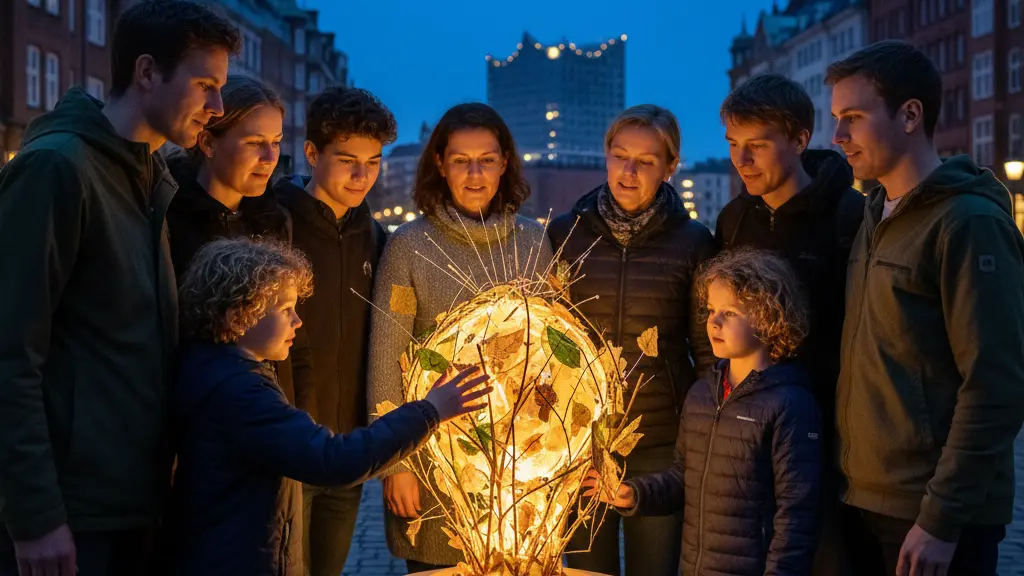
The main event in Hamburg takes place on 28 March 2026, starting at 19:30. For one hour people are invited to switch off lights, attend performances and visit a light installation and art exhibition that highlight climate themes.
Who is involved
The project enables shared cultural and artistic participation across generations. Contributors include MOTTE’s Kita, participating schools and local artists who present work created in climate workshops and collaborative creative sessions.
- MOTTE Kita: children’s climate workshop results
- Participating schools: student projects and presentations
- Local artists: installations and exhibits
- Families and community members: performances and hands-on workshops
3. Program highlights
The mini-sustainability festival combines live art, music and interactive learning. The program uses poetry, theater, live music, workshops, a light installation and a curated art exhibition to make climate issues tangible and engaging.
Performances and workshops
Performances and workshops are designed to invite reflection and participation. Poetry and theater pieces address themes of climate justice and community responsibility, while workshops provide practical skills and creative ways to think about sustainability.
- Poetry readings and spoken-word on climate themes
- Theatre performances exploring everyday climate choices
- Live music celebrating community action
- Hands-on workshops for children and adults
Light installation and exhibition
The light installation is both a visual centerpiece and a reflective space during Earth Hour. The accompanying art exhibition presents works and results from climate workshops run by MOTTE Kita, participating schools and artists, highlighting creative approaches to sustainability education.
| Contributors | What to expect |
|---|---|
| MOTTE Kita | Child-created artworks and stories from climate workshops |
| Participating schools | Student projects, posters and informative displays about local climate actions |
| Local artists | Installations, sculptures and a light-based artwork that invites reflection |
| The exhibition connects education, art and climate protection to foster dialogue across ages. | |
4. How to take part
Joining Earth Hour in Hamburg is simple and open to everyone. You can participate alone, with family, at school, or as part of a community group. The event welcomes active involvement and quiet reflection during the hour when lights go out.
- Attend the mini-sustainability festival on 28 March 2026 at 19:30.
- Switch off non-essential lights for one hour to join the global lights-out moment.
- Take part in workshops, listen to performances and visit the exhibition.
- Bring safe lighting if you need it (small flashlight or battery lantern) and follow event safety guidance.
For families and schools
Families and schools are especially encouraged to join. The project creates opportunities for children and young people to present their work, learn about climate protection through creative activities, and experience cultural participation as part of climate action.
- Teachers: consider bringing student projects to the exhibition.
- Parents: use the festival as a chance to discuss climate choices with children.
- Children: participate in workshops and share creative ideas.
5. Why this matters
Earth Hour is more than an hour of darkness. It is a moment to build collective awareness, strengthen community ties and encourage concrete steps toward sustainability. Combining cultural events with climate education makes climate protection accessible and inspiring.
Long-term benefits
Activities like MOTTE’s Our Earth Hour foster long-term benefits: increased climate literacy, creative engagement across generations, stronger local networks for sustainability projects, and motivation for ongoing climate action at home, in schools and in public life.
Join Hamburg’s Earth Hour to experience how art, music and community can help us face the climate crisis together. Switch off your lights on 28 March 2026, take part in the festival at 19:30 and be part of a shared step toward climate protection and sustainable living.
