
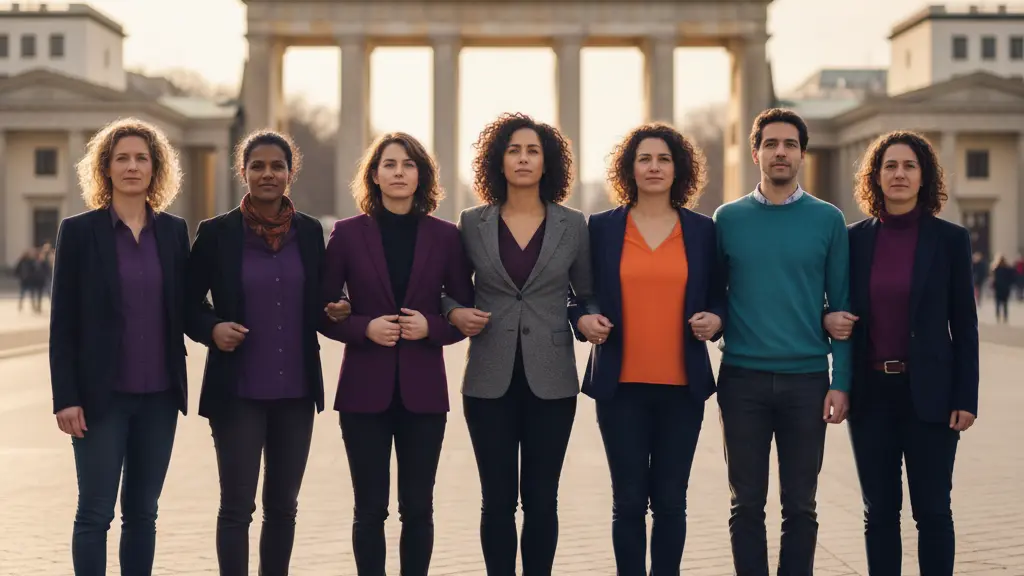
Overview: International Women’s Day 2026 in Berlin and Brandenburg
International Women’s Day 2026 in Berlin and Brandenburg brings together a dense network of protests, demonstrations and cultural events. The weekend centers on March 8 as a public holiday in Berlin, when activists for gender equality, fair pay and bodily autonomy take to the streets. The program ranges from family-friendly gatherings and union-led marches to queer actions and explicitly left-wing and left-radical mobilisations, creating a layered and diverse picture of feminist activism across the region.
Major demonstrations and union-led actions
One of the most visible events is a large demonstration organised by a broad feminist, urban and trade union alliance. Trade unions mobilise under the slogan “feminist, solidary, trade-union” for a demonstration beginning at Oranienplatz in Kreuzberg in the late morning and ending with a rally at the city hall in the afternoon. The organisers call for a life free from exploitation, fear and oppression for people of all genders. Unions emphasise that the day is both a political day of struggle and a day of solidarity, using the march to highlight demands for structural change and equal opportunity.
Purple Ride and queer-feminist actions
Alongside the large march, queer-feminist actions such as the Purple Ride take place. In this queer bicycle demonstration FLINTA* people deliberately wear purple and occupy public space to make the demand for gender justice visible in the streets. Traditional cycling protests like this draw many participants and underscore how visibility and public presence are used as political tools for gender equality.
Other feminist demonstrations
- Frauen*kampftag: a feminist, solidary and trade-union oriented march explicitly opposing all forms of exploitation.
- Feminism Unlimited: groups marching from Schönhauser Allee to Rosa-Luxemburg-Platz, calling for an antifascist and anticapitalist feminism.
- 8. März International: a demonstration highlighting international left struggles and linking feminist demands to global political questions.
Left-wing and radical currents
A notable strand of the weekend is the left-wing and left-radical activism that ties feminist demands to broader anti-capitalist and internationalist politics. Under banners like Feminism Unlimited and Revolutionary 8 March demonstrations, participants bring together antifascist, anticapitalist and international solidarity themes. These demonstrations sometimes include contentious slogans and positions, and in previous years similar events have seen clashes with police, which shapes public debate and security planning for 2026.
The range of tactics spans from street marches and direct actions to more confrontational forms of protest. That creates a mix of voices within the feminist field: while some groups emphasise broad participation and systemic reforms, others prioritise radical disruption aimed at challenging capitalist and patriarchal structures directly.
Union perspective: labour, care and equal pay
Trade unions bring a strong labour and structural perspective to the day. They highlight how women still perform the majority of unpaid care work, are more frequently employed part-time and are underrepresented in leadership positions. These patterns have long-term consequences that extend into retirement. Unions argue that collective bargaining and strong tariff agreements are essential levers for reducing the gender pay gap and achieving real workplace equality.
Unions present March 8 as both a day of political struggle and of solidarity, using the demonstrations to press for policies that increase pay equity, strengthen labour protections and protect hard-won rights from populist or anti-feminist rollbacks.
The Women’s Strike (March 9) and the Enough! campaign
An important development is the extension of the mobilisation beyond March 8. The Enough! campaign has declared the Monday after International Women’s Day as a global women’s strike day. The call asks people to down tools, both paid and unpaid, to make visible how dependent society is on women’s labour. A central action is planned at the Brandenburg Gate with demonstrations, creative protests and spaces for exchange, while decentralised actions are scheduled across Brandenburg in cities such as Potsdam, Eberswalde, Neuruppin and Cottbus.
Strike aims and arguments
The strike is framed as a response to continuing gender-based violence, low-paid work in certain sectors, the burden of unpaid care tasks and limited participation in public life. Organisers argue that the strike is a powerful, non-violent tool to challenge both capitalist and patriarchal systems. They urge women to mark the day in whatever way they can: taking leave, extending breaks, reducing consumption or publicly declaring their “Enough!” to highlight persistent injustices.
Cultural, educational and religious programmes
Beyond street protests, a wide range of cultural and educational events broaden the conversation. Museums offer tours highlighting female perspectives, theatres and cultural centres host readings, film screenings, podcast recordings and DJ sets, and exhibitions explore political engagement by refugee women. Universities and art institutions add academic and artistic layers to the public debate, emphasising intersectional feminism and community representation.
Religious and intercommunity initiatives
Religious communities also shape the programme. Mosques and Muslim organisations organise women-only iftar events, creating space for interfaith exchange, solidarity and support. These initiatives show how the day is taken up in diverse social and cultural contexts, fostering dialogue across religious and community boundaries.
Local activities across Berlin districts and Brandenburg
In many Berlin districts the momentum of March 8 extends into a “women’s March” month with performances, FLINTA*-only poetry slams, community events and local exhibitions. These neighbourhood-level formats emphasise artistic self-representation and community building as complements to large demonstrations. In Brandenburg, planned actions in several towns aim to include rural and smaller urban voices in the feminist debate and to build pressure for political change regionally.
Safety, policing and public order
The intersection of feminist protest and international political topics has prompted close police attention. Past demonstrations that combined feminist demands with international solidarity positions have occasionally escalated into clashes and attacks on police. Authorities monitor routes and large gatherings carefully, balancing the right to protest with public safety concerns, while organisers and participants are encouraged to plan for peaceful, lawful actions.
How to take part and practical suggestions
There are many ways to participate according to your ability and safety needs. You can join union marches, attend queer bike rides, come to cultural events, participate in local community activities or support the women’s strike through symbolic actions. Organisers also suggest practical measures like arranging childcare, travelling in groups, following official guidance for route and timing, and choosing peaceful forms of protest.
- Join a demonstration or the Purple Ride to make public demands visible.
- Attend cultural events, readings and exhibitions to deepen understanding of feminist issues.
- Support the March 9 strike by taking leave, extending breaks or reducing routine work where possible.
- Follow safety guidance, plan travel and look out for vulnerable participants.
Conclusion: A multifaceted weekend for gender justice
The International Women’s Day weekend in Berlin and Brandenburg creates a multilayered movement for gender justice: from union-led demands on pay and care to queer visibility, cultural reflection and calls for radical change. The shared thread across actions is the demand for equality, protection from violence and recognition of care work. Tactics and tones differ, but together they form a broad feminist field in which many approaches coexist, pushing public debate and policy pressure across the region.
