
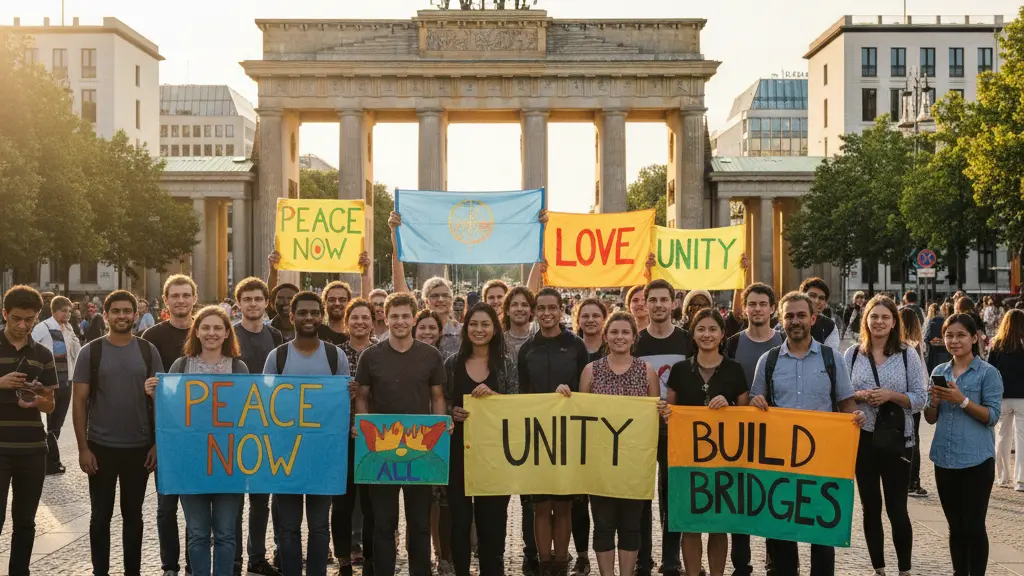
Saturday morning snapshot: conflict, strikes and a national music decision
On the morning of Saturday, 28 February 2026, three very different stories shape headlines across Germany and beyond: a major military action in the Middle East, nationwide transport strikes that have paralyzed cities, and a late-evening national final that will choose Germany’s Eurovision Song Contest entry. Each thread—security, labor, culture—affects everyday life in different ways and together they form a striking picture of a tense and eventful weekend.
Military action in the Middle East: quick facts
Israel has launched a military strike against Iran under the codename ‘Lion’s Roar’ (‘Brüllen des Löwen’), reportedly coordinated with the United States. Israeli officials, including Defense Minister Katz, and Israeli media have reported the action. Eyewitnesses in Tehran and other Iranian cities described explosions, and smoke was sighted over a U.S. military base in Manama, Bahrain—an observation confirmed by Bahrain’s interior ministry and the U.S. Fifth Fleet. The attack follows two days after fruitless nuclear talks in Geneva and comes amid an ultimatum from U.S. President Trump setting an early-March deadline for an agreement.
Observers note this operation as an escalation that risks upsetting a fragile regional balance. This strike is framed against the backdrop of last year’s conflict called ‘Rising Lion’ and is being presented by some leaders as part of a campaign to eliminate an asserted Iranian threat. The diplomatic context—failed talks in Geneva and a high-profile ultimatum—helps explain the timing and the international attention.
Transport strikes across Germany: how daily life is affected
At home, Germany is in the second day of nationwide public transport warning strikes organized by the trade union ver.di. The walkouts on 27 and 28 February involve roughly 150 companies and nearly 100,000 employees, leaving buses, trams and U‑bahns largely out of service in many cities. The strike follows a similar, highly disruptive action on 2 February and is aimed at improving collective agreements, shift allowances and rest time protections.
Where the strikes are hitting hardest
- Major urban centers such as Berlin, Stuttgart, Munich, Frankfurt, Dresden and Cologne report massive service outages and emergency timetables.
- In Dresden public transport was reported to be at a standstill from Friday 3:00 until Saturday 3:00, disrupting commuters and local services.
- Many commuters, students and people with limited mobility face particular hardship as regular mobility options are unavailable.
Demands, reactions and next steps
Ver.di demands stronger framework agreements, higher shift and Sunday allowances (including demands for a 30 percent Sunday bonus) and clearer protections for rest times. Employers have criticized the strike as an ‘unreasonable escalation’ and warned about mounting costs for local authorities. Ver.di believes the strike pressure will affect upcoming negotiations—mentioned in reports as scheduled for 9 February—and hopes to secure better terms. Meanwhile, cities and transport companies are operating emergency plans, and affected passengers are urged to seek alternative travel arrangements where possible.
Eurovision selection: Germany decides who will go to Vienna
On Saturday evening at 20:15 on ARD, ‘Das Deutsche Finale 2026’ in Berlin will determine Germany’s representative for the Eurovision Song Contest in Vienna. Nine acts are competing, including recognizable names such as Sarah Engels, Myle, Ragazzki with Italo-disco beats, and Wavvyboi. A 20-member international jury featuring figures like Christer Björkman and Ruslana will shortlist three finalists; the television audience will then choose the winner. Hosts Barbara Schöneberger and Hazel Brugger promise entertainment highlights, including a stage medley and even a bus-stop set-piece, with guest appearances such as Michael Schulte (who placed fourth in 2018).
| Event | Details |
|---|---|
| Show | Das Deutsche Finale 2026 (ARD) |
| Time | 20:15 (Saturday evening) |
| Location | Berlin |
| Contestants | Nine acts including Sarah Engels, Myle, Ragazzki, Wavvyboi |
| Selection | 20-person international jury selects three finalists; public vote decides the winner |
Context and controversy
This year’s national selection is notable because the broadcaster SWR is leading the process for the first time without Stefan Raab. The contest takes place amid broader political tensions: some countries have signaled boycott behavior—Spain was reported to be among countries protesting Israel’s participation—so the Eurovision decision sits at the intersection of pop culture and geopolitics. For viewers in Germany, the show offers a momentary cultural focal point on a day otherwise dominated by serious security and social issues.
