
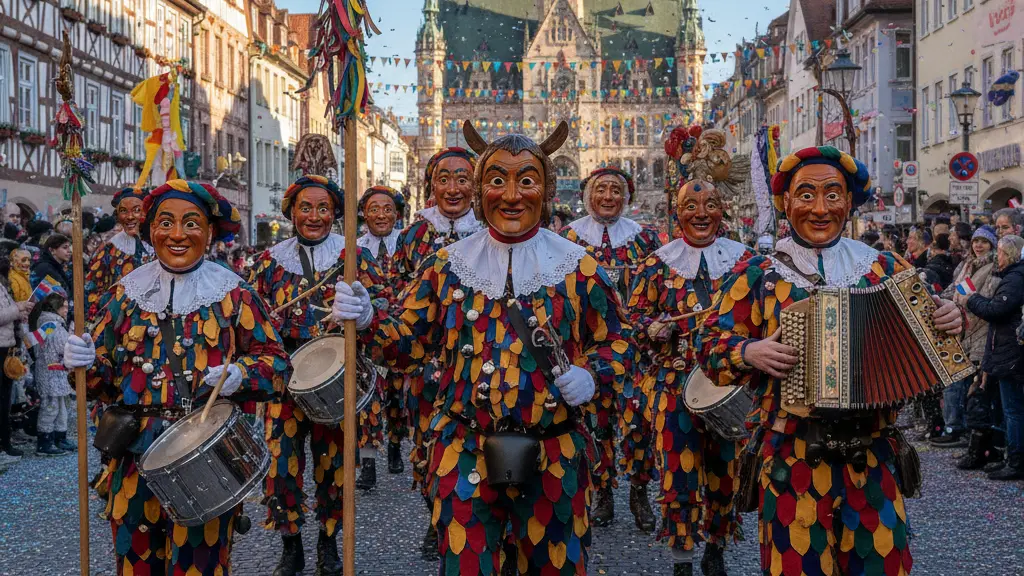
Fasnet 2026 in Baden-Württemberg: A Colorful Carnival Season
In Baden-Württemberg the Fasnet (carnival) season blossoms in bright colors in 2026. The festivities kick off with Schmotziger Donnerstag on 12 February and build to the peak celebrations on Faschingsdienstag, 17 February. Across the state, parades, music groups, traditional customs and family events draw thousands of participants and spectators, offering a mix of modern party atmosphere and long-standing local tradition.
Key carnival keywords to keep in mind this season include Fasnet, carnival parades, Guggenmusik, night parades, family-friendly events and traditional races and rituals. Whether you want loud brass bands, illuminated night processions or gentle, child-focused festivities, Baden-Württemberg has options for every carnival fan.
Six Stunning Parades to Put on Your Calendar
Stuttgart city center parade — Faschingsdienstag, 17 February (from 14:00)
The big carnival parade through Stuttgart’s city center on Faschingsdienstag starts at 14:00 and transforms the main streets into a lively stage. Groups from across the region take part with colorful floats, Guggenmusik bands and marching ensembles. Expect a high-energy spectacle and large crowds around the parade route.
Stuttgart-Mühlhausen night parade — Friday, 13 February (from 19:00)
The night parade in the Mühlhausen district brings a magical, illuminated atmosphere. Beginning around 19:00, this evening procession features glowing costumes and lantern-lit floats that create a special, festive mood ideal for visitors who enjoy parades after dark.
Freiburg St. Georgen parade — Sunday, 1 February (from 14:00)
Early in the season, the St. Georgen parade in Freiburg gathers locals in the village center at 14:00. This event blends tradition with fresh ideas, offering authentic regional costumes, local bands and a welcoming community spirit that makes it easy for visitors to join in.
Freiburg Mendig parade — Monday, 16 February
The Mendig parade in Freiburg on 16 February is another must-see for carnival fans. It adds to the city’s parade week with more floats and groups, giving additional opportunities to experience the region’s carnival culture ahead of the big Tuesday celebrations.
Bad Cannstatt Altstadt parade — Faschingsdienstag, 17 February
Bad Cannstatt — a Stuttgart quarter with over a century of carnival history — hosts a family-focused parade in its old town on Faschingsdienstag. The route and programming emphasize child-friendly spectacle, with sweets and small surprises for young viewers. The quarter also upholds historic events during the week that add local charm.
Friedrichshafen (Ailingen) tradition — Narrenbaumfällen, 17 February (around 17:00)
In Friedrichshafen and the nearby Ailingen area, traditional events such as the Narrenbaumfällen take place on 17 February at about 17:00 on the town square. These regional highlights focus on historic customs and community ritual, offering visitors a window into local folklore and carnival rites.
Practical Tips: Getting There, Crowd Advice and Family Planning
Planning ahead makes carnival days much more enjoyable. Understand local travel conditions, peak parade times and family-friendly options before you go. The biggest parades attract substantial crowds, so a simple plan helps you avoid stress and make the most of each event.
Travel and parking
In major city centers, public transport is strongly recommended. Large-scale parades often lead to severe parking congestion near the route, so arriving by tram, bus or train will save time and frustration. In smaller towns and village centers — for example some Freiburg neighborhood parades — driving and parking tend to be more straightforward, but still plan for limited spaces close to the core events.
Family-friendly advice
Many events are family-friendly, with children’s carnival parties, gentle daytime parades and seats or viewing areas suitable for strollers. If you plan to bring small kids, aim for daytime parades or dedicated children’s programs such as the child-focused events scheduled around 16 February in city halls and neighborhoods. Bring warm clothing, snacks and simple ear protection for young children when bands perform loudly.
Safety and timing
Arrive early to secure a good viewing spot and to move out before the biggest crowds leave all at once. Keep phones charged, arrange meeting points with companions in case you get separated, and follow instructions from local stewards or authorities near parade routes. Expect particularly heavy crowds on Faschingsdienstag and during evening events.
Local Traditions, Special Events and What to Expect
Beyond parades, the region’s carnival calendar includes unique local traditions. Events like historic races on Schmotziger Donnerstag and ritual tree-felling or ceremonial displays on Faschingsdienstag bring deeper cultural flavor to the festivities. These customs are often colorful, loud and very local — a great way to experience authentic Baden-Württemberg carnival culture.
Kübelesrennen and other neighborhood traditions
Some neighborhoods stage playful traditional competitions and small races that are especially entertaining for families and locals. These activities typically occur on Schmotziger Donnerstag or during the days that follow and add a historic, community-driven layer to the larger parade program.
Evening and illuminated parades
Night parades offer a different carnival experience — illuminated floats, glowing costumes and a more atmospheric setting. If you enjoy a dramatic, visually striking procession, seek out the evening parades scheduled in district centers and smaller towns.
Final tips and pick-your-parade advice
Choose your parade based on the experience you want: large city parades for variety and spectacle, neighborhood events for tradition and family-friendly vibes, and night parades for ambiance. Check start times (many parades begin in the afternoon, with some key events at 14:00 or 17:00) and plan transport accordingly. Above all, come ready to join the fun — Fasnet in Baden-Württemberg is a welcoming mix of color, music and centuries-old tradition.
