
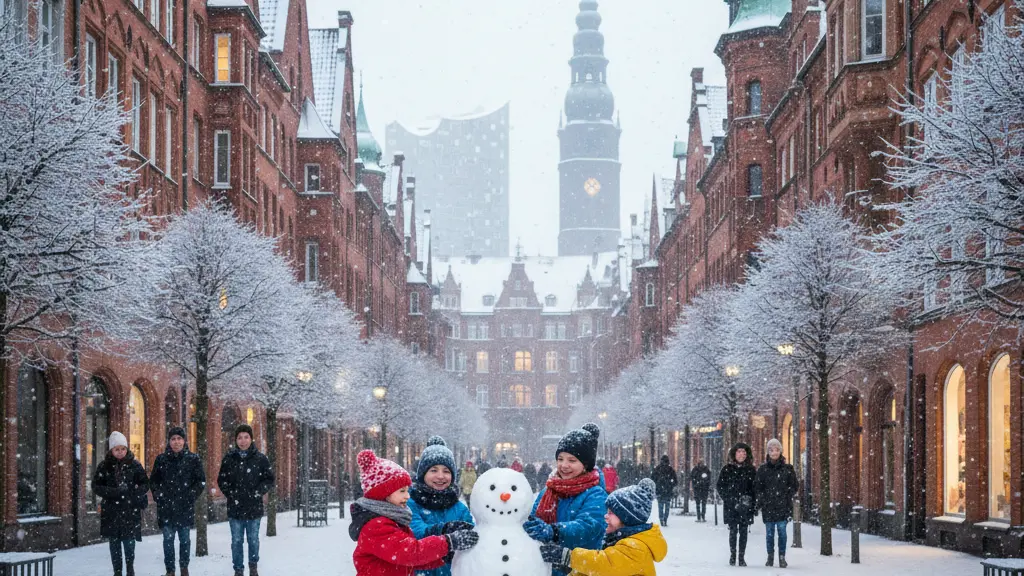
Winter is far from over in Hamburg
The winter of 2025/2026 in Hamburg and northern Germany is not finished. Expect repeated cold phases, snow showers and periods of frost driven by an active La Niña pattern and a shift toward a negative North Atlantic Oscillation (NAO). Long-range models point to a changeable pattern with particularly strong cold spells possible in January and February. Short, intense swings between deep cold and brief milder air masses are also possible, so conditions can change quickly.
Key atmospheric drivers
Several large-scale influences are shaping the weeks ahead: La Niña tends to strengthen cold air incursions from the north, a more negative NAO favors blocking patterns that allow cold arctic air to push south, and disturbances of the polar vortex or reinforced high pressure over northeastern Europe can produce sharp winter outbreaks. Together these factors increase the risk of snow, freezing temperatures and occasional deep frosts.
Short-term outlook for 26 January 2026
For Tuesday, 26 January 2026, the forecast for Hamburg calls for cold conditions around 0 to +2 °C with snowfall expected, locally heavier in the southeastern parts of the region. A band of wintry precipitation is likely to spread northward, with sleet or snow mixing in places. Some forecasts indicate a sharp midweek cold wave that could push temperatures well below zero, with local lows near -10 °C during the coldest moments.
What to expect in the coming days
- Late January: recurring snow showers and periods of sleet; cold pockets likely at night.
- Midweek risk: a pronounced cold wave could bring temperatures down toward -10 °C in places, increasing frost and icy surfaces.
- January–February window: these months show the highest chances for significant snowfall in northern Germany.
- Variable swings: models allow for rapid temperature jumps during short milder interludes, so be prepared for quick changes.
Impacts and practical advice
Recurring cold spells and winter precipitation will affect daily life: heating demand will rise, roads and sidewalks can become icy or snow-covered, and travel disruptions are possible. Households and businesses should brace for increased heating costs and take steps to reduce risks from freezing temperatures.
Safety and preparedness tips
- Keep up with local weather updates and warnings to know when heavy snow or severe frost is expected.
- Prepare your heating system and check insulation to limit heat loss and manage costs.
- Clear snow and ice from entrances and sidewalks promptly and use grit on icy surfaces.
- Carry winter equipment and emergency supplies in vehicles; drive cautiously on snowy or icy roads.
- Protect outdoor pipes and vulnerable plumbing to reduce the risk of freezing and bursting.
Looking ahead: February and beyond
Outlooks extending into February suggest the possibility of further icy episodes, with some forecasts hinting at very cold nights and localized frost below -10 °C, especially in eastern areas. At the same time, temporary milder intrusions cannot be ruled out, and some model scenarios show rapid warming over short periods. The overall pattern favors intermittent winter strikes rather than a steady easing into spring.
How residents should plan
Plan for continued winter conditions: monitor forecasts regularly, factor potential cold snaps into travel and work plans, budget for higher heating bills, and keep basic winter supplies on hand. Being prepared for alternating cold and milder periods will help households and communities cope with a winter that is not yet done in Hamburg.
